
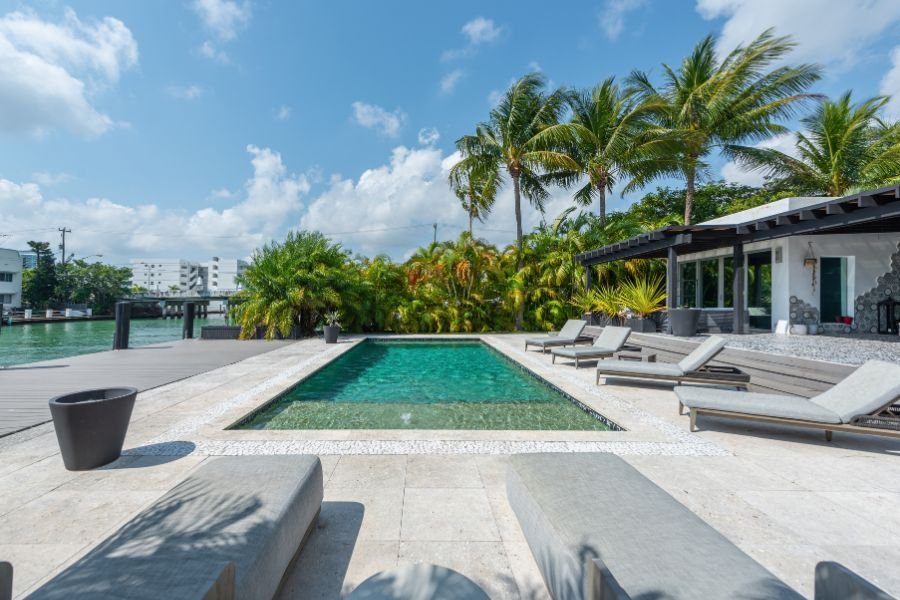
A crystal-clear pool is the centrepiece of any Florida home. Whether the plan is to host a lively backyard BBQ or to relax quietly after a long day of work, the water must be blue and inviting. However, keeping a pool this clean requires more than just luck. The secret to a sparkling and healthy swimming environment is usually a high-quality sand filter.
In this guide, we will explore what sand filters are, how they function, and why they remain the top choice for homeowners who want a beautiful backyard oasis without spending all their free time on maintenance.
The Power of Natural Filtration
Think of a pool sand filter as a heavy-duty purification chamber designed for high-performance cleaning. While the exterior looks like a sturdy, simple tank, the interior houses a precisely engineered environment optimized for trapping debris.
The core of this system relies on #20 silica sand, a professional-grade media characterized by its jagged, sub-angular shape. Unlike rounded beach sand, these specialized grains act as microscopic claws that snag impurities as water circulates through the tank. This ensures that even the smallest contaminants are locked away before the water returns to your swimming area.
How Does a Sand Filter Work?
Think of a sand filter like a giant coffee filter. When you pour water through coffee grounds, the liquid goes through, but the grounds stay behind. A sand filter does the same thing for your pool.
- Water Entry: The pool pump pushes dirty water into the top of the filter tank. A diffuser at the top spreads the water out evenly so it doesn’t just blast a hole in the sand.
- Filtration: As the water travels down through the thick layer of silica sand, the sharp edges of the sand grains grab onto dirt, oils, and algae.
- Collection: At the bottom of the tank, there are perforated pipes called laterals. These have tiny slits that let water in but keep the sand out.
- Return: The clean water is pushed back out through pipes and into your pool.
The Role of the Multiport Valve
Most sand filters have a handle on top called a multiport valve. This is the control centre. It allows you to change the direction of the water. You can set it to filter for normal cleaning, waste to drain the pool, or backwash to clean the sand itself.
Why Sand Filters are Important for Your Pool

A filter is the heart of your pool’s circulation system. Without it, your pool would quickly become cloudy, green, and unsafe for swimming. Here is why sand filters specifically are so important:
1. Keeps Water Crystal Clear
No one wants to swim in murky water. Sand filters are excellent at removing particles as small as 20 to 40 microns. To give you an idea of how small that is, a single human hair is about 50 to 70 microns wide. Even though some filters catch smaller bits, sand filters catch enough to keep the water sparkling under the Florida sun.
2. Low Maintenance
One of the biggest reasons homeowners love sand filters is that they are very easy to take care of. Unlike other filters that require you to take them apart and scrub them by hand, sand filters only need to be backwashed every few weeks. This saves you hours of scrubbing on your hands and knees.
3. Durability and Longevity
Sand filters are built to last. The tank itself is usually made of fibreglass or heavy-duty plastic and can last for decades. The sand inside only needs to be replaced every 3 to 5 years. This makes it a very reliable piece of equipment that won’t let you down in the middle of summer.
4. Cost-Effective
Because the sand lasts so long and the system has very few moving parts, it is often the most affordable filtration option. You save money on replacement parts and chemicals because a clean filter helps your pool chemicals work better.
Comparing Filter Types
While sand filters are a top choice for many, it is helpful to see how they stack up against other technologies based on long-term home ownership:
| Performance Metric | Sand Filtration | Cartridge Systems | D.E. Technology |
|---|---|---|---|
| Upfront Investment | Most Budget-Friendly | Mid-Range | Premium Tier |
| User Effort Required | Low (Automated Cycles) | Moderate (Manual Cleaning) | High (Technical Recharging) |
| Particle Capture Size | 20–40 Microns | 10–15 Microns | 1–5 Microns |
| Longevity of Internals | 3–5 Year Refresh Rate | 1–2 Year Lifecycle | Annual Grid Inspection |
| Operational Logic | Robust & Straightforward | Effective but Delicate | High-Precision |
The Self-Cleaning Advantage: Understanding Backwashing
One of the most innovative features of a sand filter is its ability to clean itself without being disassembled. Over weeks of operation, the silica sand becomes saturated with captured debris. While this shows the filter is working, a saturated bed creates resistance, forcing your pump to work harder. Backwashing is the engineering solution to this problem. By reversing the direction of the water flow sending it from the bottom of the tank up through the top the system physically lifts and fluffs the sand bed. This motion dislodges the trapped dirt and oils, sending the waste out through a dedicated drainage line. In just a few minutes, the sand is rearranged and refreshed, restoring the filter to its maximum efficiency without the need for manual scrubbing.
Safety Note: To protect the internal mechanics of your system, always ensure the pump is completely powered down before adjusting the multiport valve. Changing settings while water is pressurized can lead to internal gasket failure.
Signs Your Sand Filter Needs Attention
While these systems set it and forget it for the most part, you should still keep an eye on them. Here are some signs that it might be time to backwash or change the sand:
- Higher Pressure: If the pressure gauge on the tank is 8-10 PSI higher than its normal starting pressure, it’s time to backwash.
- Cloudy Water: If the water stays hazy even though your chemicals are balanced, the sand may be worn down.
- Sand in the Pool: If you see small piles of sand at the bottom of your pool, a part inside the filter (called a lateral) might be broken.
- Short Cycles: If you have to backwash every few days instead of every few weeks, the sand might be channelled, meaning water is carving a path straight through without being filtered.
- Calcification: In areas with hard water, minerals can turn the sand into a hard block like concrete. If this happens, water won’t filter at all.
Maintenance Tips for a Healthy Filter
To keep your backyard looking its best, follow these simple maintenance steps:
- Backwash Regularly: Do this whenever the pressure rises or after a big storm that knocks a lot of debris into the pool.
- Annual Deep Clean: Once a year, use a specialised filter cleaner. This is a liquid you pour in to melt away body oils, lotions, and minerals that backwashing can’t reach.
- Check the Pressure Gauge: Make it a habit to look at the gauge once a week. It tells the story of how your filter is feeling. If the gauge is stuck at zero, it might be broken and needs replacement.
- Replace Sand on Schedule: Don’t wait 10 years to change the sand. Fresh sand has sharp edges that catch dirt better.
- Use High-Quality Sand: Always ensure you are using #20 silica sand. Using play sand or construction sand will ruin your system because the grains are too small.
Advanced Troubleshooting: When Sand Goes Bad
If you’ve backwashed your filter and the water is still cloudy, you might be dealing with mudballing. This is when oils and hair gather together to form literal balls of mud inside the sand. These mudballs prevent the sand from doing its job. In this case, a deep chemical soak or a full sand replacement is necessary.
Another issue is channelling. If the pump is too powerful for the filter, it can force tunnels through the sand. The water will just race through these tunnels without ever getting cleaned. Ensuring your pump and filter are correctly sized for each other is key to a healthy pool.
Final Thoughts: The Best Choice for Your Backyard
A sand filter is a reliable, hardworking partner for your home. It handles the difficult task of removing invisible debris so you can enjoy a safe and beautiful swimming environment. By protecting your pool’s plumbing and keeping the water clear, this system ensures that your backyard remains the best part of your house for years to come.
Homeowners who want to simplify their routine will find that a sand filter is the perfect solution. It does all the heavy lifting behind the scenes, which allows you to spend less time scrubbing and more time relaxing. Whether you are building a brand new pool or just looking to upgrade your current equipment, this dependable choice keeps your water sparkling and your family happy. Focus on the fun parts of pool ownership and let your filter handle the rest. If you have more questions about which system is right for your backyard, feel free to contact us today.