
There’s a common hesitation that surfaces when discussing pool projects for modest yards. Homeowners assume luxury requires acreage. They imagine that premium outdoor living is reserved for sprawling Winter Garden estates or expansive Windermere properties with room to spare.
That assumption costs them years of enjoyment they could already be experiencing.
Because here’s what the luxury hospitality industry has known for decades: intimacy often creates more memorable experiences than vastness ever could. The world’s finest hotels don’t compete on room size—they compete on atmosphere, materials, and thoughtful design that makes every inch purposeful.
Your backyard can operate on the same principle.
The Compact Space Advantage
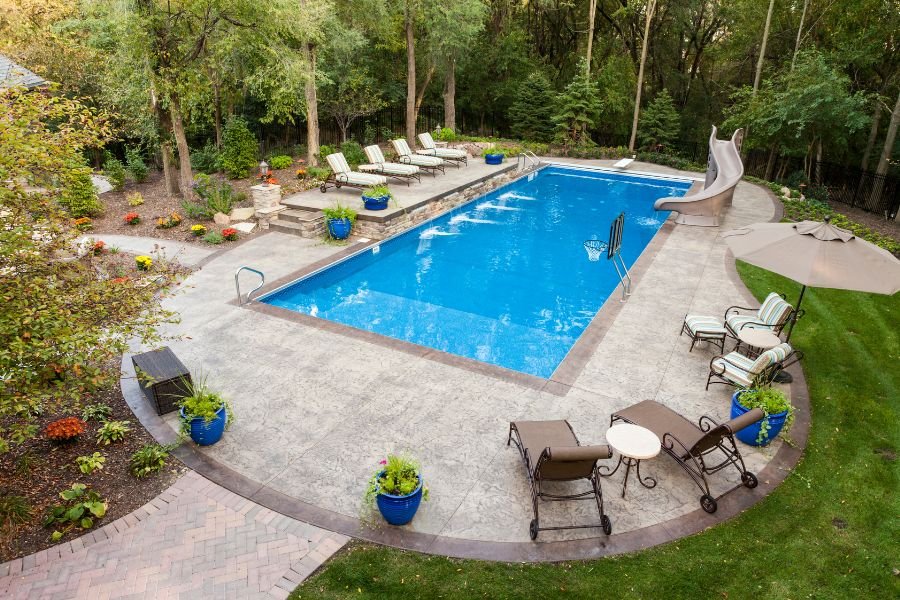
Smaller yards offer something that expansive properties struggle to achieve: genuine connectivity. When your outdoor space is thoughtfully designed rather than merely large, everything becomes accessible. The pool sits steps from the outdoor kitchen. Conversations flow naturally from one zone to another. Parents can supervise children while preparing dinner. Friends gather without shouting across vast distances.
There’s an architectural concept called intimate scale—spaces proportioned for human interaction rather than aerial photography. The principle explains why certain restaurants feel welcoming while others feel empty, why some hotel courtyards invite lingering while others prompt quick passage through.
This same principle transforms compact backyards from limitations into opportunities. When you’re not trying to fill space, you can focus on crafting experience.
Rethinking Pool Fundamentals
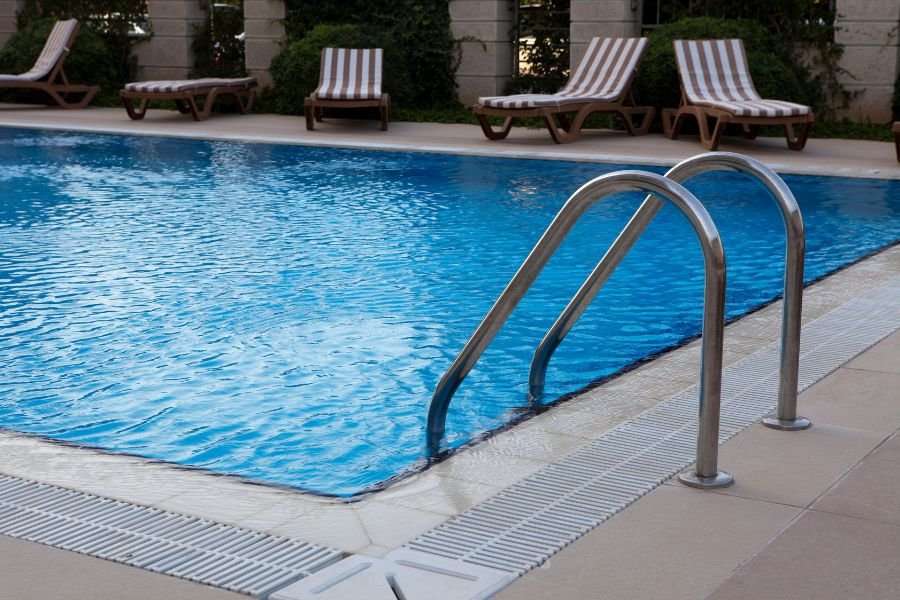
Traditional pool thinking centers on dimensions suitable for lap swimming, diving depths, and space for water volleyball. These specifications serve certain activities well. But consider how pools actually get used in daily life.
Most pool time isn’t athletic—it’s social. Adults float with drinks, discussing weekend plans or neighborhood news. Teenagers gather on ledges with music playing, feet dangling in cool water. Young children play in shallow areas under supervision. Families enjoy the water’s presence more than its depth or distance.
This reality opens design possibilities that compact spaces handle beautifully.
Cocktail pools—typically twelve by fourteen feet with consistent four-to-five-foot depth—concentrate on comfort rather than exercise. They accommodate intimate gatherings perfectly. Plunge pools offer refreshment and aesthetic impact without demanding extensive footage. Lap pools designed specifically for swimming can fit remarkably narrow configurations when length matters more than width.
The question isn’t “what’s the biggest pool this space can handle?” It’s “what type of pool serves how we’ll actually use it?”
Imagine a Dr. Phillips backyard where a carefully proportioned cocktail pool creates the social center the family lacked. Or picture a Lake Nona property where a narrow lap pool provides the exercise option without consuming the entire yard. These aren’t about compromising—they’re about precision matching design to lifestyle.
Vertical Design Strategies
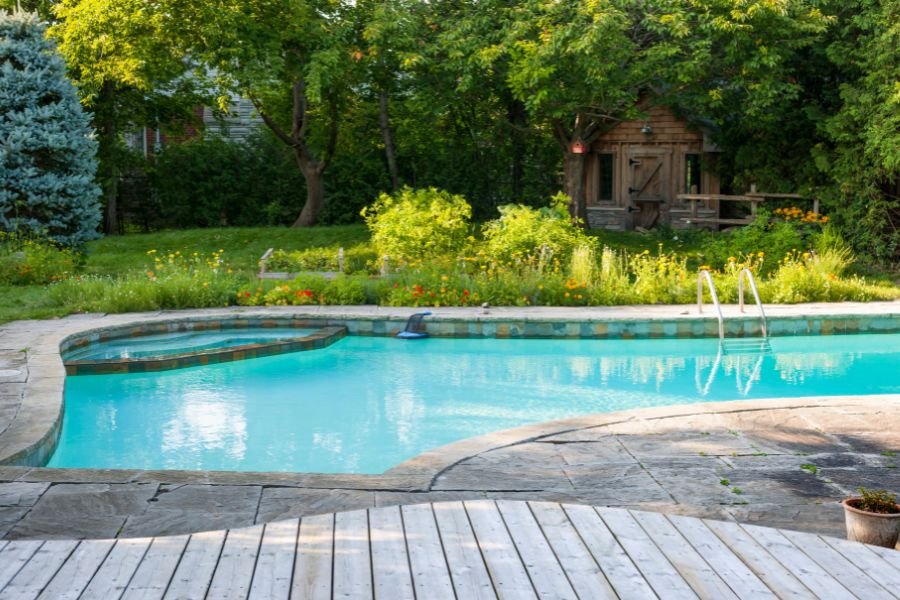
When horizontal space is constrained, vertical elements become your greatest asset.
Elevated planters frame pools without reducing deck area. Water walls add the soothing sound of moving water while consuming minimal footprint. Pergolas define spaces overhead, creating room definition without barriers at ground level. Vertical gardens bring lushness without the sprawl of traditional landscaping.
Consider a hypothetical Celebration yard measuring just thirty feet deep. A plunge pool might occupy eight by sixteen feet, but the surrounding design extends upward: a twelve-foot stone wall with water sheeting down creates dramatic backdrop, tiered planters at varying heights add visual depth, overhead string lights and pergola define evening atmosphere.
The result would feel expansive not through square footage but through volumetric thinking—designing in three dimensions rather than two.
This approach requires more intentional planning than simply spreading elements across available ground. But that constraint breeds creativity. When every decision matters, decisions tend to improve.
Material Selection Carries Greater Weight
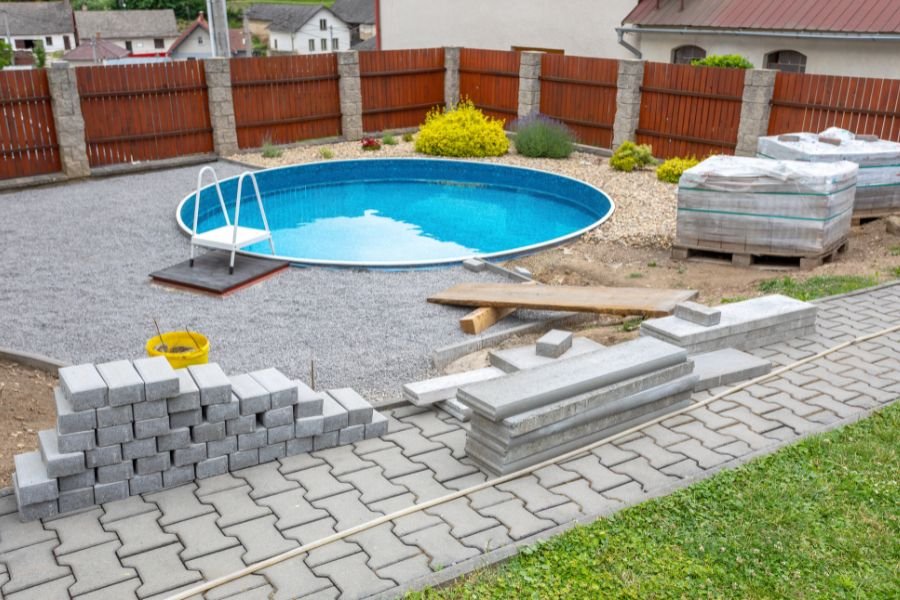
In expansive yards, the sheer variety of elements creates visual interest. A large space can accommodate basic materials because scale itself provides impact. Compact spaces don’t have that luxury—or perhaps more accurately, they have a different one.
When square footage is limited, material quality becomes amplified. Premium surfaces don’t just look refined—they signal intentionality and permanence. Travertine decking versus basic concrete. Custom coping that creates defined borders. Integrated LED lighting that transforms the environment after sunset.
This isn’t about ostentation. It’s about density of experience. When every surface is visible and accessible, every surface should deliver value.
Think of it like the difference between a spacious room with budget furniture and a smaller room with carefully selected pieces. The latter often feels more successful because quality trumps quantity when both can’t coexist.
Material choices in compact pools work similarly. Each surface, each finish, each detail operates at higher visibility. That reality becomes an opportunity for excellence rather than a limitation.
Creating Spatial Illusions
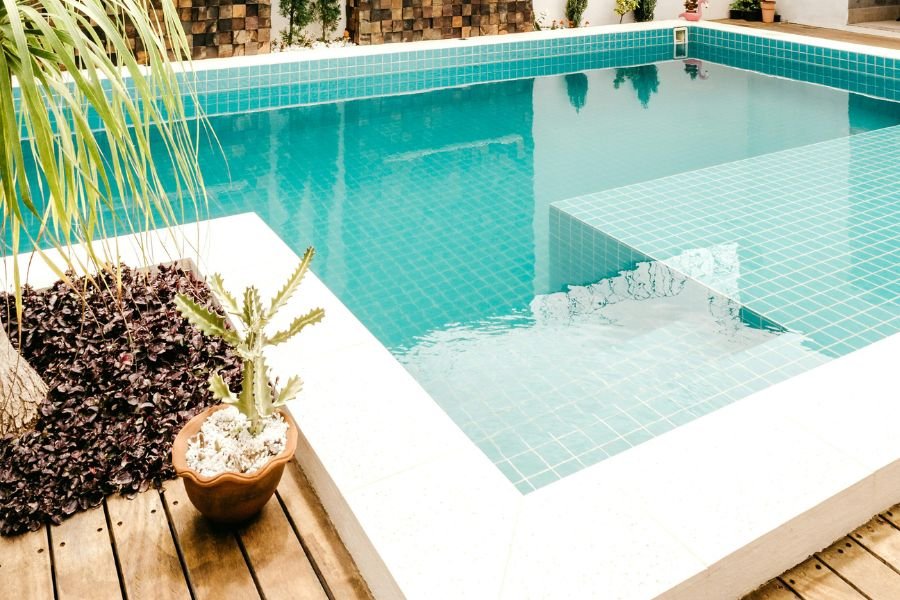
Infinity edges command premium prices not because they add usable area—they don’t—but because they eliminate visual boundaries. The water appears to merge with the horizon, with the sky, with whatever vista exists beyond. Your pool seems to extend indefinitely.
That principle of perceptual expansion applies beyond infinity edges. Glass pool fencing maintains sightlines that solid barriers would interrupt. Mirrored tile surfaces reflect light and surrounding views, doubling the sense of openness. Integrated steps that serve dual purposes as seating maximize function without expanding footprint.
One particularly effective technique: designing to frame existing views beyond your property boundary. A neighboring tree becomes part of your composed landscape. Sky visible above surrounding structures becomes your ceiling. You’re not confined to what you own—you’re incorporating what you can see.
Imagine a Winter Park property backing to mature trees. Rather than treating that as wasted space you can’t control, the pool orientation could frame that natural backdrop. Suddenly your modest yard feels connected to something larger, borrowing visual depth from context.
This approach requires seeing your space as part of a larger environment rather than an isolated plot. The shift in perspective often matters more than any single design element.
Multi-Function Design Imperatives
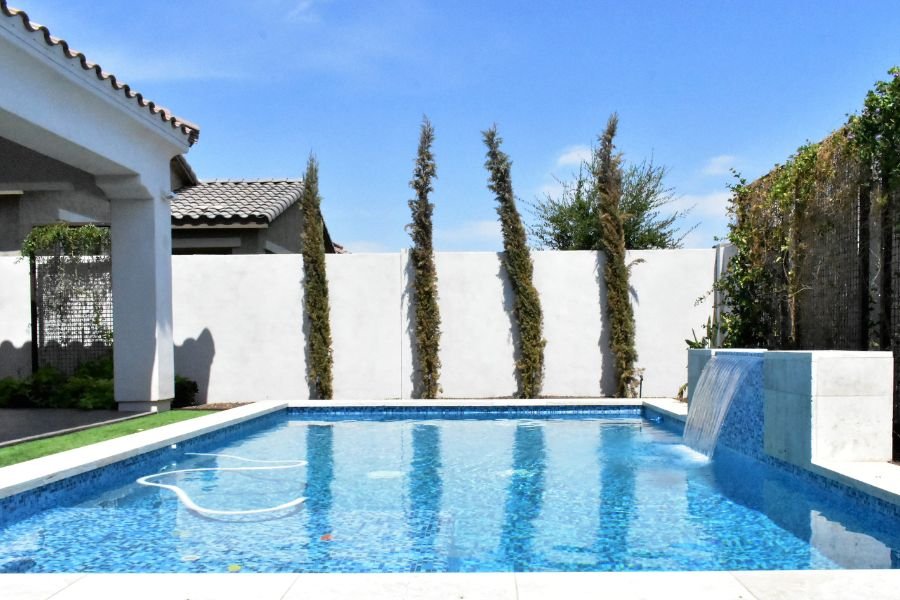
Compact spaces demand that every element earn its place through multiple contributions.
Pool steps that also function as lounging ledges. Seating walls that provide privacy, support planters, and conceal equipment. Spa installations that serve as water features, elevated seating areas, and evening soaking zones. Storage that integrates invisibly into design rather than appearing as afterthought.
This multi-function approach sounds utilitarian until executed with sophistication. Then it becomes invisible—people enjoy benefits without analyzing engineering.
Consider how a raised spa might serve four purposes simultaneously: hot water therapy, elevated water feature adding movement and sound, visual anchor for the overall design, and additional seating when covered during gatherings. One installation, multiple functions, zero wasted opportunity.
This level of integration requires more planning than spreading elements across abundant space. Every element gets considered, assigned roles, optimized for both practical function and aesthetic contribution.
But constraint breeds focus. And focus tends to breed excellence.
Maintenance Realities Favor Smaller Volumes
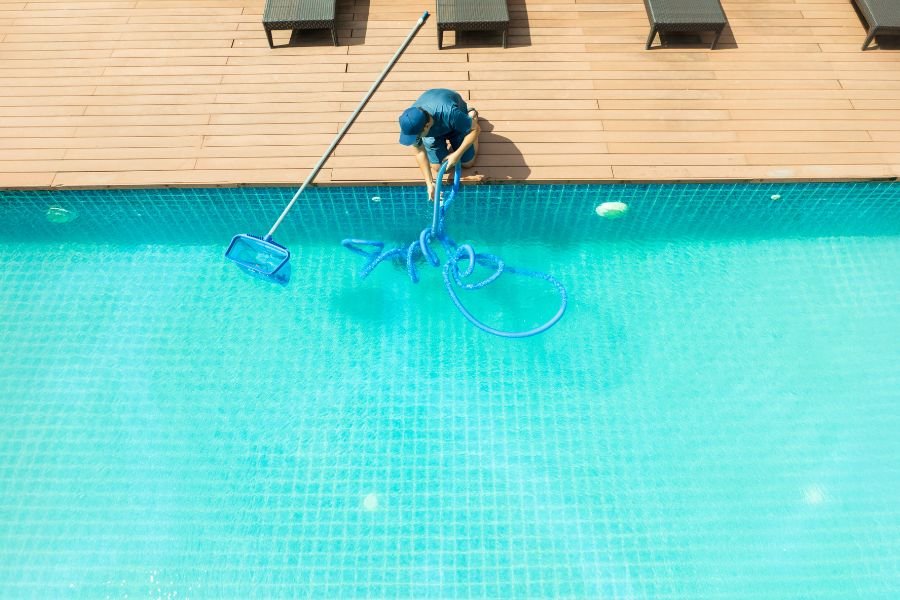
Practical considerations often get overlooked in design discussions, but they profoundly impact long-term satisfaction.
Smaller water volumes mean less chemical balancing, reduced heating costs, lower energy consumption for filtration. Modern automation systems perform exceptionally well in contained spaces where sensors can monitor conditions accurately. Quality materials in compact installations stay cleaner with less effort than basic materials in expansive pools.
Someone who’s maintained a large pool with basic equipment often discovers that a smaller pool with premium systems requires a fraction of the attention while delivering more reliable enjoyment. The relationship between effort and experience improves dramatically.
This matters because pools should enhance life, not create burden. The most beautiful design that demands constant maintenance becomes a source of stress rather than pleasure. Compact spaces with intelligent systems avoid that trap entirely.
Sometimes less genuinely delivers more—not as philosophy but as practical daily reality.
The Psychological Shift
The most significant transformations don’t happen at installation. They happen months later when homeowners stop cataloging what they don’t have and start living in what they do.
The family who considered their Windermere yard “too small” might discover it’s actually perfect for the intimate gatherings they prefer. The couple contemplating a move to gain more space could find themselves falling back in love with their current home. Parents worried about disappointment might watch their children actually use a modest pool consistently rather than occasionally photographing a larger one.
These shifts occur when design serves actual lifestyle rather than abstract ideals. The goal isn’t creating the maximum pool your space can technically accommodate. It’s creating the right pool that genuinely enhances how you want to live.
Square footage becomes nearly irrelevant when experience is optimized.
Moving Beyond Square Footage Thinking
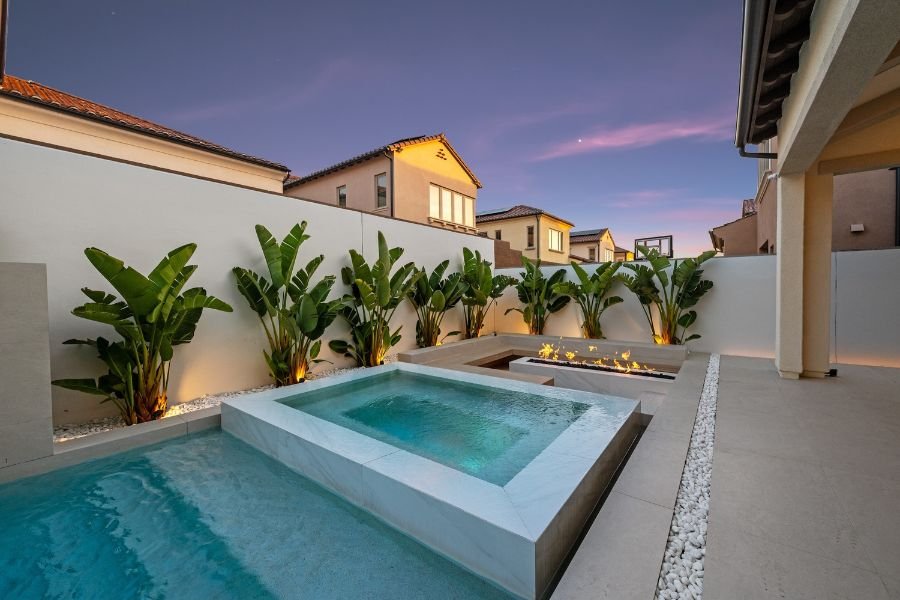
The conventional wisdom that luxury requires large spaces serves primarily to delay decisions and defer enjoyment. It’s a story we tell ourselves that sounds reasonable but doesn’t withstand scrutiny.
The truth is that thoughtful design transforms modest spaces into environments that deliver everything sprawling properties promise—and often do it with more consistent use and genuine enjoyment.
Your yard doesn’t need to be bigger. It needs to be better designed. Those aren’t the same thing, though they’re often confused.
Every compact backyard in Lake Nona, every modest lot in Dr. Phillips, every standard yard in Winter Park holds potential that most conventional thinking never recognizes. The limitation isn’t the space—it’s the vision applied to it.
When you stop measuring success in square footage and start measuring it in how often you actually want to be in your backyard, priorities clarify remarkably fast.
Your Space, Reimagined
Compact yards throughout Winter Garden, Windermere, Dr. Phillips, Lake Nona, Celebration, and Winter Park hold more potential than conventional contractors typically recognize. The question isn’t whether your space can accommodate luxury—it’s whether your designer understands how to create it.
This article reflects established principles in luxury small-space pool design for Central Florida properties. All design approaches reference recognized concepts in spatial planning and outdoor architecture. For personalized consultation specific to your property, contact us at Aqua Elite Pools™ for a free consultation.