
Think about the last time you stood at the edge of a pool, deciding whether to wade in or dive. That moment of hesitation—where your brain rapidly calculates depth, distance, and safety—happens in milliseconds. But when you’re designing a pool for your home in Lake Nona or Winter Garden, those same calculations deserve careful, deliberate thought.
Pool depth isn’t just a number on a blueprint. It’s the invisible architecture that determines whether your family feels confident or cautious, whether your backyard becomes a gathering place or just an expensive feature you occasionally use.
The measurements matter. But they matter because of what they create.
The Shallow End: Where Confidence Begins
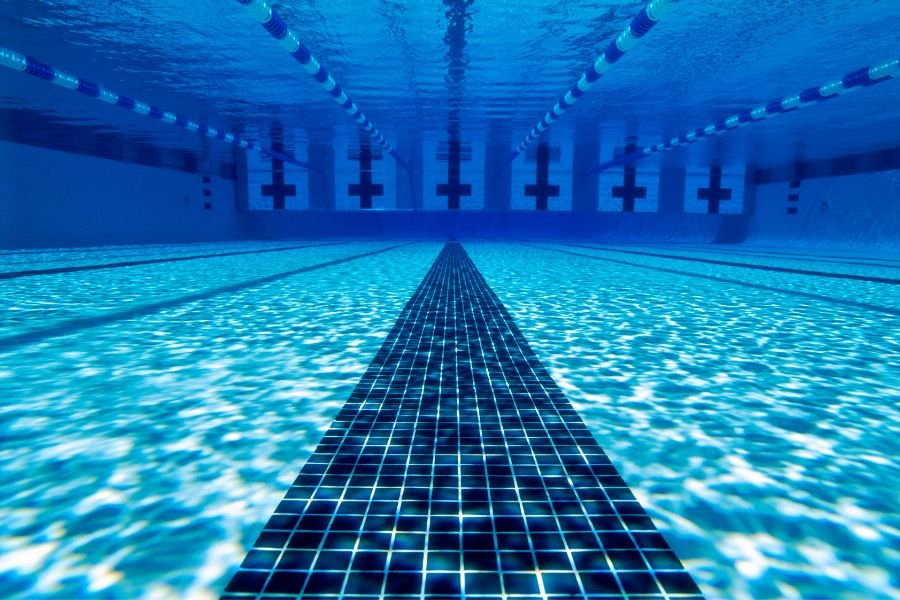
Industry standards recommend shallow end depths between 3.5 and 4 feet for residential pools, and there’s human psychology embedded in those numbers.
Consider what happens at this depth: most adults can stand comfortably with water at chest height. Children who are learning to swim can touch bottom while keeping their heads above water. Elderly family members can move freely without feeling overwhelmed. The water is deep enough to provide genuine swimming experience, yet shallow enough to maintain that crucial sense of control.
According to the Association of Pool & Spa Professionals, the 3.5 to 4-foot range accommodates the widest variety of activities while maintaining safety margins for families with varying swimming abilities.
Imagine a summer afternoon in your Windermere backyard. The shallow end becomes the social center—where conversations happen, where non-swimmers can participate fully, where young children build water confidence through play rather than lessons. This isn’t accidental. It’s geometry working in service of human comfort.
The difference between 3 feet and 4 feet might seem minimal on paper, but in practice, that twelve inches can mean the difference between a space that gets used constantly and one that feels slightly wrong in ways people can’t quite articulate.
Deep End Considerations: Physics and Local Requirements
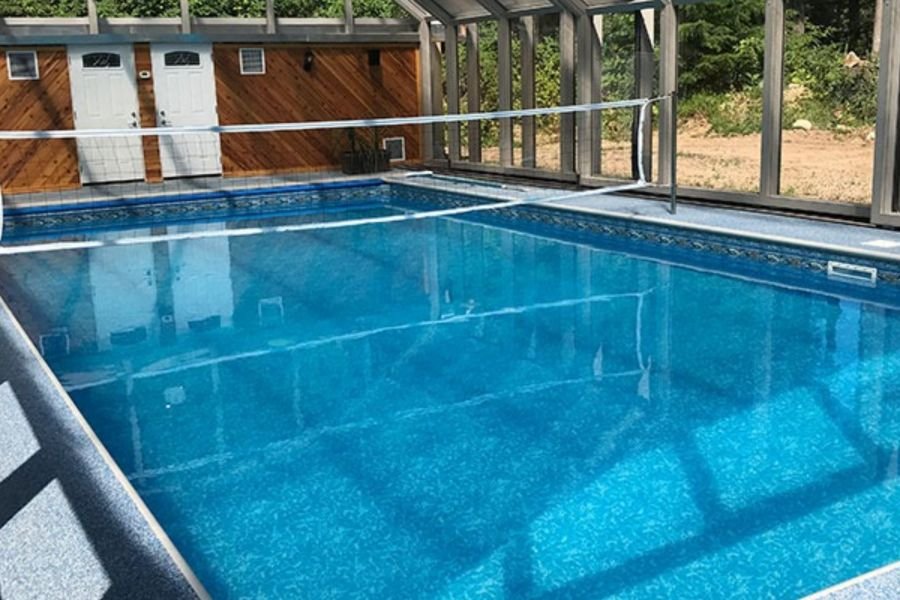
For pools that include diving boards or platforms, Florida building codes and insurance requirements converge on a specific answer: you need depth, and you need it distributed correctly.
The minimum safe diving depth is 8 feet, extending in a radius that accounts for both downward momentum and forward trajectory. But the number alone tells only part of the story.
Current Florida Building Code standards require that diving-depth areas extend at least 16 feet from the board’s edge, with properly marked depth indicators meeting specific visibility and durability requirements for year-round outdoor conditions.
Picture a family in Dr. Phillips planning their pool with teenagers in mind. The deep end isn’t just about meeting minimums—it’s about creating space for diving practice, for underwater swimming, for the kind of pool use that teenage athletes need. An extra foot of depth, bringing the maximum to 9 feet instead of 8, might seem like an expensive detail. But it transforms the pool from merely compliant to genuinely functional for competitive swimming practice.
The deep end also affects the pool’s overall character. A pool with significant depth variation—say, from 3.5 feet to 8.5 feet—reads as a serious swimming pool. A pool with minimal depth change feels more like a wading pool, regardless of its actual measurements.
Transition Zones: The Slope Nobody Thinks About Until It Matters
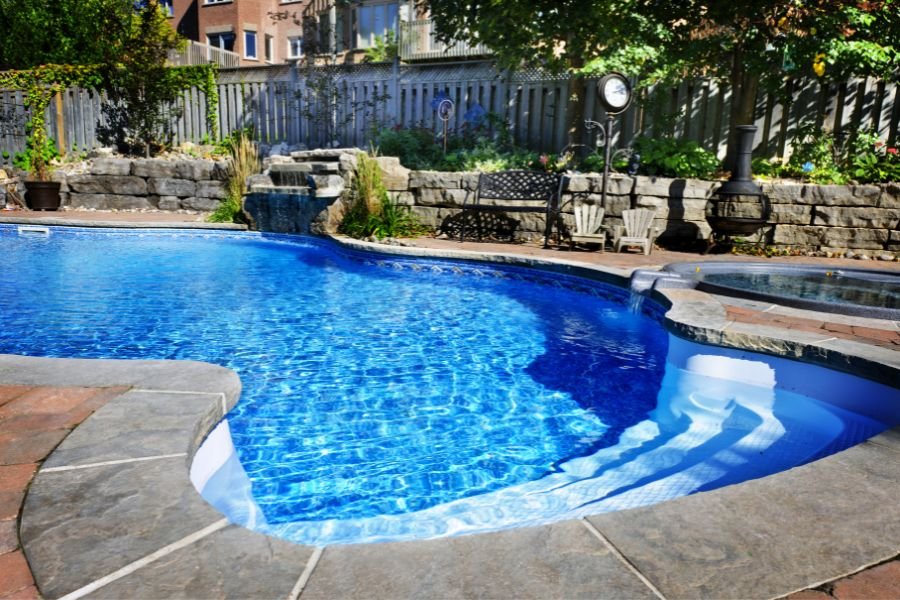
The gradient between shallow and deep carries more importance than most homeowners initially realize.
Engineering best practices suggest a slope of approximately one foot of depth for every seven feet of horizontal distance. This creates a transition that’s gentle enough for comfortable movement while distinct enough to create clearly defined zones.
Research from the National Swimming Pool Foundation indicates that gradual depth transitions reduce accidents and improve pool usability across age groups, particularly in residential settings where users include both strong and weak swimmers.
Consider how your family might actually use a pool in Celebration or Winter Park. If you’re hosting extended family gatherings, elderly relatives need to navigate from entry to deeper water without encountering sudden drop-offs that could cause panic or falls. If you have teenagers who’ll use the pool for actual lap swimming, they need enough transition length to execute proper turns without hitting shallow water unexpectedly.
The transition zone is where thoughtful design becomes invisible. When it’s done well, nobody notices it. When it’s done poorly, everyone feels it—that awkward moment where you’re suddenly too deep or not deep enough, where the pool’s geometry fights against natural movement patterns.
Some Lake Nona families incorporate underwater benches at the 4-foot mark within the transition zone—creating a resting spot that connects shallow and deep areas while providing seating for adults supervising children in both sections. It’s a detail that costs relatively little during construction but adds significant functionality for decades.
Sun Shelves: The New Standard in Residential Design
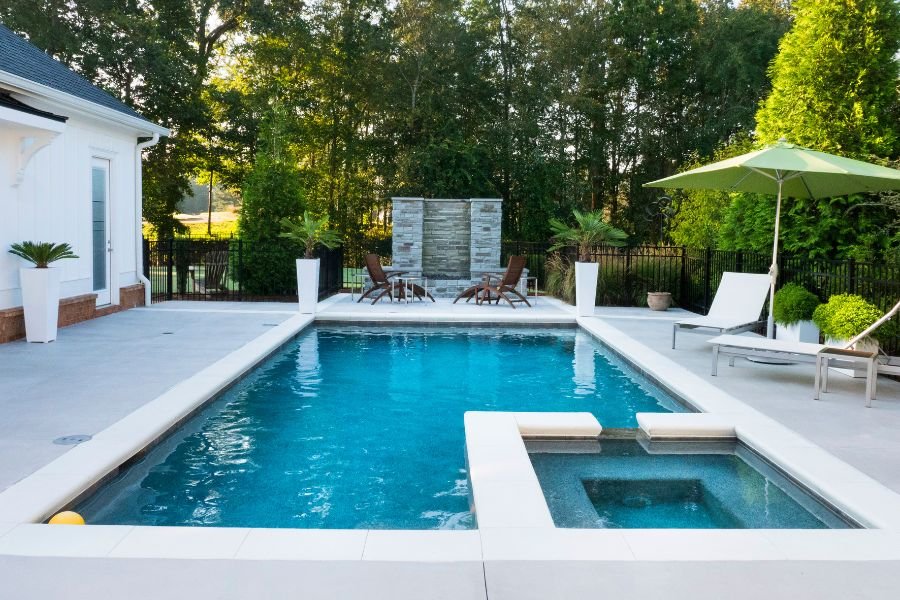
The modern residential pool has evolved beyond simple rectangular depths. Sun shelves—also called tanning ledges or Baja benches—have become expected features in premium Central Florida designs.
These shallow platforms typically range from 6 to 12 inches deep, running along one edge of the pool. Market analysis suggests sun shelves now appear in over 60% of new residential pools priced above $75,000, particularly in neighborhoods like Windermere and Winter Garden where outdoor living space receives premium attention.
But popularity aside, sun shelves serve genuine functional purposes.
At 6 to 12 inches, water is shallow enough that young children can splash and play with minimal supervision risk. Non-swimmers can read, relax, and socialize while technically being “in” the pool. Even family pets can wade in to cool off without the panic that deeper water triggers.
The sun shelf occupies an interesting psychological space—it’s water that doesn’t require swimming. For families with members who have varying comfort levels with water, this creates an inclusion zone where everyone can participate in pool activities without anyone feeling pressured to swim.
Think about a typical weekend afternoon in your Winter Park backyard. The sun shelf becomes the reading zone, the conversation zone, the place where you can be present with family using the pool without committing to actual swimming. That level of flexibility—that removal of the all-or-nothing quality that traditional pool depths create—explains why sun shelves have moved from luxury feature to standard expectation.
Florida-Specific Requirements: Climate and Code
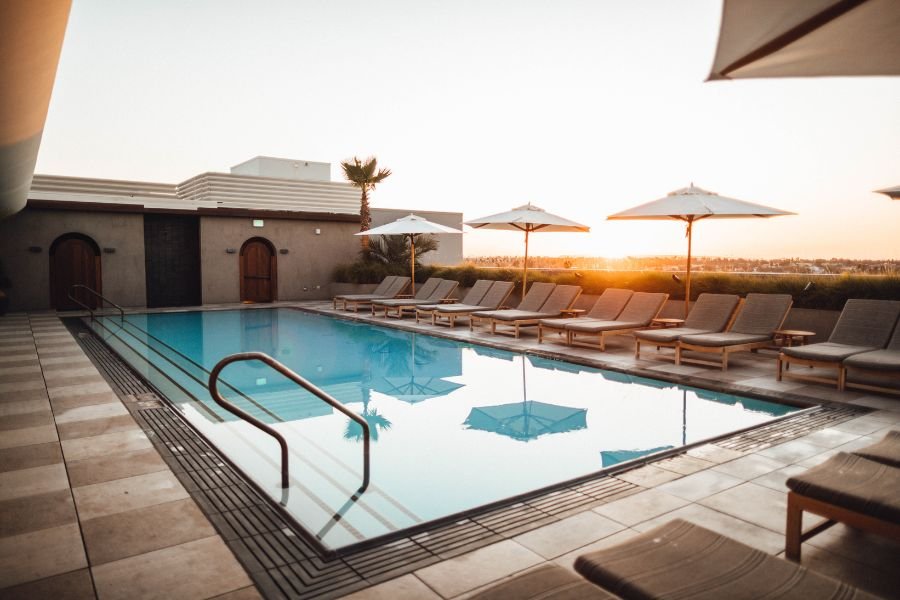
Building in Central Florida means accounting for year-round pool use and specific regulatory requirements developed through decades of experience with residential pool safety.
The Florida Building Code mandates visible depth markers at maximum and minimum points, with approved safety signage meeting specific visibility and durability requirements designed for our intense sun and humidity. Local jurisdictions in Orange and Seminole counties may add requirements based on their own community standards and historical data.
Beyond code compliance, Florida pools benefit from depth planning that acknowledges eleven months of annual use. A pool designed primarily for summer swimming might include depths that feel excessive during cooler months when families are wading and socializing more than doing laps. Conversely, a pool designed only for warm-weather comfort might lack the depth needed for the kind of active swimming that Central Florida’s climate makes possible most of the year.
Consider seasonal usage patterns when planning depths. Many Dr. Phillips and Celebration families find that incorporating varied depths—from 6-inch sun shelves to 8-foot deep ends—creates year-round utility rather than a space that’s optimal only during peak heat.
The Engineering Behind the Experience
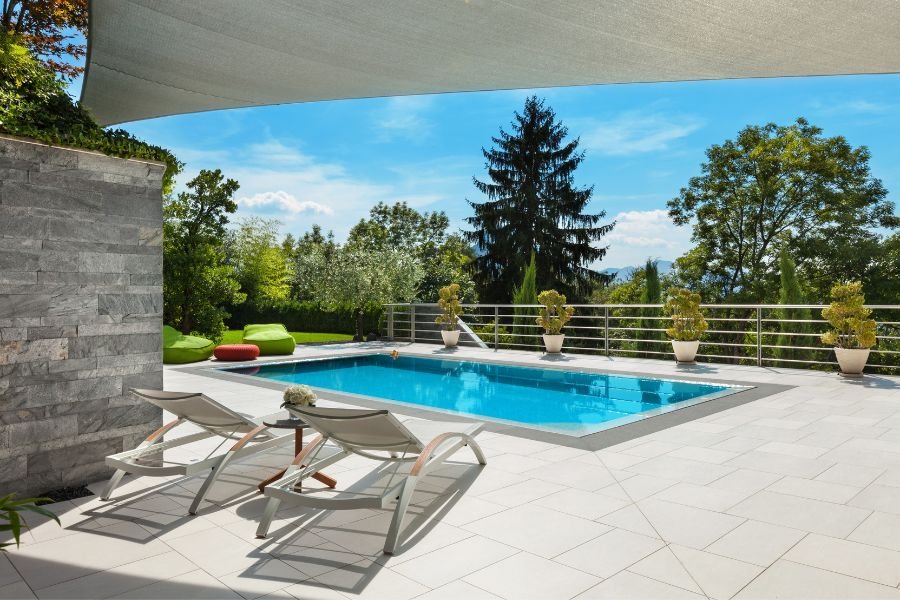
Here’s what the technical specifications don’t capture: pool depth determines behavior.
Shallow areas create social zones. Deep areas create activity zones. Transition slopes create confidence zones. Sun shelves create relaxation zones. Each depth measurement is really a decision about what kind of experiences you’re architecting into your property.
When homeowners ask about the “right” depth for diving, they’re actually asking whether their backyard will become the place their children bring friends. When they ask about shallow end specifications, they’re wondering if aging parents will feel comfortable visiting. When they ask about slopes and transitions, they’re trying to understand if they’re creating something that brings people together or just a water feature that looks impressive in listing photos.
The measurements matter because they create invisible boundaries between possible and impossible, comfortable and uncomfortable, memorable and forgettable.
Proper depth planning isn’t about perfection. It’s about intention. It’s about understanding that 3.5 feet versus 4 feet, or 8 feet versus 9 feet, or a 6-inch sun shelf versus a 12-inch one—these aren’t trivial distinctions. They’re decisions about how water will interact with your family’s life.
Planning for Your Reality
The best pool depth configuration for your Lake Nona or Windermere property depends on honest assessment of how you’ll actually use the space.
Do you have young children now who’ll be teenagers in five years? Plan for both current supervision needs and future athletic use. Do you entertain frequently, hosting guests with varying swimming abilities? Incorporate multiple depth zones that let everyone participate comfortably. Do you envision using the pool primarily for relaxation rather than exercise? Consider generous shallow areas and sun shelves rather than maximizing deep-end space.
The technical requirements—code minimums, safety standards, insurance specifications—establish the baseline. But the real planning happens when you move beyond compliance to intention, when you ask not just “what’s legal” but “what’s right for how we live.”
Depth is destiny in pool design. Those measurements you choose during planning will shape every swim, every gathering, every summer afternoon for the next twenty years. Choose them like they matter. Because they do.
If you’re wondering how to create a backyard pool that’s both stunning and safe, you’re asking exactly the right question. At Aqua Elite Pools™ we can help you integrate comprehensive protection without compromise. Request a consultation and let’s have an honest conversation about what matters most to your family — then build something that delivers on every level.