
By Thiago Machado Co-founder of Aqua Elite Pools™ with 10+ years of experience as a pool constructor
There’s a question that surfaces in nearly every serious pool planning conversation: “Which type should we actually get?”
It’s rarely just about construction methods or materials. The question carries weight because it’s really about the investment being made in future memories—birthday parties not yet planned, summer mornings not yet lived, family gatherings not yet hosted.
The internet provides abundant opinions but fewer honest frameworks for making this decision based on what actually matters for your specific situation. Let’s change that.
The Three Contenders: What You're Really Choosing Between
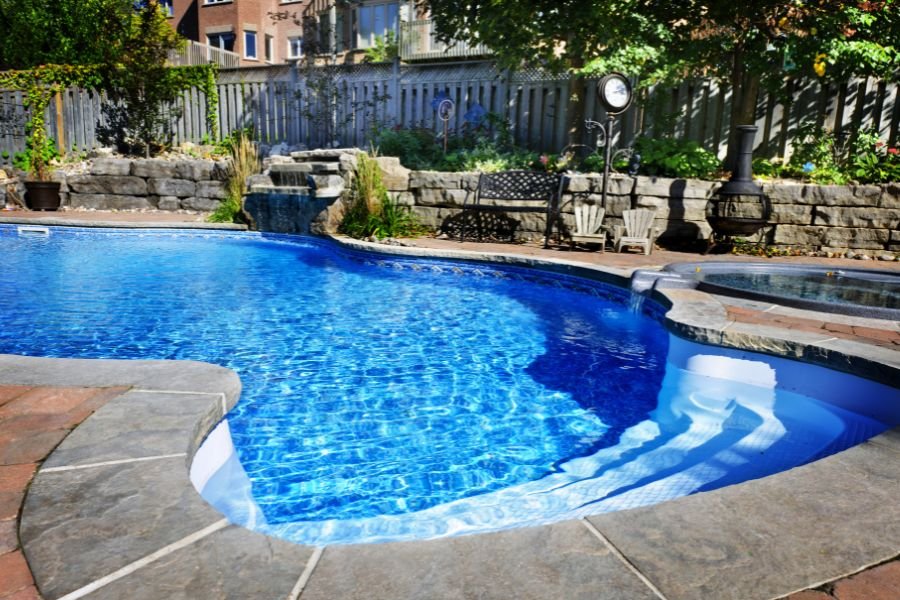
Comparing pool types means understanding three fundamentally different philosophies about construction, permanence, and customization.
Gunite pools are built entirely on-site using steel rebar frameworks sprayed with concrete. They’re shaped to exact specifications and finished with chosen materials. The result is permanent, substantial, and infinitely flexible in design.
Fiberglass pools arrive as single manufactured shells, lowered into excavated spaces by crane. They represent proven designs with high quality standards and remarkably quick installation timelines.
Vinyl liner pools use flexible liners stretched over frame structures. They offer pool ownership at more accessible price points, though with trade-offs in longevity and customization.
Each serves certain priorities beautifully while being less ideal for others. Understanding which aligns with actual needs determines long-term satisfaction.
The Customization Spectrum: Standard Shapes vs. Sculpted Vision
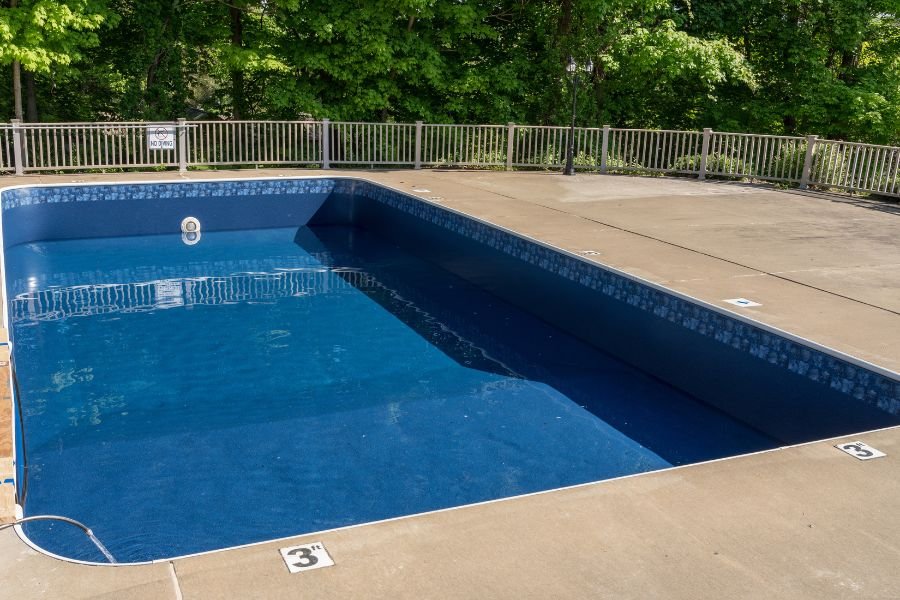
The customization question reveals an interesting pattern: most families overestimate how much they need, while others absolutely require maximum flexibility.
Fiberglass manufacturers offer dozens of attractive pre-designed shapes—far beyond basic rectangles. Modern options include integrated spa areas, tanning ledges, and sophisticated curved designs. For standard rectangular backyards in neighborhoods like Winter Garden or Dr. Phillips and classic aesthetic preferences, these proven designs satisfy most requirements elegantly.
Gunite becomes essential when vision includes pools wrapping around existing architecture, matching specific home design styles, incorporating vanishing edges for view properties, or creating unique shapes impossible to manufacture as single shells. In Windermere’s lakefront properties or Winter Park’s historic homes with distinctive architecture, this customization capability often justifies the investment.
According to consistent findings from the Association of Pool & Spa Professionals, custom gunite pools maintain higher property values in luxury markets precisely because they’re perceived as permanent architectural features rather than installed amenities.
Vinyl pools offer moderate customization within fabrication parameters—more flexible than fiberglass, less than gunite.
The practical reality? Families uncertain about customization needs typically don’t require full flexibility. Those certain they need it shouldn’t compromise.
Durability and Longevity: Generational Thinking
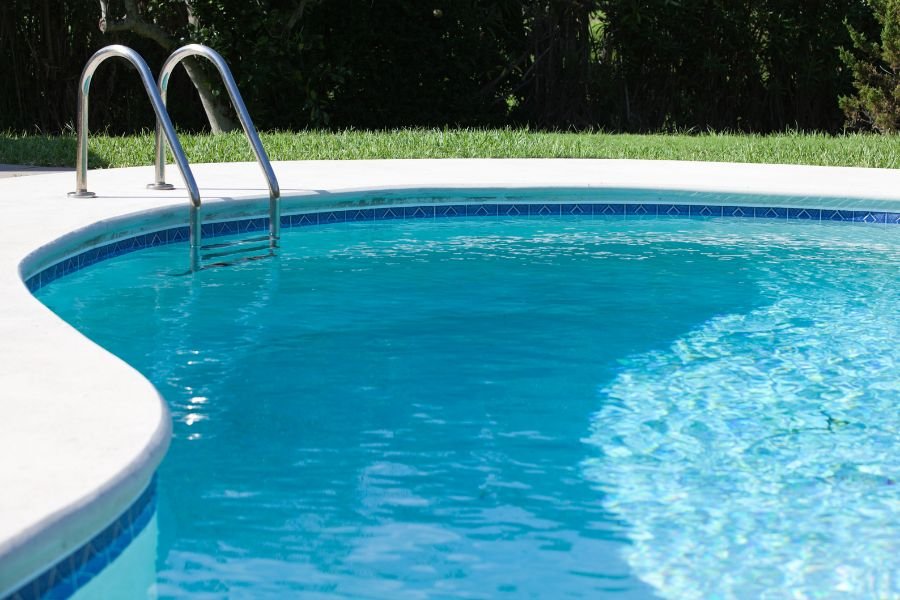
Consider durability in decades rather than years.
Properly constructed gunite pools can last 50+ years with appropriate maintenance and resurfacing every 10-15 years. The concrete shell itself is essentially permanent—these are structures built to outlive mortgages and remain functional across generations.
Fiberglass pools also demonstrate impressive longevity. Quality gelcoat surfaces last 25-30 years, and structural integrity of well-manufactured fiberglass remains excellent for decades. Pool industry research indicates that fiberglass shells maintain structural soundness long-term, though surface refinishing may eventually become necessary.
The consideration? Transportation and installation require experienced crews to prevent stress cracks during the crane-placement process. With proper installation, this risk is minimal.
Vinyl liners typically last 7-12 years before requiring replacement. This isn’t inherently problematic—replacement costs have decreased—but represents a recurring expense affecting long-term ownership calculations.
Timeline perspective matters significantly. Building in a forever home in established neighborhoods like Windermere or Winter Garden where multiple generations will swim changes the durability equation considerably.
Installation Timeline: Patience vs. Speed
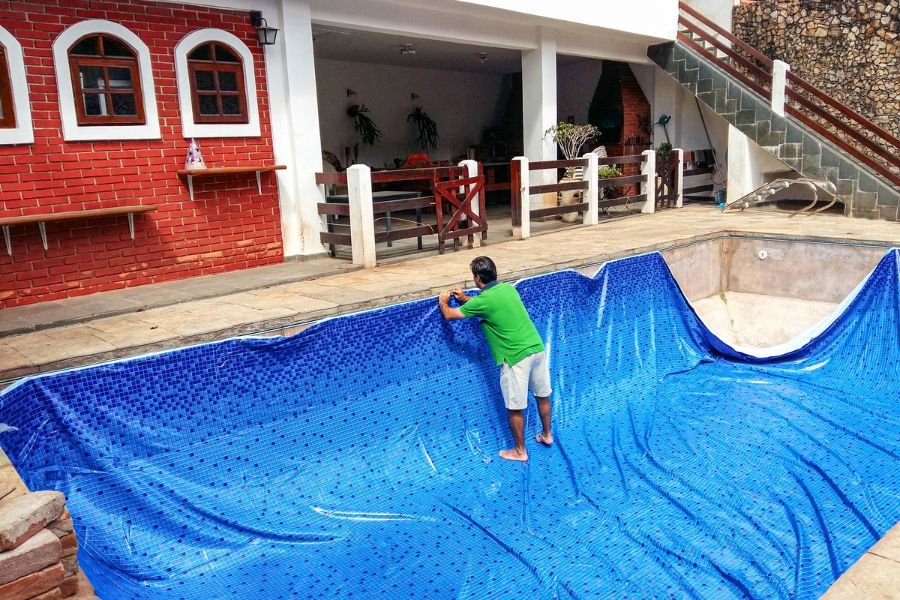
Installation speed varies dramatically between types.
Fiberglass installation can complete in as little as one week under ideal conditions. Shell arrival, excavation, crane placement, plumbing connections, backfilling—suddenly there’s a functioning pool. For families in communities like Dr. Phillips working with specific timeline pressures for summer entertaining, fiberglass delivers on speed.
Gunite requires patience. Excavation, steel framework, gunite application, plumbing and electrical systems, tile setting, interior finishing—the process typically spans 8-12 weeks. Construction timelines vary based on complexity, weather conditions, and custom feature integration.
That’s months of construction activity, gradual progress, and multiple quality control stages. It’s also months of customization opportunities and watching something substantial being crafted specifically for the property. Vinyl pools typically install in 2-4 weeks depending on complexity and site-specific factors.
The question isn’t which timeline is objectively “better”—it’s which your situation can accommodate and which pace matches planning preferences.
Aesthetic Possibilities: Morning Coffee Views
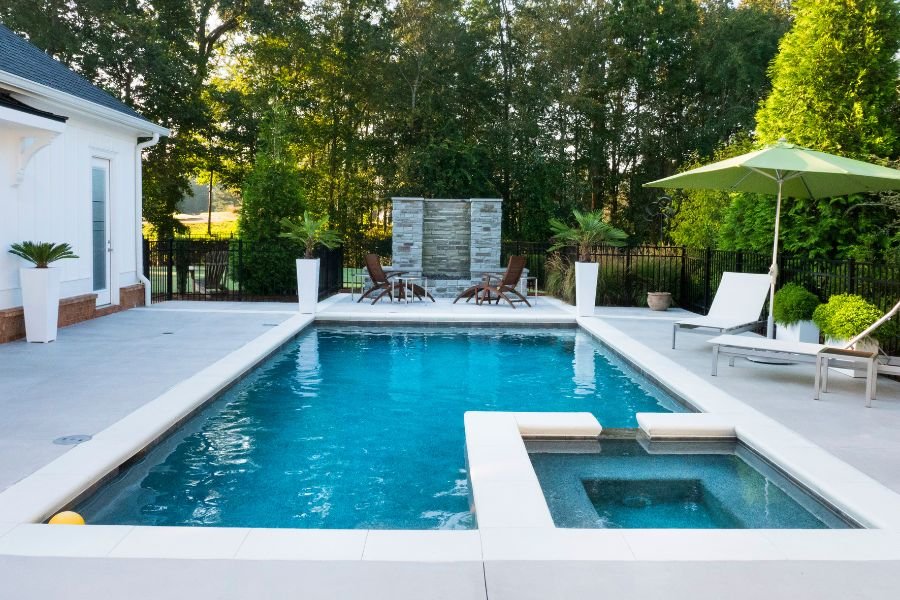
Imagine having coffee on your patio as morning sun catches the water. What aesthetic experience matters most?
Gunite offers unmatched visual flexibility. Finishes include classic white plaster, exposed aggregate, glass tiles, natural stone coping, or increasingly popular pebble finishes. Visual possibilities extend as far as budget and imagination allow. Each finish creates distinctly different character—Mediterranean elegance popular in Winter Park, modern minimalism favored in Lake Nona, or tropical resort aesthetics common throughout Orlando suburbs.
Surface textures catch light differently throughout the day, create subtle color variations, feel substantial underfoot.
Fiberglass pools have improved dramatically in appearance. Modern gelcoat finishes offer attractive colors and textures mimicking more expensive finishes. Contemporary manufacturing techniques have expanded aesthetic options significantly, though they remain more limited than custom gunite applications.
The trade-off? Choosing from available options rather than creating exactly what’s envisioned. For many families in Winter Garden and surrounding areas, available options are genuinely beautiful. For specific architectural visions, constraints may feel limiting.
Vinyl liners now feature patterns and colors far beyond decades-old basic blue. But visual quality can’t quite match the depth and richness of gunite or solid appearance of fiberglass.
Some prioritize aesthetic nuances intensely. Others focus elsewhere. Neither perspective is wrong.
Maintenance Reality: The Ongoing Relationship
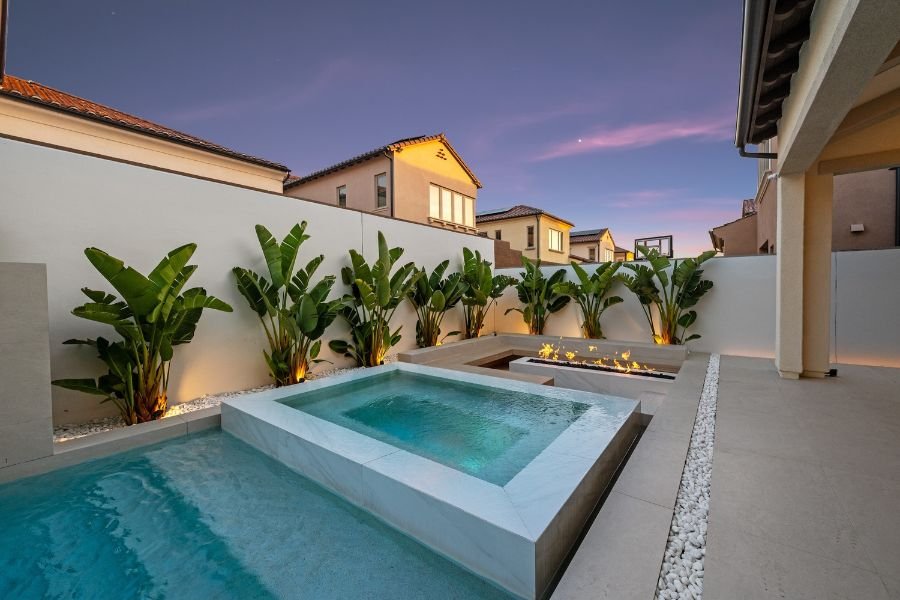
Every pool requires maintenance. The type and intensity varies significantly.
Fiberglass pools are genuinely easier to maintain. Smooth gelcoat surfaces resist algae growth, require fewer chemicals, and clean more easily than textured gunite finishes. Industry studies consistently show fiberglass owners report spending less time and money on routine maintenance.
This isn’t marketing—it’s physics. Smooth non-porous surfaces simply don’t harbor microscopic algae colonies that establish themselves in slightly more porous plaster or aggregate finishes.
Gunite pools require more diligent chemical balancing, more frequent brushing, and occasional acid washing to remove buildup and staining. Proper chemical maintenance extends plaster finish lifespan significantly, making routine care essential for long-term appearance.
Whether this matters depends on perspective. Busy families viewing pool maintenance as burden might prioritize ease. Those who enjoy maintenance rituals or hire weekly service anyway—common practice in neighborhoods like Windermere and Dr. Phillips—find it largely irrelevant.
Vinyl requires careful attention avoiding punctures or tears, with liner seams needing periodic inspection. Chemical balance is critical—aggressive chemicals damage liners prematurely.
Maintenance personality matters: meticulous or laid-back? Enjoying process or resenting obligation?
The Investment Analysis: Total Cost of Ownership
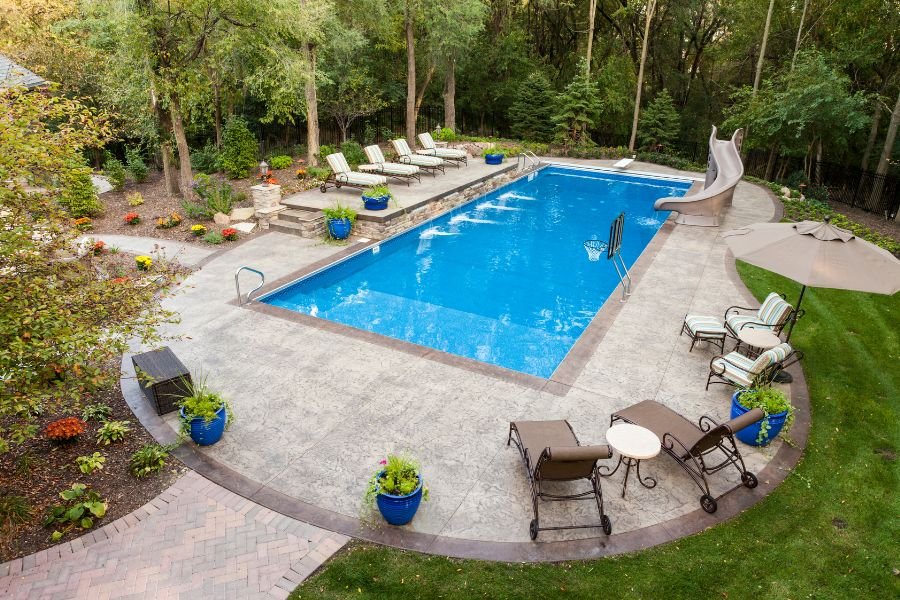
Let’s be direct about money.
Initial installation costs typically rank from lowest to highest: vinyl, fiberglass, gunite. But initial cost tells only partial stories.
Vinyl pools may cost $25,000-40,000 to install but require liner replacement every 7-12 years at $4,000-7,000 per replacement. Over 30 years, that’s potentially 2-3 additional major expenses totaling $10,000-20,000+.
Fiberglass pools typically range $40,000-70,000 for installation with minimal major expenses for decades if properly maintained. Higher upfront cost buys decades of relative freedom from major renovation expenses.
Gunite pools range from $50,000 to well over $150,000+ depending on size, features, and finishes. Resurfacing every 10-15 years costs $5,000-15,000 depending on finish selected. Over 30 years, that’s 2-3 resurfacing cycles.
The crucial consideration: real estate professionals consistently note that custom gunite pools add more value to high-end properties than manufactured fiberglass pools, particularly in luxury markets where buyers expect custom features.
For properties in the $450,000-600,000 range in neighborhoods like Lake Nona or Winter Garden, this matters. For $800,000-2 million+ properties in areas like Windermere, Winter Park, or Dr. Phillips, it matters even more significantly.
The calculation isn’t purely financial—it’s about what’s being optimized for: lowest total cost? Lowest maintenance hassle? Maximum property value? Most precisely matched to vision?
The Climate Factor: Florida-Specific Considerations
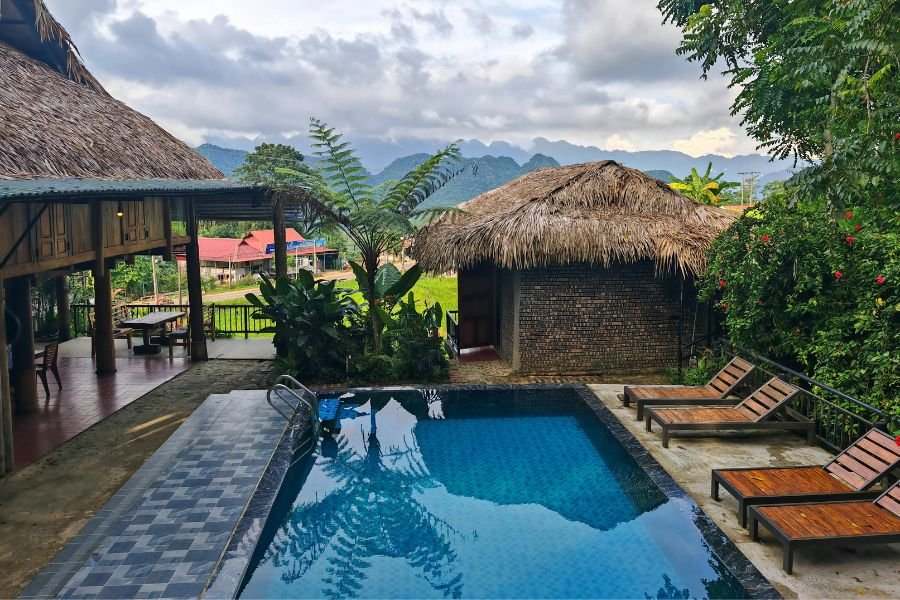
Many comparison guides ignore local climate effects on the equation.
Central Florida’s climate presents specific characteristics affecting pool performance. Year-round swimming season means investments get utilized 12 months annually, creating remarkably low cost-per-swim ratios compared to northern climates where pools sit unused half the year.
Intense UV exposure and heat can accelerate vinyl liner degradation—Florida homeowners often experience the lower end of the 7-12 year lifespan range. Many Orlando-area pool companies serving Winter Garden, Windermere, and Dr. Phillips specialize in vinyl liner replacement with refined processes.
Fiberglass holds up excellently in Florida’s climate. Gelcoat surfaces are UV-resistant, and structural integrity isn’t compromised by freeze-thaw cycles problematic in northern regions.
Gunite thrives in Florida. Stable ground conditions, absence of frost heaving, and warm temperatures ideal for concrete curing make Central Florida optimal for gunite construction. Resurfacing needs are typically driven more by chemical wear than climate damage.
The subtropical environment also makes pool heating more affordable—extending effective swimming seasons to genuinely year-round use with minimal heating costs.
Decision Framework: Finding Your Answer
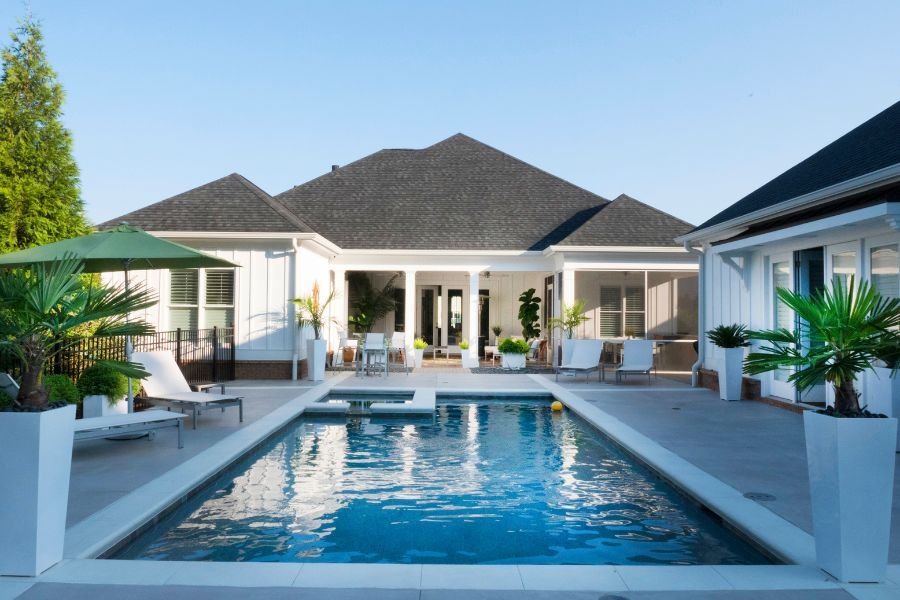
Patterns emerge in which families report highest long-term satisfaction with each option.
Fiberglass tends to satisfy those who:
- Want quick installation (weeks, not months)
- Prioritize low-maintenance lifestyles
- Are comfortable with proven designs rather than custom shapes
- Value “install and forget it” philosophy
- Have relatively standard backyards and aesthetic preferences
Gunite makes sense for those who:
- Have specific architectural visions requiring customization
- View pools as permanent architectural features
- Are building in high-value properties where custom features matter
- Don’t mind longer construction timelines
- Want flexibility in finish materials and future renovation options
Vinyl works for those who:
- Need to optimize for lowest initial investment
- Have relatively simple shape preferences
- Are comfortable with periodic liner replacement as ownership aspect
- Don’t prioritize long-term property value impact from pools specifically
These represent observations about alignment between product characteristics and priority structures.
The Unasked Question
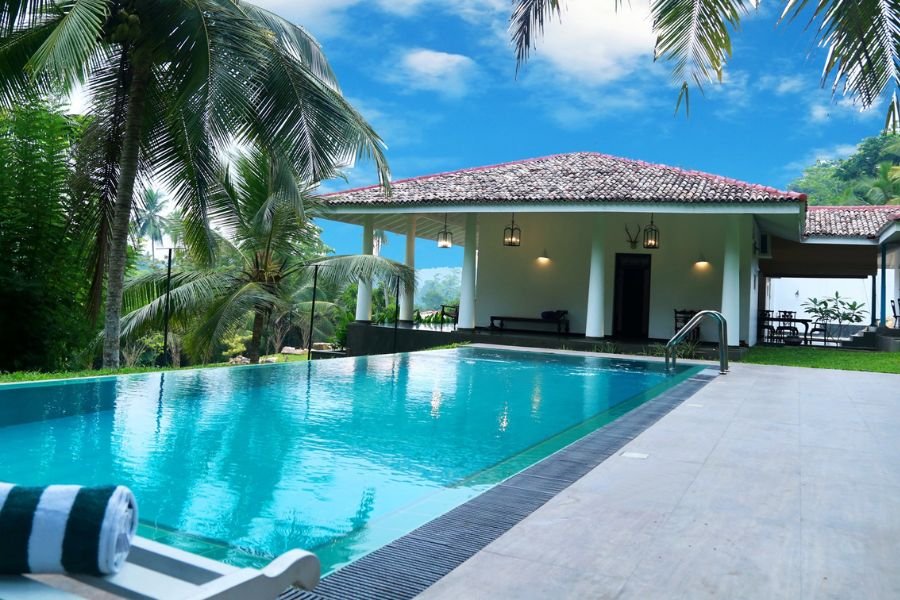
Consider what might be regretted five years from now—not the financial calculation or maintenance schedule specifically, but the bigger picture.
Will choosing the faster option create regret when the specific envisioned shape was compromised? Or will choosing the longer construction process create regret when an entire summer of swimming was missed?
Will saving money upfront create regret when writing checks for the third liner replacement? Or will spending extra for customization create regret when realizing it wasn’t actually needed?
These aren’t rhetorical questions. They’re prompts for genuine reflection about what matters most for specific families in specific situations.
Making Your Decision
There’s no universally “best” pool type. There’s only the best pool type for you.
If speed and simplicity are valued, fiberglass provides both without meaningful compromise on quality or appearance for most families. If property or vision requires customization, gunite provides infinite flexibility and permanent quality. If budget is the primary constraint, vinyl delivers the pool ownership experience at the lowest entry point.
What’s clear from industry patterns: families who make this decision based on actual priorities—not neighbors’ choices, not internet’s loudest opinions, not lowest quotes received—tend to remain satisfied with decisions for decades.
Whether you’re building in the established neighborhoods of Winter Park, the growing communities of Winter Garden, the lakefront properties of Windermere, or the family-friendly streets of Dr. Phillips, the right pool isn’t the one that’s objectively “best” according to universal standards. It’s the one matching what’s actually needed, serving how families actually live, and aligning with what’s valued most.
That pool—which ever type it turns out to be—becomes where children learn to swim, where summer evenings stretch into memory, where the sound of splashing water becomes the soundtrack of home.
And that’s worth getting right.