
By Henri Pera, co-founder of Aqua Elite Pools.
The sun was relentless that Tuesday afternoon when I drove through Winter Park, past houses that cost more than most people earn in a lifetime. I wasn’t looking at the houses, though. I was watching the water.
Every third yard had one—a shimmering rectangle of blue, pumps humming away like miniature factories, chemicals mixing in secret underground rooms. Backyard pools in Winter Garden, Lake Nona, and Windermere that consumed more electricity in a month than a small family used in six. Beautiful, yes. But hungry. Always hungry.
That’s when something shifted in how I understood luxury.
The Uncomfortable Truth Nobody Mentions at Cocktail Parties
Here’s what the industry rarely discusses openly: traditional pool systems consume extraordinary resources. The average pool pump uses as much electricity as running your air conditioner continuously. The chlorine evaporating into the Orlando sky? Industrial-strength chemicals in residential concentrations.
Industry data shows pools represent one of the largest single energy consumers in Florida homes with backyard water features. Yet few homeowners in Dr. Phillips or Celebration receive transparent information about consumption patterns during the buying process.
I learned this from Thiago Machado, who’s spent 15 years building pools across Central Florida. “People think we’re just digging holes and filling them with water,” he told me over coffee. “But what we’re really doing is creating ecosystems. The question is whether those ecosystems work with nature or against it.” The distinction matters more than you’d think.
What Makes Water Sustainable (Besides Good Intentions)
Eco-friendly pool design isn’t about sacrifice. It’s about intelligence. It’s understanding that the same Florida sun beating down on backyards throughout Windermere and Lake Nona—the one making homeowners dream of cool water in the first place—can power every pump, every filter, every light in that pool.
Solar heating systems have evolved dramatically from earlier generations. Modern solar collectors integrate seamlessly with contemporary architecture while delivering measurable returns. Variable-speed pumps—the kind that adjust their power based on actual need rather than running full throttle constantly—can reduce energy consumption by up to 75% according to Department of Energy data.
LED lighting has transformed from expensive novelty to standard practice, using 80% less energy than traditional pool lights while lasting five times longer. But here’s what really matters: these aren’t compromises. They’re upgrades. The water clarity improves. The systems run quieter. The maintenance simplifies.
You’re not giving up anything except the guilt.
The Revolution Happening Across Central Florida
Natural filtration systems represent the most radical shift in pool design since chemical treatment became standard. Instead of chemicals doing all the work, these systems use biological filtration—beneficial bacteria, plants, even specific types of algae—to maintain water clarity.
Imagine a regeneration zone that functions like a water garden, with native Florida plants creating a buffer between the traditional pool and what essentially becomes a natural spring. The aesthetic resembles landscape art more than mechanical infrastructure, yet the biological processes maintain crystalline water without harsh chemical additions.
No chlorine smell. No red eyes. No chemicals evaporating into air that families breathe during summer afternoons. The initial investment runs approximately 20% higher than conventional systems, but monthly operating costs drop dramatically—often to near zero for chemical expenses.
That calculation becomes compelling when considering 20-year ownership timelines common in Winter Garden and Dr. Phillips neighborhoods.
Saltwater Isn't Just for the Ocean Anymore
The saltwater revolution happened quietly in communities from Celebration to Winter Park. One generation had chlorine pools; the next adopted salt systems as the sophisticated choice. But here’s what actually changed: saltwater chlorination—where salt cells generate chlorine naturally from dissolved salt—eliminates harsh chemical additions while creating water that feels softer, looks clearer, and requires dramatically less maintenance.
The salt concentration registers lower than human tears. You won’t taste it. Children won’t emerge looking pickled. But the system maintains consistent sanitation, day after day, converting salt to chlorine and back again in an endless, elegant cycle.
Materials matter too. Natural stone coping. Recycled glass tiles that shimmer like Caribbean water. Decking made from reclaimed wood or permeable pavers that let rainwater return to the aquifer instead of rushing into storm drains. These aren’t just eco-friendly choices—they’re materials that age beautifully, that develop character, that make pools look better in ten years than on installation day.
The Native Landscaping Secret
Every sprinkler system in Orlando fights a quiet war against climate. Traditional pool landscaping—those thirsty exotic plants, that perfect carpet of St. Augustine grass—demands constant irrigation, chemical fertilizers, and vigilant pest control throughout Lake Nona and Windermere properties. It’s expensive. It’s exhausting. And it’s completely unnecessary.
Native Florida plants evolved for this climate. Coontie palms. Simpson’s stopper. Beach sunflower. Muhly grass that turns pink in fall. They don’t just survive without irrigation—they thrive. Their root systems prevent erosion, their flowers attract pollinators, and they create natural privacy screens that improve with time instead of requiring constant pruning.
The conceptual shift matters: designing pool areas as “native habitats with swimming features” rather than “pools with some plants around them.” Because when you work with the land instead of against it, maintenance costs plummet while beauty compounds across seasons.
Water Conservation That Actually Works
Here’s the paradox of Florida pools: we live in a state surrounded by water but increasingly concerned about water consumption. Pool covers reduce evaporation by up to 95%. In Orlando’s climate, that translates to thousands of gallons saved monthly. Yet adoption remained low because early covers were cumbersome and aesthetically unappealing.
Automatic covers changed everything. Press a button, and your pool seals itself. The water stays warmer, cleaner, and actually present instead of evaporating into the atmosphere. The covers also block debris, which means less filter runtime, which means less energy consumption. One change cascades into multiple benefits.
Rainwater harvesting systems capture roof runoff and store it for pool refilling and landscape irrigation. Smart controllers monitor weather patterns and adjust watering schedules automatically. Drip irrigation delivers water directly to root zones instead of broadcasting it into the air. These aren’t experimental technologies anymore—they’re proven systems that pay for themselves while protecting resources.
The Real Cost of Doing Nothing
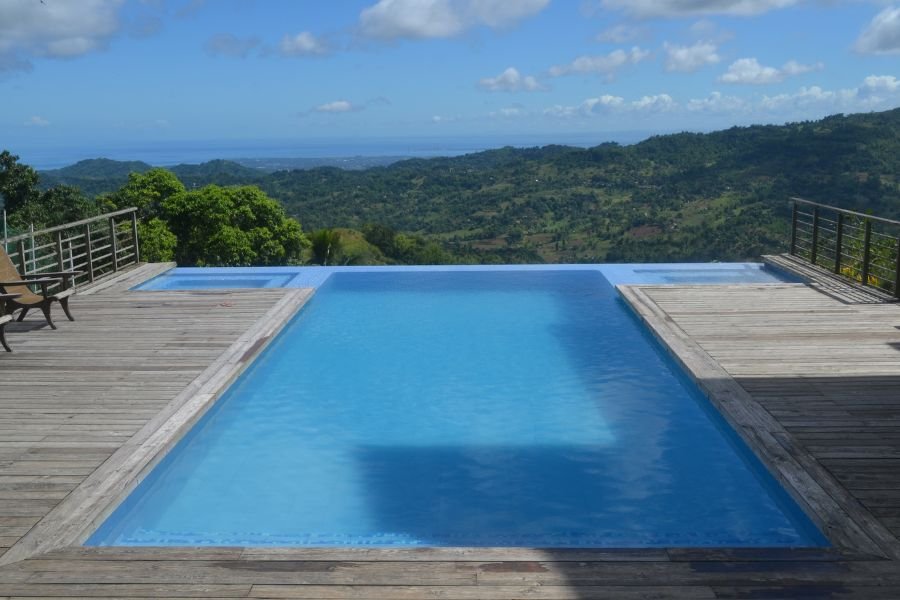
Traditional pools lose their appeal as operating realities set in. The constant chemical balancing becomes tedious. The utility bills arrive with depressing regularity. The environmental impact creates cognitive dissonance during dinner conversations about conservation.
But eco-friendly pool design compounds in the opposite direction. Energy costs drop permanently. Maintenance becomes simpler. Water consumption falls. And that initial investment—the 15-20% premium for sustainable systems—typically breaks even within 3-5 years while adding measurable value to properties throughout Winter Park and Celebration.
Because here’s what real estate data confirms: buyers in Lake Nona, Winter Garden, and Dr. Phillips are specifically seeking sustainable features. Not as nice-to-have amenities, but as non-negotiables. The market has shifted. Eco-friendly pools aren’t alternative anymore—they’re aspirational.
Building It Right From the Start
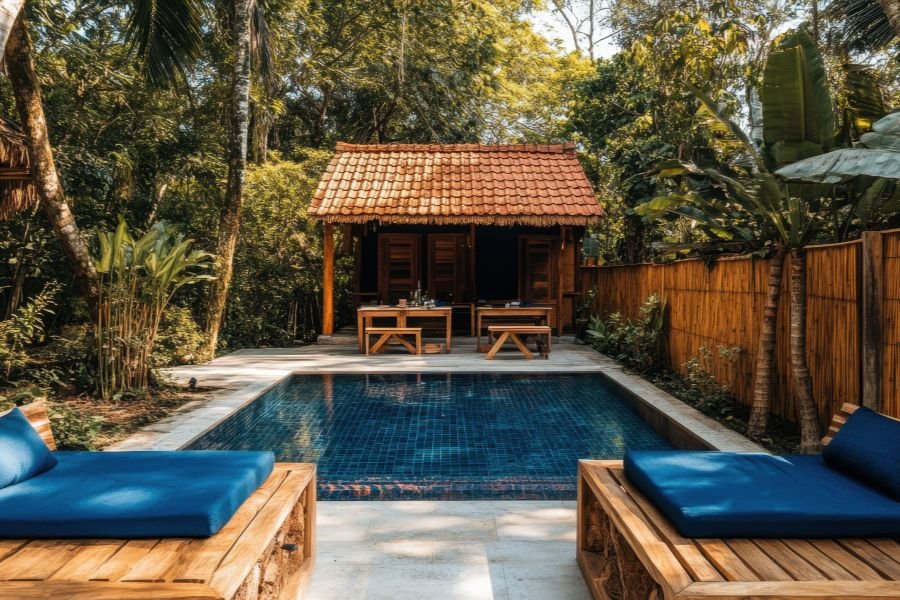
The critical moment arrives during initial design. Every decision compounds. Choose solar heating now, and you’re saving energy for decades. Select a variable-speed pump, and your monthly electricity bills reflect that choice for the system’s entire lifespan. Integrate native landscaping from day one, and you establish ecosystems that mature into something remarkable.
Epic Watershapes specializes in these integrated approaches—systems where sustainability isn’t added as an afterthought but designed into the project’s DNA. Because retrofit always costs more than building correctly initially. Always.
The consultation process matters enormously. You need designers who understand both engineering and ecology, who can explain why certain choices create compounding benefits while others lock you into expensive patterns. Who know which Florida native plants thrive in pool microclimates. Who’ve installed enough solar systems to predict exactly what your payback timeline looks like.
This isn’t about finding someone who can excavate and install equipment. It’s about partnering with professionals who think in decades, not installation schedules.
The Transformation You Can't Photograph
Something shifts when you swim in an eco-friendly pool. Perhaps it’s knowing the water cleaning itself is powered by the same sun warming your shoulders. Perhaps it’s the absence of that chlorine bite in your nostrils. Perhaps it’s watching native butterflies visit the surrounding plants, drawn by flowers that belong in this ecosystem.
Or perhaps it’s simpler than that. Perhaps it’s pride. The quiet satisfaction of knowing your luxury doesn’t come at the planet’s expense. That future generations can enjoy water like this. That you’ve added something beautiful to the world without taking something essential away.
Your Orlando home—whether in Winter Garden, Windermere, Dr. Phillips, Lake Nona, Celebration, or Winter Park—deserves the sophistication of sustainable design. Your family deserves water that enhances rather than compromises. The investment returns itself financially while paying dividends in clarity, simplicity, and conscience.
The question isn’t whether eco-friendly pool design works—data settled that years ago. The question is whether you’re ready to build something that improves with time instead of demanding increasing resources to maintain.
The answer, increasingly, is surfacing in backyards across Central Florida. In water that sparkles a little brighter. In systems that hum a little quieter. In landscapes that bloom a little wilder. In families that swim a little easier.