
You picked the shape. You picked the size. But did you think about the finish?
Most pool owners spend a lot of time choosing tiles or water features. But the finish on your pool walls and floor does more than just look good. It actually changes how warm or cool your water feels and how fast it heats up or cools down.
If you swim in the morning and want warm water, or if you have young kids who hate cold pools, this matters a lot. Let’s break it down in plain English.
How Pool Finishes Affect Water Temperature
It comes down to two things: color and texture.
Color controls how much heat from the sun your pool absorbs. Dark colors soak up more sunlight and turn it into heat. Light colors reflect sunlight away and keep the water cooler.
Texture affects how the surface holds or releases heat. Rough finishes have more surface area, so they can store and give off more heat. Smooth finishes do the opposite.
Think of it like wearing a black T-shirt versus a white one on a sunny day. The black one gets much hotter. Your pool finish works the same way.
Common Pool Finishes & Water Temperature
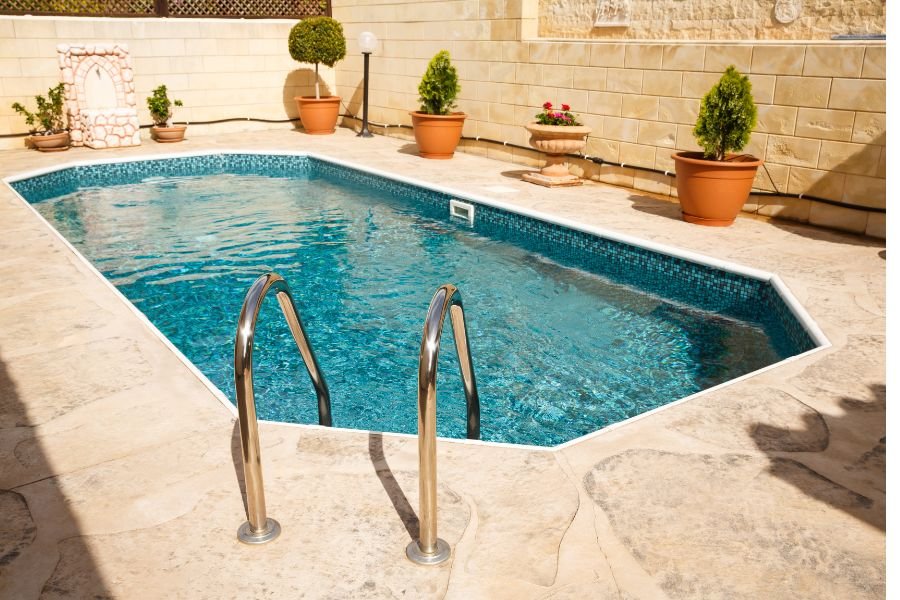
1. White Plaster (Marcite)
White plaster is the most common pool finish. It’s been used for decades and is usually the cheapest option.
Because it’s very light in color, white plaster reflects a lot of sunlight. This keeps the water cooler, which can be great in Florida summers when you want to cool off. However, if you swim early in the morning, the water might feel chilly. White plaster also gives pool water that classic bright blue look.
Best for: Swimmers who want cooler water in hot climates.
2. Colored Plaster (Gray, Blue, or Dark Tones)
Colored plaster works just like white plaster, but the added pigment changes how much heat it absorbs. Gray and blue finishes are middle-ground; they absorb more heat than white but less than very dark finishes. The water stays a bit warmer.
Dark plaster (charcoal, black, or deep navy) absorbs the most heat of all plaster options. In Central Florida, a dark plaster pool can be 5–8°F warmer than a white plaster pool on the same sunny day.
Best for: Swimmers who prefer warmer water or use the pool in cooler months.
3. Pebble and Aggregate Finishes
Pebble finishes like Pebble Tec, Pebble Sheen, or exposed aggregate mix small stones or glass beads into the plaster. This creates a rough, natural look.
These finishes come in a wide range of colors from light tan to deep charcoal so the heat absorption depends heavily on the color you pick. But the texture also plays a role. The rough surface holds heat longer once it’s absorbed.
A dark pebble finish can heat your pool water noticeably faster on sunny days, while a light pebble finish stays cooler but still retains a bit more warmth than smooth white plaster. Beyond temperature control, these pebble finishes also last significantly longer than standard plaster usually 20–25 years versus just 7–10 years for regular plaster.
Best for: Homeowners who want durability plus some control over water temperature based on color choice.
4. Glass Tile
Glass tile is a premium finish. It’s smooth, beautiful, and often used as an accent or a full-wall finish in luxury pools.
Light-colored or white glass tile reflects sunlight well, keeping the water on the cooler side. Darker glass tiles absorb heat but not as efficiently as dark plaster or dark pebble, because the glass surface reflects some light back.
Glass tile is the easiest to clean and resists algae better than other finishes, a bonus for Central Florida pools where algae grows fast in the heat.
Best for: Homeowners who want a premium look with moderate temperature control.
5. Quartz Finishes
Quartz finishes (like Diamond Brite or QuartzScapes) add quartz crystals to plaster. The result is a smooth, shiny surface that’s tougher than plain plaster.
Quartz finishes come in many colors. They don’t absorb as much heat as pebble or dark plaster. The surface is very smooth, so it doesn’t hold heat as long either.
In terms of water temperature, quartz lands somewhere between white plaster and pebble, not the warmest, not the coolest.
Best for: Swimmers who want a balance between durability, appearance, and temperature.
Pool Finish Comparison
| Pool Finish | Color Range | Heat Absorption | Water Temp Effect | Durability |
|---|---|---|---|---|
| White Plaster | White | Low | Coolest water | 7–10 years |
| Colored Plaster | Gray, Blue, Dark | Low to High | Warmer as color darkens | 7–10 years |
| Dark Pebble Finish | Charcoal, Black | Very High | Warmest water (+5–8°F) | 20–25 years |
| Light Pebble Finish | Tan, Cream, Beige | Medium | Slightly warmer than white | 20–25 years |
| Glass Tile (Light) | White, Light Blue | Low | Cool to moderate | 25+ years |
| Glass Tile (Dark) | Navy, Black | Medium-High | Warm | 25+ years |
| Quartz Finish | Many options | Medium | Moderate | 12–15 years |
Pool Finishes in Florida's Climate
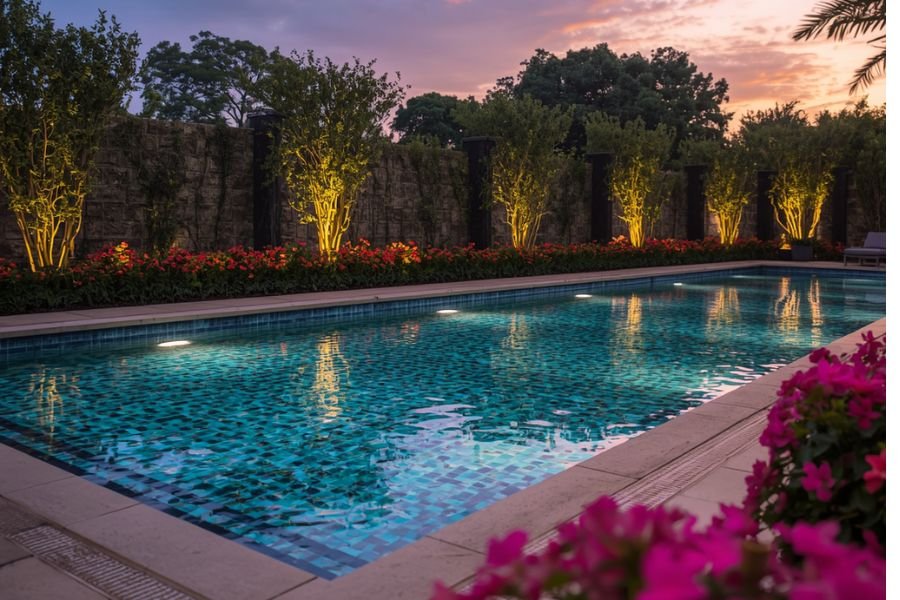
Central Florida is warm almost all year. So you might think you don’t need to worry about pool heating.
But here’s the thing: Florida winters are real. From November to February, nights drop into the 40s and 50s. Water cools down fast overnight. Pool heaters work harder. And if you have a dark finish, the sun does a lot of the heating work for free during the day.
On the flip side, in July and August, a dark-finished pool can feel like a warm bath. If you want to cool off after working in the yard, that’s not ideal.
Think about when you use your pool most. That should guide your finish choice.
- Swim mostly in summer: Go lighter to keep water refreshing
- Swim year-round, including winter: Go darker to gain free solar heat
- Swim early mornings: Dark finishes warm up faster during the day
- Kids or elderly family members who need warmer water: Dark or pebble finish
Finished Colour & Energy Costs
A dark finish that absorbs more sunlight acts like a natural solar heater. During sunny Florida days, it can raise the water temperature by several degrees without running your pool heater at all.
If you use a gas or electric pool heater, a darker finish means you run it less. Over a year, that adds up to real savings on your energy bill. Some pool owners in Central Florida pair a dark pebble finish with a solar cover and barely need their heater at all during spring and fall. That’s a smart combination.
Other Factors That Affect Water Temperature
The finish is important, but it doesn’t work alone. These things also affect your pool’s water temperature:
Pool depth: Shallower pools heat up faster and lose heat faster. Deeper pools hold temperature longer.
Pool placement: A pool in full sun heats up more than one in shade. Read more on our blog: How Pool Placement Affects Sun Exposure and Comfort.
Pool cover: A solar cover traps heat at night. Without one, you lose several degrees overnight no matter what finish you have.
Water circulation: Good pump and filter systems distribute heat evenly. Without it, you get warm spots and cold spots.
Conclusion
Your choice of pool finish is ultimately about balancing how you want your backyard to look with how you want your water to feel. Whether you prefer a crisp, refreshing escape from the July heat or a naturally warm haven for early morning laps, the surface you choose plays a massive role in your daily comfort and your long-term energy savings. At Aqua Elite Pools, we take the guesswork out of this decision by using realistic 3D visualisations to show you exactly how your chosen finish will look and function before we ever break ground.
Our signature Golden Triangle System™ ensures your custom pool is built on time, on budget, and exactly to your lifestyle needs. We have spent over 15 years helping Central Florida homeowners craft their ideal backyard getaways with total peace of mind. Ready to start designing your dream oasis? Contact us today to schedule your free consultation.