
Choosing what goes around a pool in Central Florida is a big decision because the local weather is harsh. The sun beats down on the deck all day and heavy rain falls almost every afternoon in the summer. If the wrong material is picked, it can lead to a cracked surface or burnt feet. Most homeowners around Orlando and the surrounding areas look at two main options: poured concrete or individual pavers.
This guide breaks down how these materials actually hold up in the local environment. It focuses on how they perform in a backyard over a ten-year period.
The Reality of Concrete in Florida
Concrete is made by mixing cement, water, and stone. It is poured as a wet liquid and smoothed out into one big slab.
Why People Use It
- Budget Friendly: It is usually the cheapest way to cover a large area quickly.
- Simple Surface: It provides a flat, solid area that is very easy to walk on when it is brand new.
- Different Finishes: It can be finished with a broom texture to help with grip or stamped to look like more expensive materials.
The Problem with Slabs
- Cracking Issues: Because Central Florida has sandy soil that shifts when it rains, rigid concrete slabs often snap and develop long cracks.
- Extreme Heat: A plain concrete slab gets very hot in the July sun, making it painful to walk on without shoes.
- High Maintenance: If not sealed perfectly, Florida’s humidity turns the surface green with mold and algae, requiring frequent pressure washing.
How Pavers Handle the Environment
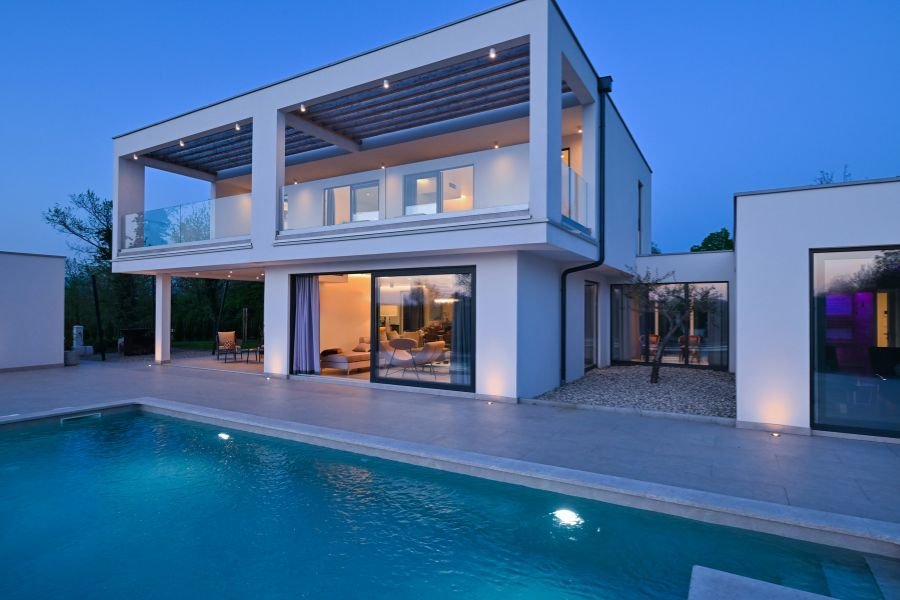
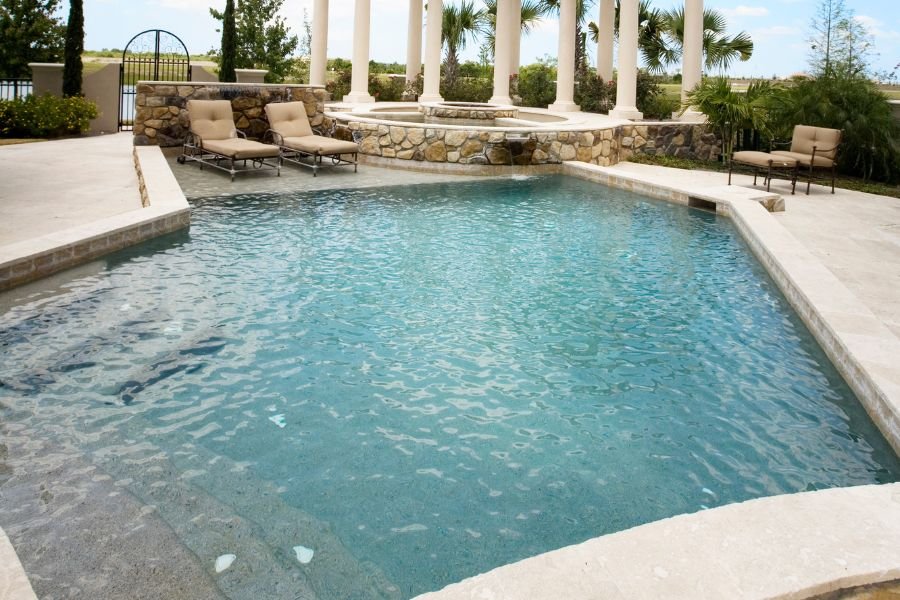
Pavers are separate blocks made of concrete, brick, or natural stone. They are laid down one by one on a bed of crushed rock and sand.
The Practical Benefits
- Flexible Design: Since they are individual pieces, the deck can move and flex with the shifting soil without cracking.
- Easy Repairs: If a stone breaks or the ground sinks, you can lift just those specific pieces, fix the base, and put them back.
- Better Drainage: Water drains through the sand joints between the stones instead of sitting in big puddles after a storm.
- Cooler Surface: Materials like light-colored travertine stay much cooler than solid concrete, which is better for kids and pets.
The Maintenance Side
- Weed Growth: Small weeds can grow in the sand between stones if they aren’t treated or filled with specialized “locking” sand.
- Shifting: If the base isn’t packed down perfectly during the start, some stones might become uneven. If the deck starts looking wavy, you might need pool renovation services to level things out.
How Decking Affects Your Florida Home Value
- Curb Appeal and First Impressions: A high-quality deck makes the whole backyard look finished. When people look at a house, a nice paver deck looks much more expensive than a plain concrete slab, which can help a house sell faster.
- Maintenance History: Buyers in Florida know about the sandy soil. If they see a deck with no cracks, they feel better about the quality of the home. A well-kept deck shows that the owner took care of the property.
- Usable Square Footage: In our climate, the pool deck is basically an outdoor living room. A material that stays cool and safe for bare feet makes the backyard more usable, which adds real value to the home.
- Long-Term Durability: Materials like stone pavers last for decades. A buyer is more likely to pay a premium for a deck they won’t have to replace in five years due to massive cracks or sinking.
- Insurance and Safety Factors: A deck that isn’t slippery and has proper drainage is a big plus. It reduces the risk of accidents, which is something every homeowner thinks about when buying a house with a pool.
Comparing the Costs Over Time
For Poured Concrete: This is almost always the cheapest choice at the start. The labor is faster and the materials cost less per square foot. However, if a pipe under the deck leaks, a jackhammer is needed to break the slab. When the hole is patched, the new concrete will never match the old color perfectly. Over ten or fifteen years, the cost of fixing cracks or dealing with underground leaks often makes it more expensive than the initial price suggests. Factors like 10×20 inground pool costs in Orlando often highlight how initial savings on decking can be offset by these future repairs.
For Pavers: While the upfront cost is higher, these offer a better financial picture for long-term maintenance. If a pipe leaks or a section sinks, the stones are simply lifted, the work is done, and the original stones are put back. The repair is completely invisible. This saves money over time because there is no need to tear up and replace the entire deck when a small issue happens.
Safety and Grip
For Poured Concrete: Wet concrete is very slippery and can be a major hazard near water. It must have a rough texture, like a broom finish, to keep people from falling. Temperature is also a safety factor here. In an Orlando summer, concrete acts like a heat sink and can get hot enough to cause actual burns on the soles of feet during a typical afternoon.
For Pavers: These usually have a natural grit that provides a much better grip even when the surface is soaking wet. Natural stone options, such as travertine, are porous and do not hold onto heat the way solid slabs do. Even in direct sun, these materials stay much cooler and are more comfortable for barefoot walking, making them safer for kids and pets. Choosing the right pool coping material to match your pavers further ensures a non-slip, comfortable transition from the deck to the water.
Appearance and Style
For Poured Concrete: This provides a simple and industrial look that works well for minimalist designs. It can be painted or stained, but it will always remain a single, flat color across the whole yard. Stamped concrete is an option to mimic the look of wood or stone, but it still looks like a solid slab when you get close to it. It is a functional look but lacks the high-end feel of individual stones.
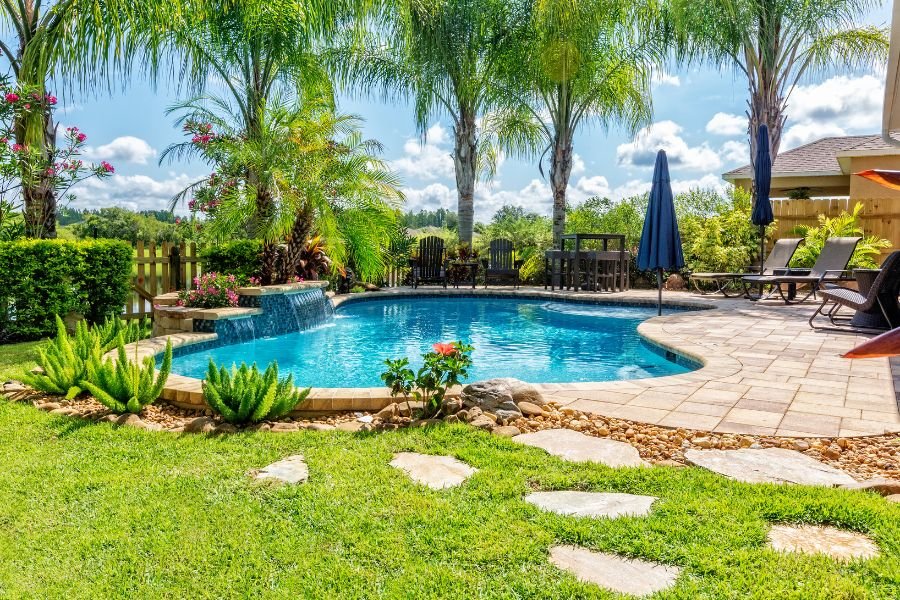
For Pavers: These offer a huge amount of variety in patterns like herringbone or staggered rows to create visual interest. Colors can be mixed to match the specific bricks or roof tiles on a house. This usually gives a backyard a more finished and custom look. Many home buyers in Florida view this as a premium feature, which can help increase the resale value of a house, especially when paired with modern pool designs that favor clean, sophisticated lines.
The Installation Process
For Poured Concrete: Installing this is usually a messy job that takes about one or two days. A truck pours the wet mix into a frame, and a crew smooths it out by hand. The biggest downside is the waiting time. The deck cannot be walked on for at least 24 to 48 hours while it dries. Owners also have to wait about a week before putting heavy patio furniture back on the surface to allow the material to fully cure.
For Pavers: This process takes longer, often three to five days, because each stone is hand-placed like a puzzle. It involves more prep work with gravel and sand bases to ensure everything stays level. However, the big benefit is that the deck can be used immediately once the last stone is placed and the sand is swept in. There is no drying or curing time required at all.
Summary Comparison Table
| Feature | Poured Concrete | Interlocking Pavers |
|---|---|---|
| Upfront Cost | Lower | Higher |
| Flexibility | Rigid (prone to cracking) | Flexible (moves with soil) |
| Heat Level | Very high | Low to Moderate |
| Repair Difficulty | Hard (requires patching) | Easy (replace single stones) |
| Installation Time | 1-2 days (plus drying) | 3-5 days (use immediately) |
| Lifespan | 10-15 years | 25+ years |
Final Thoughts on Your New Deck
Selecting a decking material is about finding the right balance between how much is spent now and how much work is required later. Concrete is a solid, basic choice for a quick project, but pavers offer more long-term durability and safety for families who spend every weekend by the water. The best way to decide is to visit a local supplier and actually feel the materials after they have sat in the sun. Seeing how they handle water and heat in person makes the choice much easier for most homeowners.
Whether the choice is the clean look of concrete or the classic style of pavers, getting the foundation right is what matters most for the Florida sand. If you are ready to see how these options fit your specific yard and budget, reaching out for a professional estimate can help clear up any remaining questions.