
Adding a swimming pool to your home is an exciting step. It’s a place for fun, relaxation, and making memories with family and friends. But a pool isn’t just a “set and forget” feature. To keep your water sparkling, your equipment running smoothly, and your investment lasting for years, regular maintenance is essential.
If you’ve just installed a pool or are planning to, it’s important to understand what maintenance tasks are needed. This guide will walk you through everything you need to know to keep your pool clean, safe, and enjoyable all year long.
Why Pool Maintenance Matters
Owning a pool is rewarding, but it comes with responsibilities. Without proper maintenance, your pool water can become cloudy, algae may form, and equipment can get damaged. Poor maintenance can even make the water unsafe for swimming.
The good news is that with a consistent routine, pool maintenance can be easy. Small, regular tasks prevent bigger problems, save you money, and help you enjoy your pool without stress.
Keep Your Water Chemistry Balanced
Water chemistry is the heart of a healthy pool. Balancing chemicals ensures the water is safe to swim in, prevents algae, and protects your pool surfaces and equipment. Here are the main things to check:
- pH Levels: This measures how acidic or basic the water is. Keep it between 7.2 and 7.8. Low pH can irritate eyes and skin, and high pH can cause scaling.
- Chlorine: Chlorine kills bacteria and keeps your water clean. Aim for 1–3 ppm (parts per million). Too much chlorine can irritate swimmers; too little can let bacteria grow.
- Alkalinity: Acts as a buffer for pH changes. Ideal range: 80–120 ppm.
- Calcium Hardness: Too low can damage pool surfaces; too high can create scaling. Keep it around 200–400 ppm.
- Cyanuric Acid: Protects chlorine from sunlight. Recommended range: 30–50 ppm for outdoor pools.
How to test: Use test strips, a liquid kit, or digital testers. Test at least 2–3 times a week during the busy summer season, and weekly when use is low.
Skimming the Surface
Leaves, bugs, and debris can collect on your pool’s surface daily. Removing them keeps your water clean and prevents your filter from getting clogged.
- Skimmer nets: Quick and simple for daily cleaning.
- Automatic skimmers: These constantly remove floating debris for a more hands-off approach.
Try to skim your pool every day or every other day, especially during windy periods or when trees are nearby.
Brushing and Vacuuming
Even if the surface looks clean, dirt and algae can settle on the pool floor and walls. That’s why brushing and vacuuming are essential.
- Brushing: Scrub walls, steps, and corners 2–3 times a week to prevent algae and dirt buildup. Use a nylon brush for plaster or stainless steel for concrete/fiberglass.
- Vacuuming: Removes dirt that brushes and skimmers can’t. You can do this manually or use an automatic robotic cleaner for regular upkeep.
Doing these tasks weekly keeps your pool sparkling and prevents larger cleaning jobs later.
Maintaining Your Pool Filter and Pump
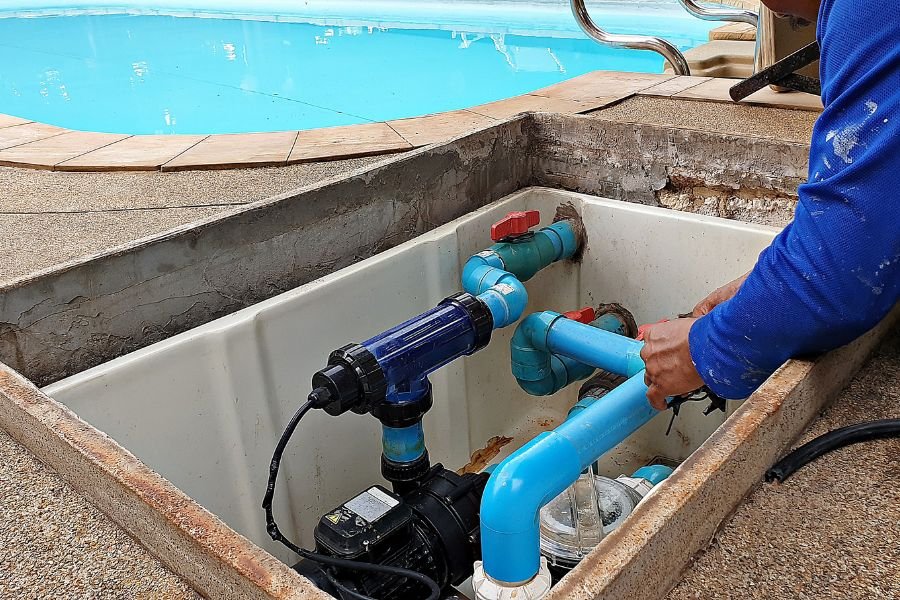
Your pool’s pump and filter are the backbone of your water system. They remove dirt, debris, and bacteria. Keeping them in good condition is key.
Types of Filters:
- Sand filters: Backwash monthly or as needed.
- Cartridge filters: Rinse every 2–6 weeks, replace annually.
- Diatomaceous Earth (DE) filters: Excellent filtration; require backwashing and DE powder replacement.
Pump tips:
- Empty the pump basket weekly.
- Watch for unusual noises or leaks.
- Lubricate O-rings occasionally.
Regular filter and pump maintenance ensures clean, clear water and extends equipment life.
Shocking Your Pool
“Shocking” is adding a strong dose of chlorine (or a non-chlorine alternative) to kill bacteria, algae, and contaminants that normal chlorine levels can’t handle.
- Shock your pool every 1–2 weeks, after heavy rain, or when water looks cloudy.
- Follow instructions carefully, and avoid swimming until chlorine levels return to normal.
Shocking keeps your pool water fresh and safe, especially in warm weather when algae can grow quickly.
Algae Prevention
Algae can make your pool green, slimy, and unsafe. Preventing it is easier than removing it once it appears.
- Keep chlorine and pH balanced.
- Brush walls and corners regularly.
- Use algaecides during summer or heavy use periods.
If algae appears, brushing, vacuuming, and a proper shock treatment usually restores your pool in a few days.
Managing Water Levels
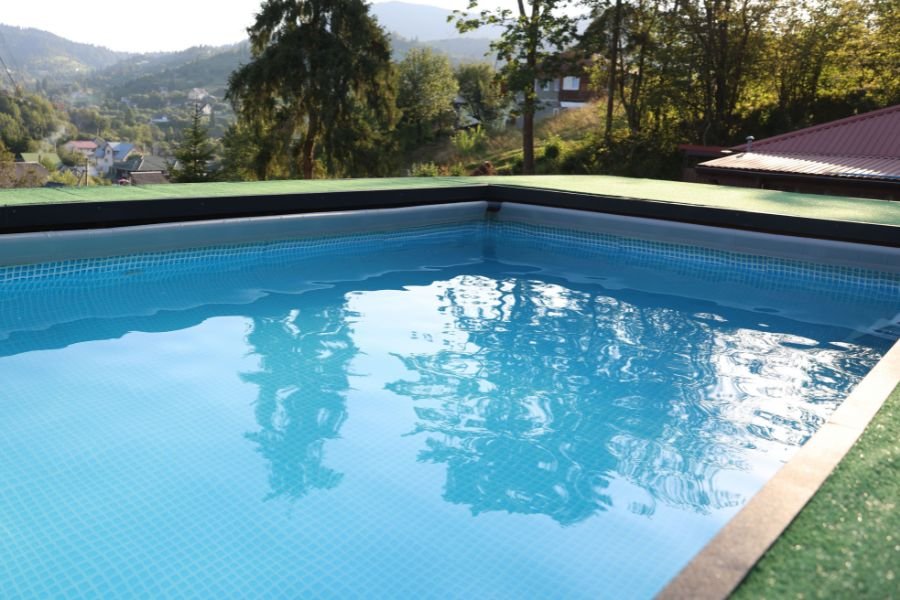
Pool water levels can drop from evaporation, splash-out, or leaks. Too high or too low water affects the skimmer and pump.
- Ideal level: Around the middle of the skimmer opening.
- Add water gradually and avoid letting levels drop below the skimmer line.
- After heavy rain, check water levels to prevent overflow and chemical imbalances.
Seasonal Maintenance
Pool care changes with the seasons. Adjust your routine depending on weather and usage.
Summer Tips:
- Test water frequently.
- Skim daily and vacuum weekly.
- Watch pump pressure and filter operation.
Winter Tips (if you live in colder climates):
- Lower water slightly and add winter chemicals.
- Cover the pool.
- Turn off pumps if not swimming, but circulate water occasionally if possible.
Using a Pool Cover
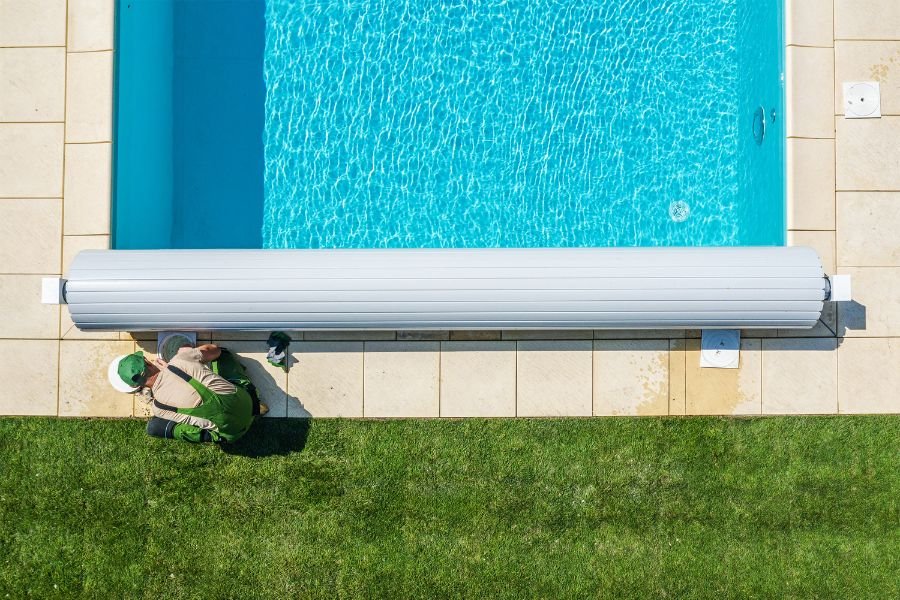
A pool cover is a smart investment. It protects your water, reduces cleaning, and saves water by reducing evaporation.
- Manual covers: Affordable but require effort.
- Automatic covers: Easy to use and efficient.
- Solar covers: Keep water warm and reduce evaporation.
A cover means fewer chemicals, less debris, and less work overall.
Inspecting Your Equipment
Regular equipment checks prevent small issues from becoming big problems.
- Check pumps, motors, and heaters for leaks or unusual noises.
- Inspect skimmers, drains, and plumbing for blockages or damage.
- Test lights and electrical systems for safety.
Annual professional inspections are a smart way to catch hidden issues early.
Safety and Health
A clean, well-maintained pool isn’t just pretty—it’s safe. Poor maintenance can lead to harmful bacteria, eye and skin irritation, and accidents.
- Keep chemical levels safe.
- Remove algae promptly.
- Follow local fencing and safety regulations.
- Teach swimmers good pool hygiene.
Keep a Maintenance Log
A maintenance log helps you track cleaning, chemical adjustments, and equipment checks. It’s an easy way to spot patterns and stay on schedule.
- Note when you add chemicals.
- Record water tests and adjustments.
- Track equipment service or repairs.
Even a simple notebook can make pool care simpler and more organized.
When to Call Professionals

Some maintenance tasks are better left to experts. Professional services can:
- Test water and balance chemicals accurately.
- Service pumps, heaters, and filters.
- Perform seasonal prep or winterization.
- Catch small issues before they become expensive problems.
Using professionals occasionally saves time, effort, and money in the long run.
Common Mistakes to Avoid
Avoid these mistakes to keep your pool healthy and reduce headaches:
- Skipping chemical checks.
- Using too many chemicals at once.
- Ignoring debris or dirty filters.
- Overlooking equipment issues.
- Forgetting to winterize in cold months.
Sticking to a routine helps your pool stay safe, clean, and ready for fun.
Tips for Easy Pool Maintenance
Here are simple tips to make pool care easy:
- Set a weekly schedule for cleaning and testing.
- Test water 2–3 times per week.
- Skim daily, brush 2–3 times per week, and vacuum weekly.
- Inspect pumps, filters, and plumbing regularly.
- Use a cover to reduce debris and water loss.
- Call professionals for help when needed.
A simple routine keeps your pool sparkling and stress-free.
Conclusion
Owning a pool is a wonderful addition to your home, but it comes with responsibilities. Maintaining water chemistry, cleaning surfaces, checking equipment, and preventing algae are all key to a safe and enjoyable pool. By following a consistent maintenance schedule and getting professional help when needed, you can enjoy your pool all year long.
At Aqua Elite Pool, we make pool maintenance easy. Our team can guide you through cleaning routines, chemical balancing, equipment care, and seasonal preparation so your pool stays pristine.
Contact us today at welcome@aquaelitepool.com to learn how we can help you enjoy your pool without the stress!