
Owning a swimming pool is a rewarding experience. It adds value to your property, enhances your outdoor lifestyle, and creates a space for relaxation, fun, and family memories. However, one of the most common and often overlooked problems pool owners face is pool leaks. Even a small leak can lead to significant water loss, higher utility bills, structural damage, and costly repairs if not detected early.
Understanding how pool leaks happen, how to identify early warning signs, and when to seek professional leak detection services can save homeowners time, money, and stress. This guide explains everything you need to know about leak detection for swimming pools, helping you protect your investment and keep your pool operating efficiently.
Why Pool Leak Detection Is So Important
A swimming pool is a complex system made up of plumbing, structural components, filtration equipment, and surrounding surfaces. When a leak develops, it often goes unnoticed because water naturally evaporates or splashes out during use. However, leaks can cause problems far beyond water loss.
Undetected leaks can weaken the pool structure, damage surrounding landscaping, erode soil under the pool shell, and strain pool equipment. Over time, these issues can result in major repairs or even complete pool renovation. Early leak detection helps prevent these problems and ensures your pool remains safe, functional, and enjoyable.
Common Causes of Swimming Pool Leaks
Pool leaks can occur for several reasons, and understanding these causes helps homeowners act quickly when something feels wrong.
One of the most common causes is aging plumbing. Over time, pipes can crack, joints can loosen, and fittings can fail due to pressure changes and ground movement. This is especially common in older pools or pools built in areas with shifting soil.
Another frequent cause is structural damage. Small cracks in the pool shell, steps, or walls may seem harmless at first but can slowly allow water to escape. Fiberglass pools are highly durable, but damage can still occur due to improper installation, ground movement, or impact.
Leaks can also originate from pool equipment, including pumps, filters, heaters, valves, and chlorinators. A worn seal or faulty gasket can cause continuous water loss without obvious signs.
Additionally, skimmers, lights, and fittings are common leak points. These areas connect the pool structure to plumbing lines and can develop leaks due to wear, improper sealing, or shifting materials.
Signs Your Swimming Pool May Have a Leak
Many pool owners assume water loss is due to evaporation, but excessive water loss is often the first sign of a leak. While evaporation is normal, losing more than a few millimetres of water per day could indicate a problem.
Another warning sign is consistently low water levels, even after regular refilling. If you find yourself topping up your pool more often than usual, it’s time to investigate.
Cracks in or around the pool, loose tiles, or sinking pavers may also signal an underlying leak. These issues often occur when water escapes and erodes the soil beneath the pool or surrounding areas.
An unexplained increase in water bills is another clear indicator. Pool leaks can waste thousands of litres of water over time, significantly impacting household utility costs.
You may also notice air bubbles in the pool pump or poor circulation, which can indicate a suction-side plumbing leak.
How Pool Leak Detection Works
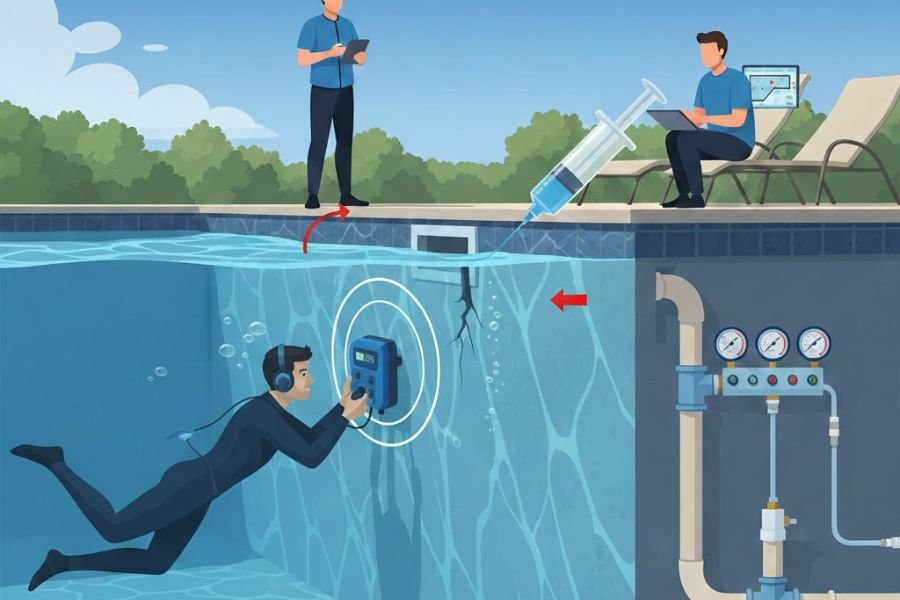
Professional pool leak detection involves specialised tools and techniques designed to locate leaks accurately without unnecessary excavation or damage.
One common method is pressure testing, where plumbing lines are sealed and tested for pressure loss. This helps determine whether the leak is in the plumbing system rather than the pool structure.
Another technique is dye testing, where non-toxic dye is applied near suspected leak areas. If the dye is drawn into a crack or fitting, it confirms the leak location.
Advanced leak detection may involve electronic listening devices, which amplify the sound of water escaping underground pipes. These tools are highly effective for locating hidden leaks beneath concrete, decking, or landscaping.
In some cases, infrared or thermal imaging may be used to detect temperature differences caused by leaking water.
DIY Leak Detection vs Professional Leak Detection

Some homeowners attempt to identify leaks on their own using simple methods such as the bucket test. While DIY tests can help determine whether a leak exists, they rarely pinpoint the exact location.
Professional leak detection services provide accurate results using advanced equipment and trained technicians. This not only saves time but also prevents unnecessary digging, surface damage, or incorrect repairs.
For homeowners investing in premium pools and outdoor retreats, professional leak detection ensures problems are resolved efficiently and correctly the first time.
The Bucket Test: A Simple Leak Check

The bucket test is a basic method to determine whether your pool is leaking or simply losing water through evaporation.
To perform the test, place a bucket filled with pool water on a pool step so the water levels inside and outside the bucket are the same. Mark both water levels and leave the bucket in place for 24 hours. If the pool water level drops more than the water inside the bucket, a leak is likely present.
While helpful, this test does not identify where the leak is located, making professional assessment essential.
Areas Where Pool Leaks Commonly Occur
Understanding common leak locations can help homeowners stay alert to potential issues.
Skimmers are one of the most frequent leak points, especially if cracks form around the skimmer throat. Pool lights are another vulnerable area, as the conduit behind the light niche can allow water to escape.
Return jets and suction fittings can also develop leaks due to worn seals or loose connections. Plumbing lines underground are harder to detect and often require specialised equipment.
Even pool steps, benches, and ledges can develop hairline cracks that allow water to seep out slowly over time.
Pool Leak Detection Methods at a Glance
| Leak Detection Method | Best Used For | Accuracy Level |
|---|---|---|
| Bucket Test | Initial leak confirmation | Low |
| Dye Testing | Visible cracks & fittings | Medium |
| Pressure Testing | Underground plumbing | High |
| Electronic Listening | Hidden pipe leaks | Very High |
| Infrared Detection | Complex leak scenarios | High |
Why Early Leak Detection Saves Money
Ignoring a pool leak can quickly turn a small issue into a major expense. Continuous water loss increases utility bills and chemical usage, placing additional strain on pool equipment.
Leaks can also undermine the pool’s foundation, causing surface cracking, tile damage, or even structural failure. Repairs for these issues are far more expensive than early leak detection and targeted repair.
Prompt leak detection protects not only your pool but also your surrounding outdoor areas, landscaping, and hardscaping.
Leak Detection for Fiberglass Pools
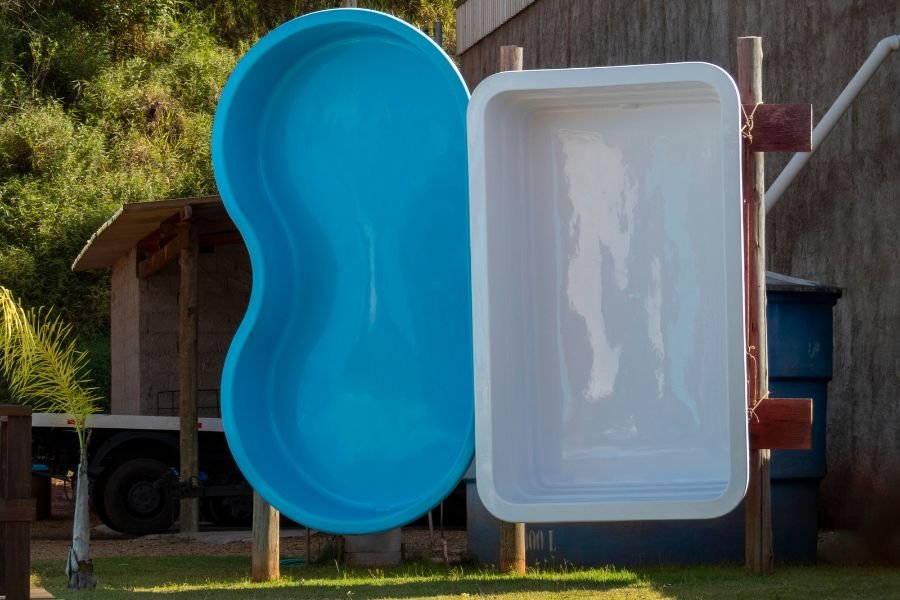
Fiberglass pools are known for their strength, flexibility, and low maintenance. However, leaks can still occur at plumbing connections, fittings, or due to impact damage.
One advantage of fiberglass pools is that they are generally easier to inspect and repair compared to concrete pools. Professional leak detection ensures any issues are addressed without compromising the integrity of the pool shell.
For homeowners investing in premium fiberglass pool installations, regular inspections and early leak detection are key to long-term performance.
When to Call a Professional Pool Leak Detection Service
If you notice ongoing water loss, visible cracks, wet areas around the pool, or unexplained equipment issues, it’s best to contact a professional immediately.
Professional services offer accurate diagnosis, minimal disruption, and long-lasting repair solutions. Attempting repairs without proper detection often leads to recurring leaks and higher costs.
Experienced pool professionals understand how different pool types, materials, and designs behave, allowing them to provide tailored solutions.
Preventing Pool Leaks Before They Start
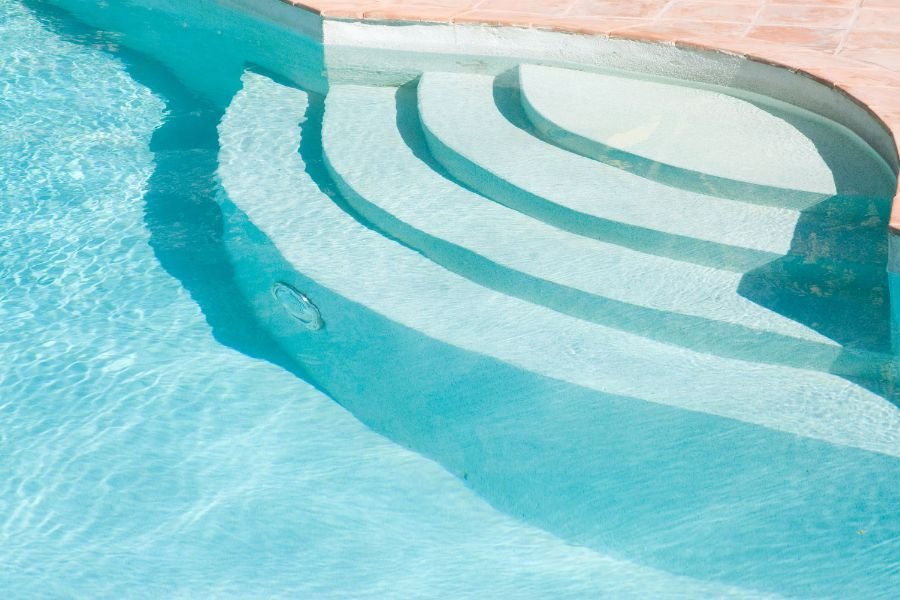
While not all leaks can be prevented, regular maintenance significantly reduces the risk. Routine inspections of pool equipment, plumbing, and surfaces help catch early signs of wear.
Maintaining proper water chemistry prevents corrosion and deterioration of seals and fittings. Avoid draining pools unnecessarily, as changes in water pressure can stress the pool structure.
Working with experienced pool builders and service providers ensures your pool is installed and maintained to the highest standards.
How Aqua Elite Pools Helps Homeowners Protect Their Pools
At Aqua Elite Pools, we understand that a swimming pool is more than just water—it’s an investment in your lifestyle. Our expertise in premium fiberglass pools and outdoor retreats means we design, build, and support pools that are made to last.
Leak detection and prevention are essential parts of long-term pool care. By combining quality materials, precise installation, and professional support, Aqua Elite Pools helps homeowners avoid costly issues and enjoy peace of mind.
Whether you’re installing a new pool or maintaining an existing one, expert guidance makes all the difference.
Final Thoughts: Knowledge Is Your Best Defence Against Pool Leaks
Pool leaks are a common issue, but they don’t have to become a major problem. Understanding the causes, recognising the signs, and acting early are the most effective ways to protect your pool.
Professional leak detection ensures accurate results, minimal disruption, and long-term solutions. With the right care and expert support, your swimming pool can remain a beautiful, functional part of your outdoor retreat for many years to come.
If you value quality, durability, and expert craftsmanship, trust professionals who understand pools inside and out—because your pool deserves the best care possible.