
There’s a particular Tuesday afternoon feeling that happens somewhere around week six of a pool construction project. You’re standing in your backyard—which currently resembles a construction site from a dystopian film—and you’re wondering if you made a terrible mistake.
The neighbor’s kids are already swimming. The Instagram photos show finished pools with families laughing around fire pits. And here you are, staring at exposed plumbing and a giant hole where your lawn used to be.
This is the moment when understanding the actual timeline becomes less about patience and more about sanity.
Let me walk you through what really happens when you build a custom pool in Orlando. Not the glossy brochure version. The real one—the one that includes permit delays, weather patterns, and that weird week when nobody seems to be working on your project but you’re too polite to ask why.
The Pre-Construction Reality (2-6 Weeks)
Before a single shovel touches your Lake Nona or Windermere backyard, there’s paperwork. Mountains of it.
The design phase feels exciting because you’re making decisions about waterfall heights and tile patterns. You’re choosing between travertine and paver decking. You’re debating whether that swim-up bar is practical or pure fantasy (it’s always fantasy, but sometimes fantasy is worth it).
Most families spend two to four weeks in design revisions. You’ll look at 3D renderings. You’ll change your mind about the spa placement. Your spouse will have strong opinions about the lighting package. This is normal.
What catches people off guard is the permit process. Orange County, Seminole County, Osceola County—each has slightly different requirements. In Dr. Phillips, you might sail through in three weeks. In Winter Park’s historic districts, you could wait six weeks while the city reviews setback requirements and discusses tree preservation with you.
Nobody talks about this part because it’s boring. But it matters. This is where realistic expectations begin.
Some contractors will tell you they can start “right away.” What they mean is they can start the permit application process right away. Actual construction? That comes later.
Excavation Day (1-2 Days)
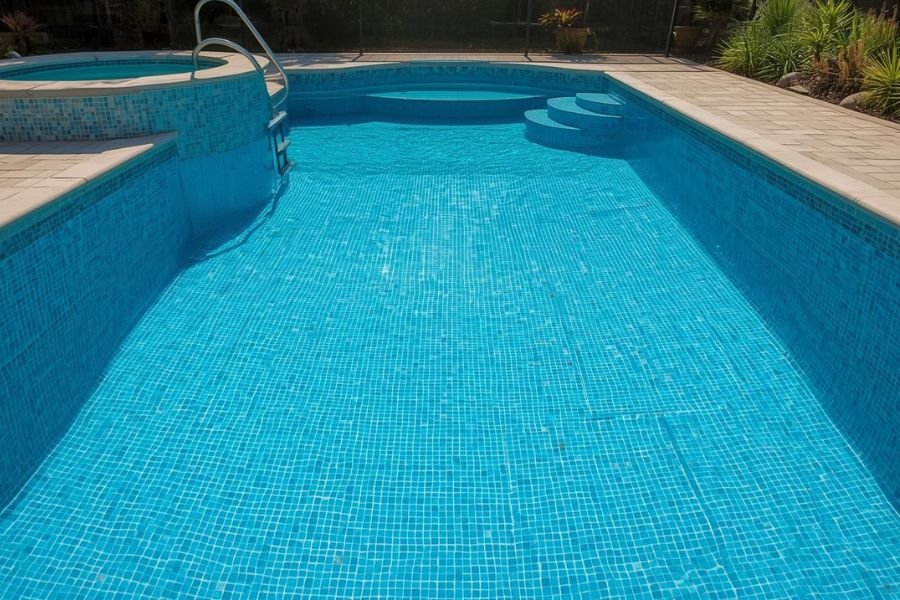
Then suddenly, everything moves fast.
The excavation crew arrives at dawn with machinery that looks capable of digging to the earth’s core. By lunchtime, your backyard has transformed into a geometric hole that’s simultaneously exciting and terrifying.
This is when your neighbors become very interested in your project. Expect questions. Expect opinions. Expect the guy three doors down to mention that his brother-in-law “knows pool construction” and has thoughts about your waterline tile choice.
Excavation typically takes one to two days for standard residential pools. If you’re building something more elaborate—a lazy river in Lake Nona or an infinity edge in Celebration—add another day or two.
The hole will look wrong at first. Too big. Too deep. Too… geometric. Trust the process. This is what it’s supposed to look like.
Steel and Plumbing (1 Week)
Now comes the skeleton.
Steel rebar gets installed in intricate patterns that create the structural framework. Plumbing lines snake through the ground, connecting to equipment pads and establishing the circulation system that will eventually keep your water crystal clear.
This week feels slow compared to excavation day’s drama. Workers arrive, work methodically, leave. Progress seems incremental. You’ll walk out in the morning and struggle to identify what changed since yesterday.
This is the phase where quality matters most and shows least. Premium pool builders in Windermere or Winter Garden spend extra time here, ensuring every connection is perfect, every measurement precise. Rushed work in this phase creates problems that emerge years later—leaks that require jackhammering, circulation issues that waste energy.
You won’t see the difference now. You’ll feel it in year three when your pool still operates flawlessly while your neighbor’s requires constant attention.
Gunite Day (1 Day)
Gunite day is theater.
A concrete pumper truck arrives. Hoses snake across your yard. A crew of specialists—and they are specialists—sprays high-pressure concrete mixture onto the rebar framework. The pool shell that was theoretical yesterday becomes physical today.
It’s loud. It’s messy. It’s strangely beautiful.
Most residential pools complete the gunite application in a single day, though larger projects might require two. The crew works quickly, systematically, building up thickness in layers until the entire structure is encased.
Your pool now looks like a concrete bunker. This is correct. Resist the urge to panic about aesthetics. You’re only seeing step four of a twelve-step process.
The gunite needs to cure—typically seven to ten days depending on Orlando’s humidity levels and temperature. During this time, the shell is kept moist but otherwise undisturbed. Nothing appears to be happening. Everything is actually happening at the molecular level.
Tile and Coping Installation (1-2 Weeks)
Here’s where your pool starts becoming recognizable as a pool.
The coping—the cap that goes around the pool’s edge—gets installed first. Then comes the tile work, typically a six-inch band at the waterline. This phase requires precision and patience.
A skilled tile setter in Dr. Phillips or Lake Nona will spend days ensuring every line is level, every corner crisp, every transition seamless. Rushed tile work announces itself immediately—misaligned patterns, inconsistent grout lines, tiles that don’t quite meet properly.
This is also when you’ll notice small decisions made months ago suddenly becoming very visible. That glass tile you selected? It looks different in actual sunlight than it did in the showroom. That natural stone coping? Its texture is more pronounced than you expected.
Sometimes these surprises delight. Sometimes they don’t. Either way, you’re committed now.
Most premium installations in Winter Park or Celebration take one to two weeks for tile and coping. The timeline extends if you’ve chosen intricate patterns, multiple tile colors, or specialty materials that require extra care.
Decking Installation (1-2 Weeks)
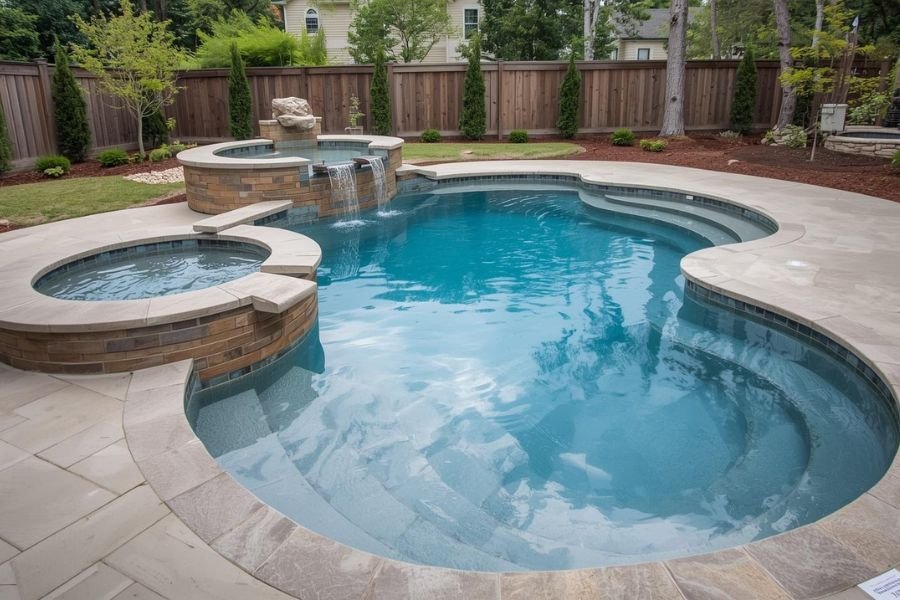
Your pool is taking shape. Now it needs context.
Decking installation—whether travertine pavers, poured concrete, or natural stone—typically requires one to two weeks. The timeline varies based on your choices. Simple poured concrete finishes faster. Intricate paver patterns with multiple colors and cuts take longer.
Weather matters here more than earlier phases. Orlando’s afternoon thunderstorms can delay deck work. Pavers need to set properly. Concrete needs optimal conditions to cure correctly.
This phase also includes any additional hardscaping—retaining walls, fire pits, outdoor kitchens. If you’re building a comprehensive outdoor living space in Windermere or Winter Garden, the timeline extends accordingly.
Your backyard is still a construction zone, but it’s starting to look less like a war zone and more like something intentional.
Equipment Installation and Plumbing Connections (3-5 Days)
The mechanical systems come online.
Pumps, filters, heaters, automation systems—everything that will operate invisibly once your pool is finished gets installed and connected during this phase. This typically takes three to five days for standard residential installations.
If you’ve invested in advanced automation—controlling your pool from your phone, integrating with your smart home systems, programming complex lighting schedules—this phase takes longer. The technology itself installs quickly. Programming everything to work harmoniously requires patience.
This is also when your electrical work gets completed. Lighting transformers, equipment power,
any additional electrical features all get wired and inspected.
Interior Finish Application (1 Day + Cure Time)
The interior finish—plaster, pebble, or other surfaces—gets applied in a single intensive day. Then the real waiting begins.
The finish needs to cure before filling. The exact timeline depends on your choice of finish:
● Traditional plaster: 14-28 days before optimal use
● Pebble finishes: 28-30 days for complete curing
● Specialty finishes: Follow manufacturer recommendations
This creates a peculiar psychological challenge. Your pool looks finished. It even has water in it. But you can’t use it yet. Not properly.
The chemistry needs to stabilize. The surface needs to cure completely. Rushing this phase creates long-term problems—staining, rough texture, premature deterioration.
Orlando’s climate actually helps here. Consistent temperatures and humidity create ideal curing conditions compared to regions with more variable weather.
Startup and Orientation (1 Day)
Finally.
The startup process involves filling the pool, balancing the chemistry, programming the equipment, and teaching you how everything works. This typically takes half a day, though it might extend to a full day if you have complex systems.
A thorough builder in Lake Nona or Dr. Phillips will walk you through everything: how to read your automation system, when to clean your filters, how to maintain proper chemistry, what to do if something seems wrong.
You’ll forget half of what they tell you. This is normal. Most companies provide written materials and follow-up support for exactly this reason.
Your pool is now operational. Not quite mature—the water chemistry will continue stabilizing over the first few weeks—but swimmable. Usable. Real.
The Realistic Timeline
So what does this actually mean in calendar terms?
For a standard custom pool in Orlando:
● Design and permits: 4-10 weeks
● Construction: 8-12 weeks
● Curing and startup: 2-4 weeks
Total timeline from contract signing to swimming: 14-26 weeks, depending on complexity, permitting efficiency, weather cooperation, and whether you make changes during construction.
Premium projects with extensive hardscaping, outdoor kitchens, elaborate water features, or complex automation systems extend this timeline. A comprehensive outdoor living transformation in Windermere or Celebration might take 6-8 months from initial design to final completion.
The contractors who promise “8 weeks start to finish” either cut corners or deliver disappointment. Quality work respects the necessary timeline.
What Actually Causes Delays
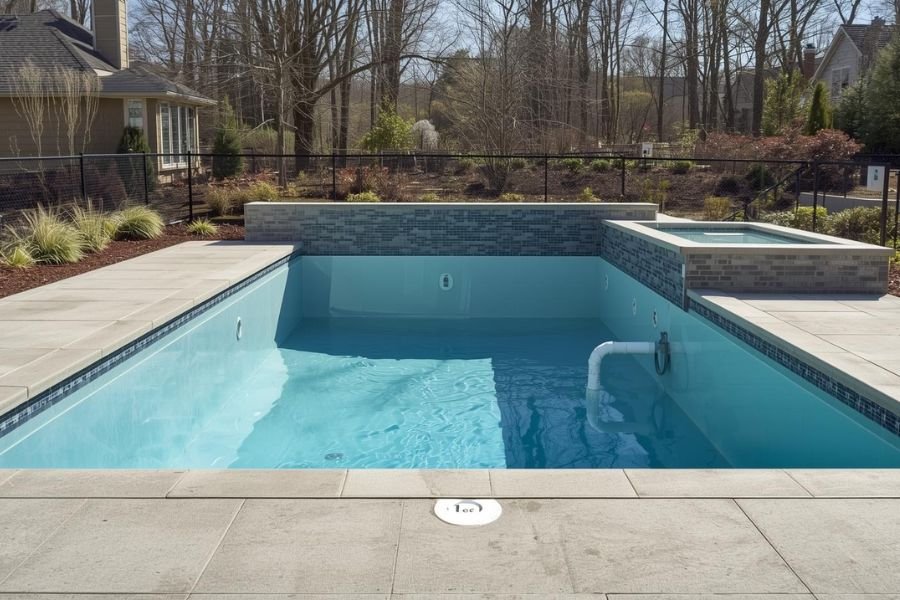
Understanding potential delays helps you maintain perspective:
Permits: The single most unpredictable variable. You can’t control government processing times. Building in multiple pool projects while waiting for permits creates capacity challenges when approvals arrive simultaneously.
Weather: Orlando’s summer thunderstorms rarely delay projects more than a few days total, but concrete work and decking installation both require dry conditions. Florida’s winter months actually offer more predictable construction windows.
Supply chain issues: Post-pandemic disruptions have mostly stabilized, but specialty tiles, custom equipment, or unique materials can still create waiting periods.
Change orders: Every modification you request during construction extends the timeline. That fire pit you decide to add in week six? It affects scheduling, material ordering, and sequencing of subsequent work.
Discovery issues: Sometimes excavation reveals unexpected conditions—old construction debris, rock layers, drainage problems. These require solutions that extend timelines.
The best builders in Winter Park or Lake Nona build buffer time into their schedules. They promise 12 weeks knowing that unforeseen issues might stretch it to 14. They finish on time more often because they planned realistically.
Managing Your Expectations (And Your Sanity)
Here’s what helps:
Visual documentation: Take photos every few days. Progress feels slow in real-time but obvious in retrospect. Those comparison photos remind you that things are actually happening.
Communication protocols: Establish how and when you’ll receive updates. Daily texts about minor progress feel excessive. Weekly scheduled calls with your project manager feel professional.
Flexibility about completion timing: If you’re planning a specific event around your pool—a graduation party, a summer birthday—build in at least a four-week buffer. Better to have your pool ready early than to reschedule your party.
Trust the process: That week when nothing visible happens? Critical work is occurring. Curing. Setting. Stabilizing. The magic happens in the waiting.
Resist comparison: Your neighbor’s pool went faster because they built a simpler design with a different company using different materials under different permit conditions. Your project is yours.
The Week Everything Changes
Then one morning, usually about six weeks after you thought you couldn’t take the mess anymore, you walk outside with your coffee.
The construction debris is gone. The equipment pad is landscaped. The deck is installed and clean. Your pool is filled with water that catches the early light. Everything that was theoretical in those design meetings has become physical.
You’re still waiting for the chemistry to stabilize. You’re still a week away from that first swim. But standing there in your backyard in Lake Nona or Windermere or wherever Orlando life brought you, you finally see what you signed up for.
The timeline suddenly makes sense. Every delayed permit, every weather postponement, every phase that felt endless—all of it was necessary to create something that will serve your family for decades.
This isn’t the moment the pool becomes functional. This is the moment you understand why quality work requires time.
Looking Forward
A year from now, you won’t remember exact construction timelines. You’ll remember the first party around your completed pool. The first time your kids brought friends over specifically to swim at your house instead of asking to go elsewhere. The first evening you sat by the fire pit, pool lights reflecting across the water, thinking about how different your home feels now.
The timeline matters immensely during construction. It becomes irrelevant once you’re living with the results.
If you’re beginning this journey in Orlando—whether in Lake Nona’s modern developments, Windermere’s established neighborhoods, or anywhere across Central Florida—understanding the realistic timeline helps you plan appropriately. Set expectations correctly. Maintain perspective during the messy middle.
Quality takes time. The pool builders who respect that create spaces that reward your patience every single day thereafter.
Your backyard transformation isn’t just about adding a pool. It’s about creating the space where your family’s future memories happen. That’s worth getting right. That’s worth the wait.