
The Fine Print Nobody Reads (Until It's Too Late)
Consider what typically happens: You buy your dream home in one of Orlando’s desirable communities. You sign the HOA documents at closing. You might skim them—because who reads 47 pages of legal text when you’re excited about good schools, short commutes, and that beautiful backyard?
Then you decide you want a pool.
That’s when you discover your HOA has opinions. Strong ones. About everything from pool deck colors to whether water features can be heard from neighboring properties.
The Orlando HOA landscape presents particular complexity because of the sheer variety of communities here. Winter Park’s historic districts maintain ultra-specific architectural requirements. Newer developments in Windermere often have more relaxed guidelines. Lake Nona falls somewhere in the middle—modern and planned, but with rules designed to maintain careful aesthetics. Dr. Phillips communities vary significantly depending on when they were established. Celebration famously maintains detailed design standards for nearly everything.
The assumption that “it’s my backyard, so I can build whatever I want” doesn’t survive contact with HOA covenants. Not when you’ve signed an agreement that gives your community architectural authority over exterior modifications.
What Your HOA Actually Controls (And Why)
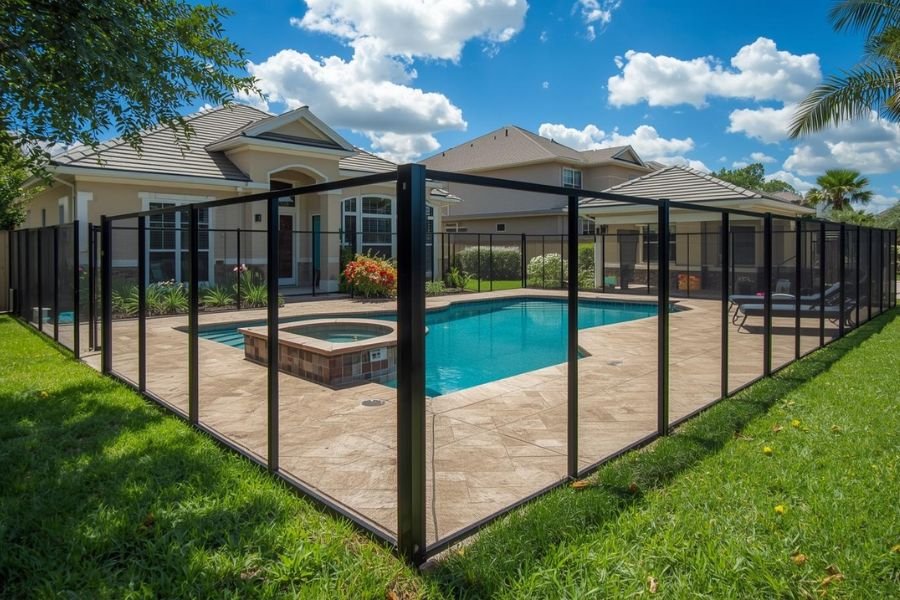
Most Central Florida HOAs regulate pool construction through Architectural Review Boards—sometimes called Architectural Review Committees or Design Review Boards. These typically consist of volunteer homeowners who review proposed property changes and determine whether they align with community standards.
The logic isn’t arbitrary, even when it feels that way. HOAs exist to maintain property values and neighborhood cohesion. Imagine a Spanish-style villa with an elaborate fountain system appearing in a street of Modern Farmhouse designs—visually jarring, potentially affecting surrounding property values.
Common restrictions in Orlando HOAs include setback requirements—mandating how far pools must sit from property lines. Many associations require pools positioned at least 10 feet from side and rear boundaries, though this varies significantly. Some Winter Garden communities require 15 feet. Others allow as little as 5 feet with specific fencing types.
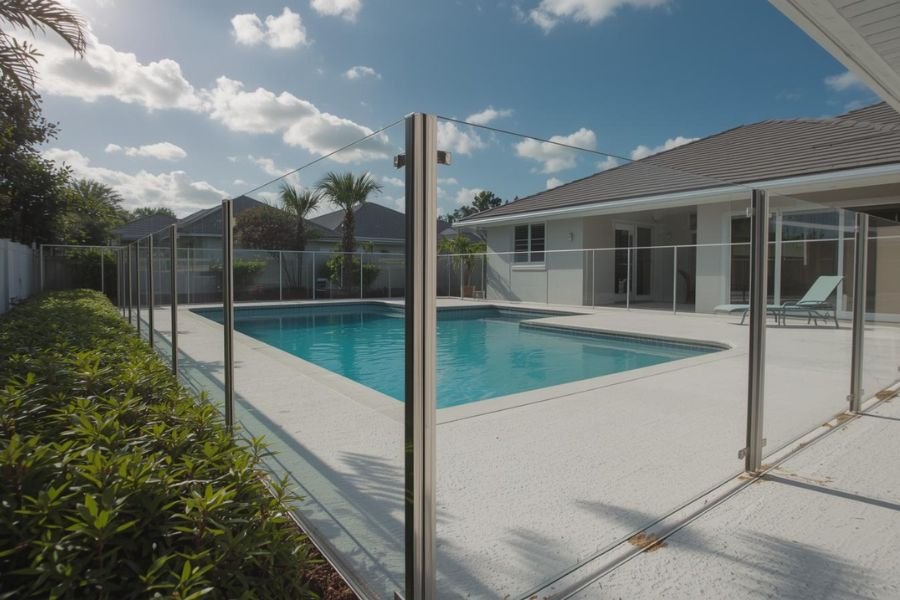
Fencing itself becomes another focal point. Florida law requires barrier protection around residential pools, but your HOA probably layers additional requirements about style, height, and materials. Some associations mandate specific fence types—wrought iron, aluminum, or glass—while prohibiting chain-link regardless of cost-effectiveness or childhood nostalgia.
Pool deck color and finish often need approval. Consider HOA boards rejecting projects because proposed travertine was two shades too light, or because certain paver types weather poorly in Florida humidity and compromise long-term neighborhood appearance.
Equipment visibility faces increasing regulation. That pool pump, heater, and filtration system? Your HOA might require landscaping screens, specific placement locations, or compliance with noise level limits—particularly important in communities with smaller lots where sound travels between properties.
Water features face particular scrutiny. That cascading waterfall from social media might exceed your HOA’s noise ordinances. Many Central Florida communities limit fountain heights and require water features to operate within specific decibel ranges during evening hours, respecting neighbors who value peaceful outdoor spaces.
The Approval Process (And Why It Takes Forever)
Understanding timelines matters almost as much as understanding rules.
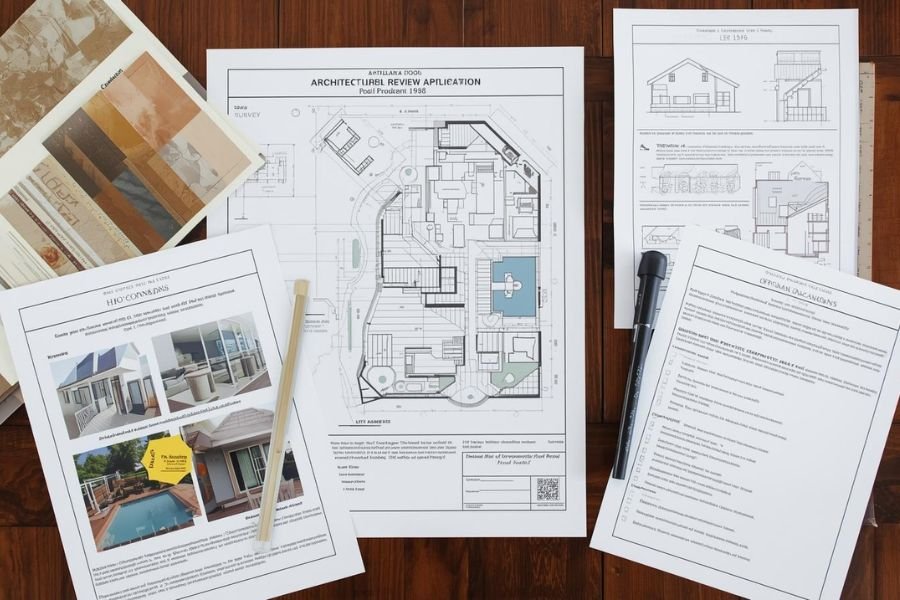
Most Orlando HOAs require detailed plans before breaking ground. This isn’t casual sketches—you’re typically submitting architectural drawings, site surveys, material samples, and contractor information. Some associations require plans prepared by licensed professionals, adding both credibility and cost to the process.
Review periods vary dramatically. Communities exist that turn around approvals in two weeks. Others take three months. Many Lake Nona HOAs maintain 45-day standard review periods with monthly board meetings, meaning missed meeting cycles push approvals to the next month—or beyond.
Imagine submitting plans only to receive rejection because fence height was listed in feet and inches instead of exclusively inches. An entire month lost over formatting. That scenario isn’t hypothetical—it represents the kind of administrative precision some boards require, where volunteer reviewers with day jobs process dozens of requests while erring toward caution and additional clarification requests.
Smart homeowners submit applications early—ideally before finalizing contractor selection. This allows time for revisions without pushing entire construction schedules into less favorable seasons. In Orlando, timing matters. Pool projects starting in July face afternoon thunderstorms and heat that complicate everything from concrete curing to worker productivity.
Some HOAs charge application fees ranging from $50 to $200. Luxury communities sometimes charge significantly more, occasionally based on project cost percentages. These fees aren’t refunded for denied projects, making understanding rules before applying financially prudent.
What Gets Denied (And How to Avoid It)
Patterns emerge in rejected applications after observing hundreds of Orlando homeowners navigating HOA approvals.
Pools positioned too close to property lines fail frequently. Homeowners underestimate setback requirements or assume flexibility if neighbors approve. HOAs don’t accommodate individual preferences—rules apply uniformly regardless of neighbor enthusiasm for specific designs.
Inappropriate materials and finishes face regular rejection. That stunning black bottom pool from Arizona might not work in your subdivision if the HOA has approved only light-colored finishes for years. Boards prioritize consistency when maintaining visual cohesion.
Overly elaborate designs face pushback, particularly in communities with traditional architecture. If your neighborhood features classic Florida homes with understated landscaping, resort-style pools with lazy rivers and tiki bars might clash with established aesthetics that protect property values.
Drainage concerns sink projects too. Florida’s heavy rainfall demands careful attention to water runoff, and HOAs recognize that poorly planned pool decks create drainage issues affecting neighboring properties. Plans failing to address water flow during summer storms invite scrutiny and questions.
The strategic approach involves pre-submission consultation. Many HOAs allow homeowners or contractors to present preliminary concepts before formal submission. This informal review can save weeks by identifying issues early. Some architectural review boards offer “courtesy reviews” examining basic concepts and flagging potential problems before official applications.
Working the System (Ethically)
Understanding your HOA’s priorities increases approval likelihood.
Most boards prioritize maintaining property values and neighborhood harmony. Frame projects in those terms. Don’t just present attractive pools—demonstrate how designs enhance community aesthetics and align with existing environments.
Professional plans matter significantly. Boards take homeowners more seriously when receiving polished, professionally prepared documents. Rough sketches suggest incomplete commitment to meeting standards. Detailed architectural drawings with material specifications and site surveys demonstrate thorough preparation.
Attending meetings helps, even when not required. Many HOAs allow homeowners to present projects personally. This creates opportunities to address questions directly, clarify intentions, and demonstrate consideration of potential concerns. Boards more readily approve projects when witnessing homeowner commitment to proper execution.
Strategic submission timing matters too. Consider that November and December boards focus on budget planning and year-end items, potentially meaning less attention for individual pool projects. Early spring, before construction season rushes, often works better for thoughtful review.
Building community relationships helps long before submitting plans. When known as responsible homeowners who maintain properties and participate in community events, boards approach applications with that context. They’re not just reviewing pools—they’re reviewing proposals from people they trust to execute thoughtfully.
When to Push Back (And How)
Not all HOA decisions are final, and some rules deserve questioning.
If your HOA denies your project, you’re entitled to detailed explanations citing specific governing documents. Sometimes denials result from misunderstandings or board members misinterpreting rules. Clear explanations help determine whether denials are legitimate or appealable.
Most HOA bylaws include appeal processes—typically involving additional information or revised plans addressing board concerns. Some associations allow reconsideration requests at subsequent meetings. A few maintain formal mediation processes for disputed decisions.
The key is approaching appeals professionally. Emotional emails to board members rarely succeed. Document-supported arguments showing project compliance with governing documents prove more effective. When HOA rules appear vague or contradictory, respectfully pointing this out can create space for reasonable accommodations.
In rare cases, homeowners successfully challenge HOA decisions through legal channels, particularly when boards apply rules inconsistently or deny projects arbitrarily. Florida law provides some protections for homeowners facing unreasonable HOA restrictions, though litigation should be a last resort after exhausting other options.
Special Considerations for Orlando's Unique Communities
Different Orlando neighborhoods present different challenges.
Older Winter Park communities often maintain the strictest architectural guidelines, reflecting historic character. These HOAs typically require traditional materials and classical designs. Modern, contemporary pool concepts face uphill battles unless demonstrating how they complement historic architecture while respecting neighborhood heritage.
Lake Nona’s newer developments focus on cohesive modern aesthetics. These communities generally welcome innovative designs but expect execution with high-quality materials and professional finishes. Budget solutions or material shortcuts typically fail in neighborhoods where visual consistency commands premium property values.
Celebration’s HOA maintains famously particular requirements about architectural details, with specific standards covering nearly every home modification aspect. Pool projects require extensive documentation and adherence to detailed design standards. The approval process runs longer, but standards ensure neighborhood consistency that residents specifically chose when purchasing there.
Windermere communities vary significantly depending on specific developments. Some neighborhoods maintain minimal restrictions. Others rival Celebration’s detailed requirements. Understanding your particular subdivision’s approach matters enormously for setting realistic expectations and planning appropriate submission strategies.
Winter Garden’s growing planned communities typically fall in the middle—reasonable restrictions focused on quality and neighborhood harmony without excessive detail. These HOAs usually approve well-designed projects meeting basic standards without extended review periods, reflecting communities balancing individual expression with collective property value protection.
Dr. Phillips presents interesting variety, with older established neighborhoods having evolved rules over decades while newer developments implement more contemporary architectural standards. Understanding which category your specific community represents shapes approach and timeline expectations significantly.
What This Means for Your Timeline
Factor HOA approval into pool construction schedules from the beginning.
Most homeowners should add 60 to 90 days to anticipated timelines specifically for approval processes. This includes time to prepare documents, submit applications, wait for board reviews, address questions or revision requests, and receive final approvals.
Starting approval processes in winter for spring construction makes sense in Orlando. You’ll navigate reviews during cooler months when construction is less appealing anyway, positioning for ideal build windows once approval arrives.
Some contractors offer to handle HOA submissions as part of their services. This provides value, particularly with experience in your specific community. Contractors familiar with your HOA’s typical requirements can prepare documents addressing common concerns proactively, potentially accelerating approval.
However, even with contractor assistance, stay involved. You’re ultimately responsible for HOA rule compliance, and you need to understand what’s been promised to boards. Problems arise when homeowners rely entirely on contractors and later discover submitted plans don’t match actual desires.
The Bottom Line
Building pools in HOA-governed Orlando communities isn’t impossible—it requires planning, patience, and professionalism.
Imagine the satisfaction of proper process completion: modifications to original visions, fence material changes, deck color adjustments, waterfall refinements. But finished pools that are beautiful, compliant, and admired by neighbors rather than generating complaints.
The realization often comes afterward—that attempting to skip steps or hope nobody notices would have been disastrous. HOA violations can result in fines, mandated removal of non-compliant features, and legal battles costing far more than doing things correctly initially. Some associations can even place liens on properties for unpaid fines related to rule violations.
The smart approach is straightforward: read HOA documents carefully before planning anything, consult with architectural review boards early, submit thorough and professional applications, and remain patient throughout review processes.
Your HOA isn’t trying to ruin pool dreams—they’re protecting property values for everyone in the community, including you. Work within that framework, and you’ll end up with pools that are not just beautiful, but also ones that enhance rather than disrupt neighborhoods.
Because ultimately, the best pools are ones you can actually enjoy without worrying about compliance issues, neighbor complaints, or board citations. And in Orlando’s HOA communities—from Winter Park’s historic streets to Lake Nona’s modern developments, from Celebration’s detailed standards to Windermere’s varied approaches, from Dr. Phillips’ established neighborhoods to Winter Garden’s growing communities—that pool starts with understanding and respecting rules before ever breaking ground.