
By Thiago Machado - Aqua Elite Pools™ co-owner
There’s this moment—usually on a Saturday morning with coffee in hand—when you find yourself staring at your backyard, really seeing it for the first time in months. The grass could use work. That fence is looking tired. And somewhere in the middle of all that potential, you’re trying to picture a pool.
But not just any pool.
You’ve been scrolling through Instagram. You’ve driven past those houses in Winter Park where the backyards look like resort spreads. You’ve seen the kidney-shaped pools that seem to flow naturally across the landscape, and the sharp, modern rectangles that make a statement from the moment you step outside.
And now you’re stuck on the question that matters more than you initially thought: Which style actually fits your life?
The Tale of Two Philosophies
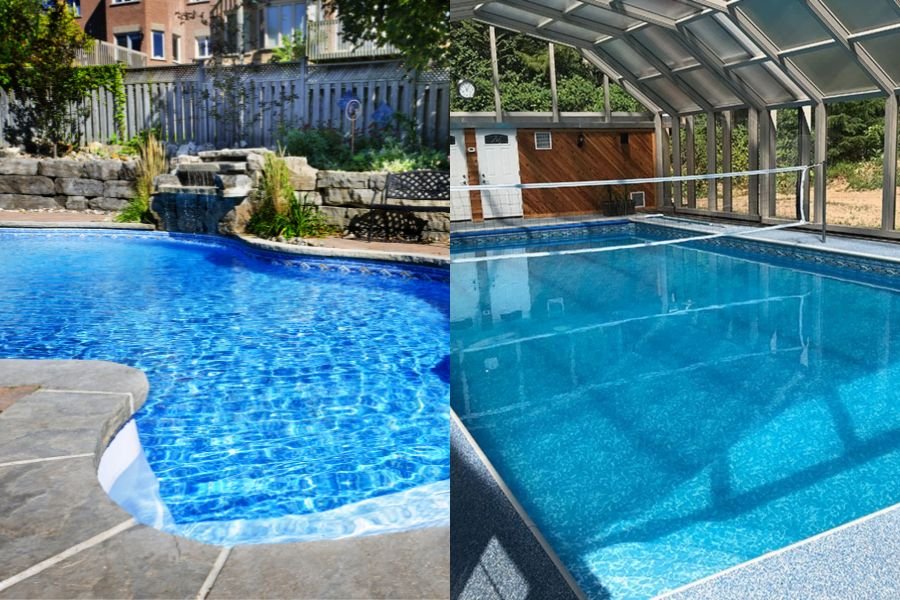
Pool design isn’t just about digging a hole and filling it with water. It’s about creating a space that either complements the natural world or celebrates human precision. Freeform pools embrace curves, organic shapes, and the kind of flowing lines you’d find along a riverbank. Geometric pools? They’re all about clean edges, defined angles, and architectural clarity.
Neither is better. Both are right—but not for everyone.
Think of it this way: A freeform pool is like a conversation that meanders through interesting topics, taking its time, enjoying the journey. A geometric pool is a well-crafted argument—direct, powerful, impossible to ignore.
What Freeform Really Means
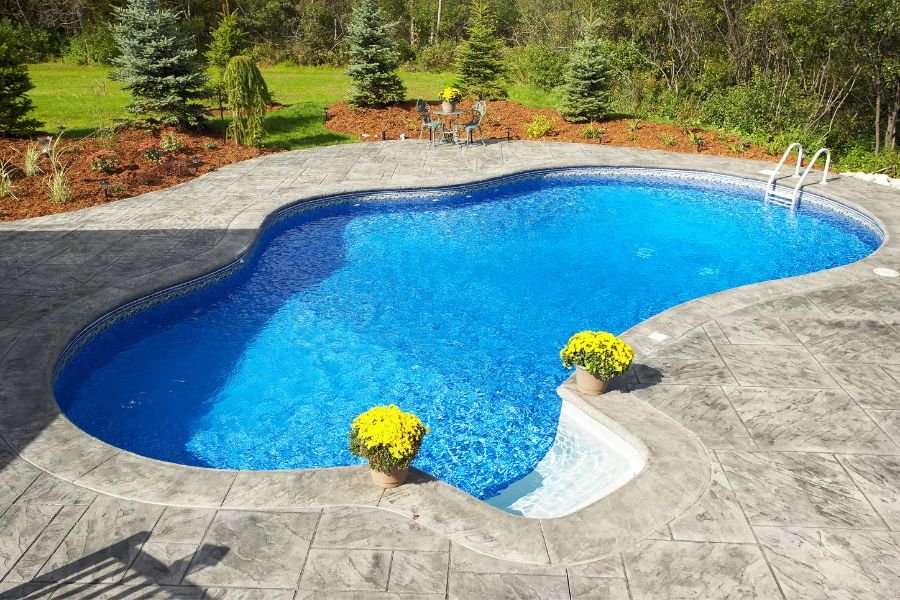
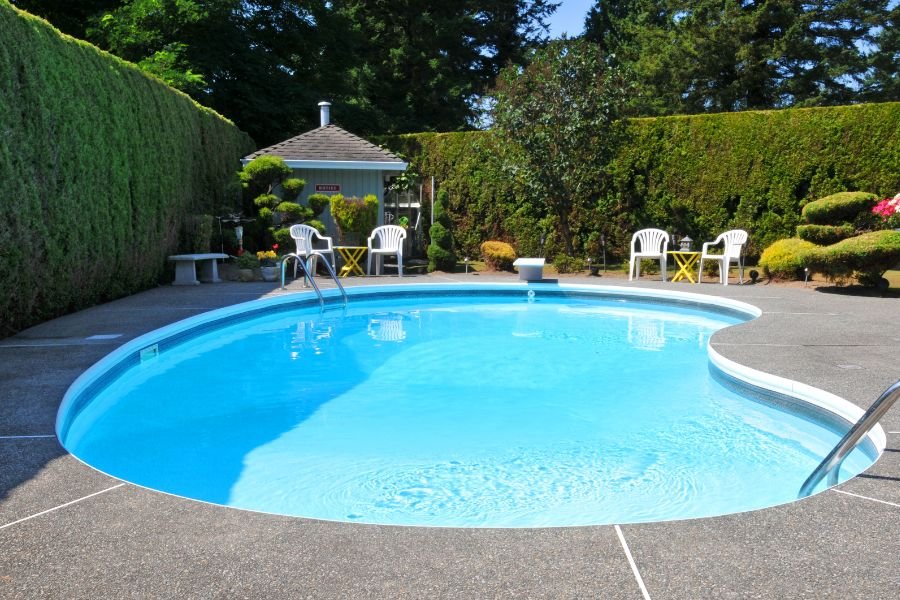
When designers talk about freeform pools, they’re describing shapes that don’t follow rigid mathematical patterns. These pools curve, bend, and adapt to the landscape rather than dominating it. They often incorporate natural stone, boulders, and plantings that blur the line between pool and garden.
In Central Florida, where lush vegetation thrives year-round, freeform designs can make your backyard feel like a hidden oasis. The style works particularly well in neighborhoods like Windermere or Dr. Phillips, where lots tend to have mature trees and established landscaping. A freeform pool doesn’t fight with nature—it becomes part of the scenery.
The aesthetic leans tropical, relaxed, and timeless. These pools age gracefully because their organic shapes don’t scream any particular decade. Twenty years from now, a well-designed freeform pool will still look intentional and beautiful.
The Geometric Approach
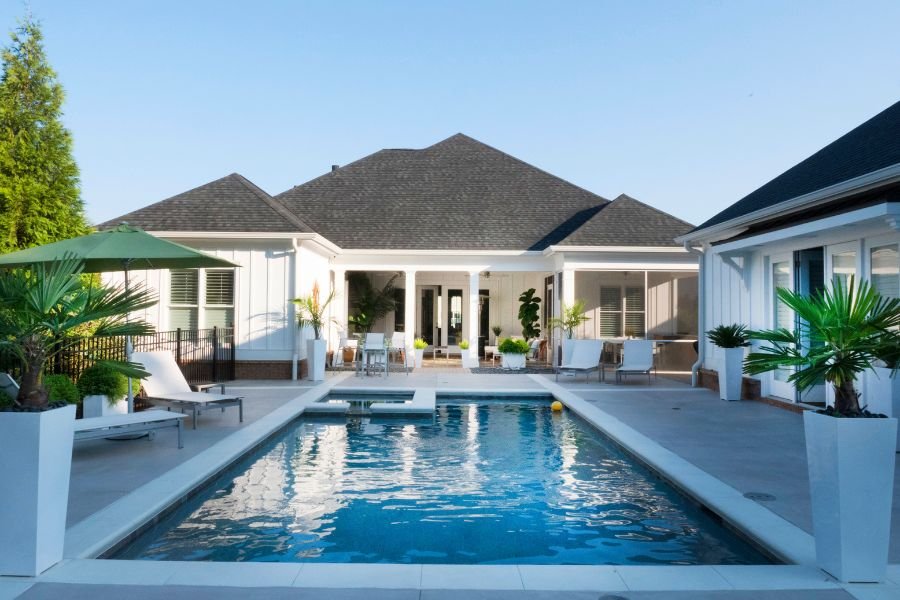
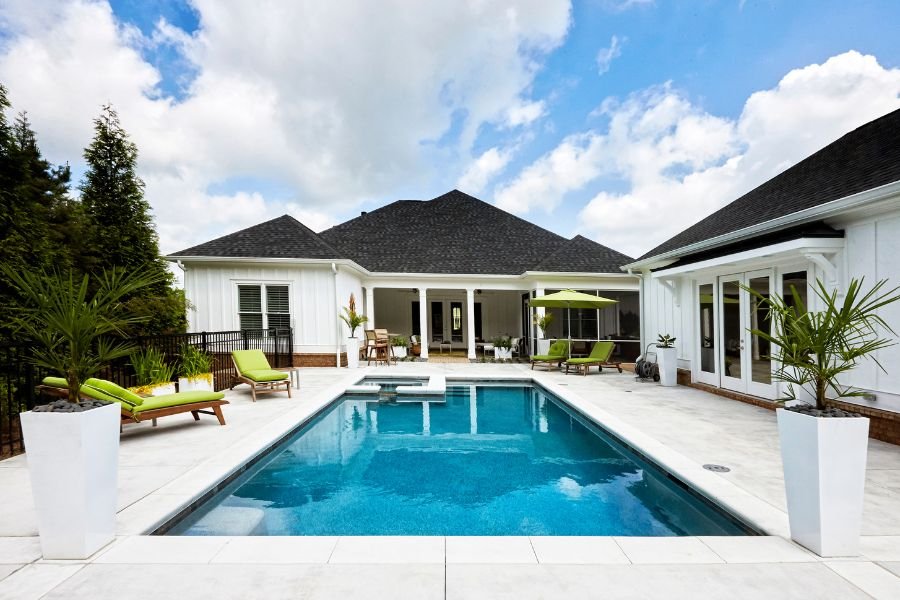
Geometric pools are the opposite philosophy made concrete. Rectangles, squares, L-shapes—these designs celebrate precision and symmetry. They create visual drama through contrast: the sharp edges of the pool against the soft curves of landscaping, the perfect stillness of water within defined boundaries.
In Lake Nona, where modern architecture dominates and homes feature clean lines and large windows, geometric pools make perfect sense. They echo the home’s design language and create outdoor spaces that feel like extensions of interior living areas.
These pools photograph beautifully. They look intentional and considered, which matters if you care about curb appeal or eventual resale value. And there’s something deeply satisfying about the precision—the way morning light reflects off perfectly straight edges, the clean sight lines from every angle.
Lifestyle Considerations That Actually Matter
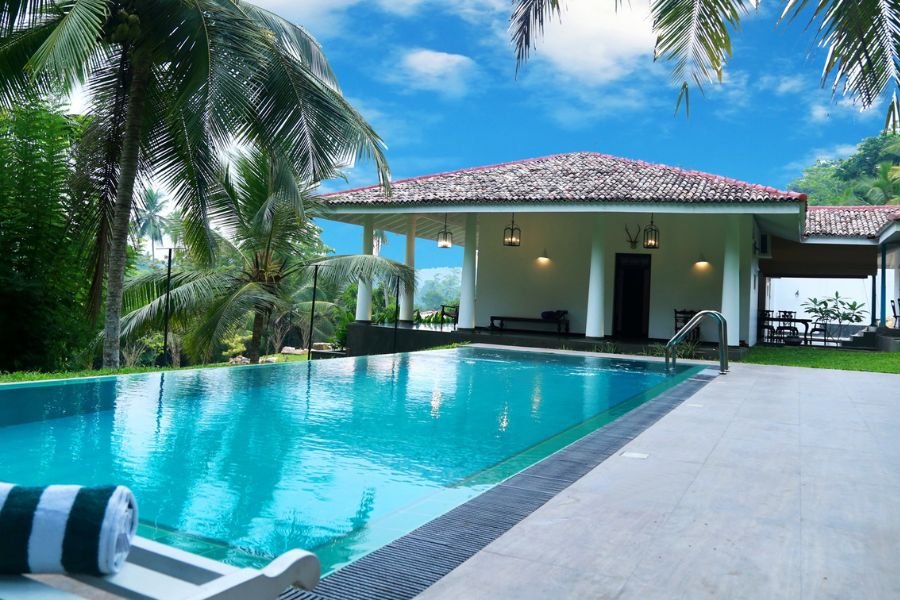
Style matters, but daily life matters more.
If you have young children, freeform pools offer advantages you might not initially consider. The curves create natural shallow areas perfect for early swimmers. Beach entries—those gradual slopes that mimic lakeshores—are easier to integrate into freeform designs. And kids don’t run as fast around curves as they do along straight edges, which means fewer slips and parent heart-attacks.
For lap swimming enthusiasts, geometric pools are non-negotiable. You need that straight shot, preferably 40 feet or longer. Freeform pools can incorporate swim channels, but they’ll never match the efficiency of a purpose-built rectangular design.
Entertaining shifts the calculation again. Geometric pools with attached spas and swim-up bars create distinct zones for different activities. Your guests can move between spaces without feeling crowded. Freeform designs excel at creating intimate gathering spots—those tucked-away seating areas where conversations naturally deepen.
The Architecture Question
Here’s where people often get tripped up: They fall in love with a pool style without considering how it relates to their home’s architecture.
A Mediterranean-style home with stucco walls and terra cotta tiles practically demands a freeform pool with natural stone coping. Put a stark rectangular pool in that setting and something feels off—like wearing running shoes with a tuxedo. Both pieces are fine individually, but together they create dissonance.
Conversely, if you’ve invested in a modern home with floor-to-ceiling windows and horizontal sightlines, a curving freeform pool might undermine the design clarity you paid good money to achieve. The geometric pool reinforces your home’s architectural statement.
The best pool designs don’t just live near the house—they complete it.
Maintenance Realities
Let’s address something contractors sometimes gloss over: Freeform pools tend to require more attention to keep looking their best.
All those curves and varied depths create more surface area than a simple rectangle. More surface means more brushing, more potential for algae in shaded curves, and more complexity when it comes to automated cleaners. Not impossible to manage, but definitely something to factor into your decision if you’re realistic about how much time you’ll actually spend on pool care.
Geometric pools offer maintenance efficiency. Robotic cleaners navigate rectangular shapes flawlessly. Automated systems work more predictably. And it’s easier to spot when something’s off because you’re dealing with uniform surfaces rather than varied contours.
That said, proper design and equipment choices can minimize these differences. A well-designed freeform pool with the right circulation system and quality automation won’t demand dramatically more time than its geometric counterpart.
Cost Considerations Without the Sticker Shock
Construction costs vary based on countless factors, but as a general principle, complexity costs more.
Simple geometric pools—basic rectangles without elaborate features—typically represent the most cost-effective option. The forms are straightforward, the engineering is standardized, and construction crews can work efficiently.
Freeform pools inherently involve more complexity. Those curves must be precisely formed, often requiring custom shotcrete work and careful attention to structural engineering. Natural rock features, if included, add both material and labor costs. Expect to invest 10-20% more for a well-executed freeform design compared to a comparable-sized geometric pool.
But before you automatically opt for geometric based on price, consider total value. If a freeform pool better suits your property and lifestyle, that 15% premium might represent the best money you’ll spend on the entire project. The wrong pool at a lower price is still the wrong pool.
The Orlando Factor
Central Florida’s climate and landscape create unique considerations for pool style selection.
Our year-round growing season means vegetation can quickly soften the edges of any pool design. A stark geometric pool installed today will look dramatically different in three years once plantings mature. This works in your favor if you want that architectural clarity to remain visible, or against you if you’re hoping for a more naturalistic effect.
Hurricane considerations also play a role. While both styles can be engineered to withstand severe weather, geometric pools with fewer complex features potentially present fewer points of concern during major storms. This matters less than proper engineering and construction quality, but it’s worth understanding.
Local architectural trends lean modern in newer developments like Lake Nona, while established neighborhoods often feature more traditional styles. Your pool will exist within this context, and swimming against the prevailing aesthetic current—while certainly possible—requires confidence and commitment to your vision.
Making Your Decision
If you’ve read this far and still aren’t certain which direction to go, that’s actually healthy. The best pool designs come from thoughtful consideration, not impulse decisions.
Start by photographing your house and backyard from multiple angles. Print them out or pull them up on a tablet. Sketch both geometric and freeform options—very roughly, just to visualize possibilities. Which feels right? Which makes you excited?
Consider how you actually live. Are you the type who appreciates clean lines and order, or do you prefer spaces that feel organic and discovered? Do you host structured pool parties or casual gatherings? Are your kids doing cannonballs or are you swimming laps?
Talk to your family. Individual preferences matter. You might love geometric pools while your spouse dreams of a tropical lagoon. Finding compromise—or understanding why one person’s vision serves the family better—is part of the process.
The Third Option Nobody Mentions
Here’s something that might open up your thinking: You’re not limited to pure freeform or strict geometric.
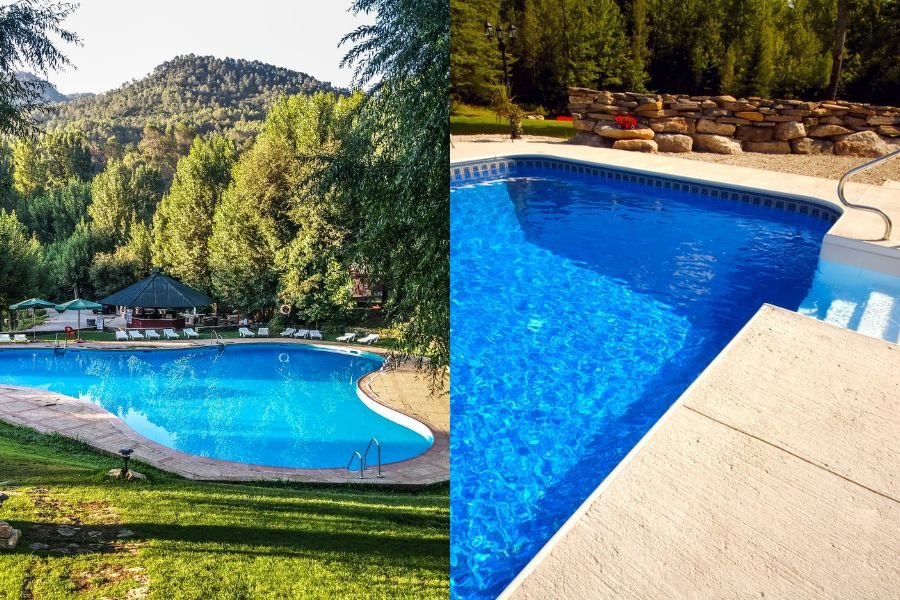
Many of the most successful pool designs blend elements from both approaches. A primarily rectangular pool might incorporate curved spa with radius edges. A freeform design could include straight sections that create functional lap swimming areas.
These hybrid approaches offer flexibility while potentially sidestepping some of each style’s limitations. They require skilled designers who understand how to balance competing aesthetics, but when executed well, they can be stunning.
What Really Happens Next
Whatever style you choose will become the backdrop for hundreds of family moments. Birthday parties where kids eventually drip their way inside for cake. Saturday mornings when you’re the only one awake, watching sunlight dance across the water. Summer evenings when the pool lights come on and conversations stretch into the night.
The best pool style is the one that makes you want to be outside. The one that feels like a natural extension of how you actually live rather than some idealized Instagram version of someone else’s life.
Freeform or geometric, what matters most is that the decision reflects your priorities, serves your family’s needs, and brings you genuine joy every time you step outside.
That’s not a small thing. That’s the whole point.