
There’s a question that changes every pool design conversation.
After discussing dimensions, depths, tile selections, and heating systems—after covering all the practical elements that make a pool functional—the question becomes: “What do you want to hear when you’re out here?”
It’s a different kind of inquiry. Because most planning focuses on what you’ll see, what you’ll use, how much it will cost. But the auditory experience of your outdoor space?
That rarely enters the conversation until someone asks directly. That’s when the discussion shifts from building a pool to creating a sanctuary.
The Heartbeat of a Home Built for Peace
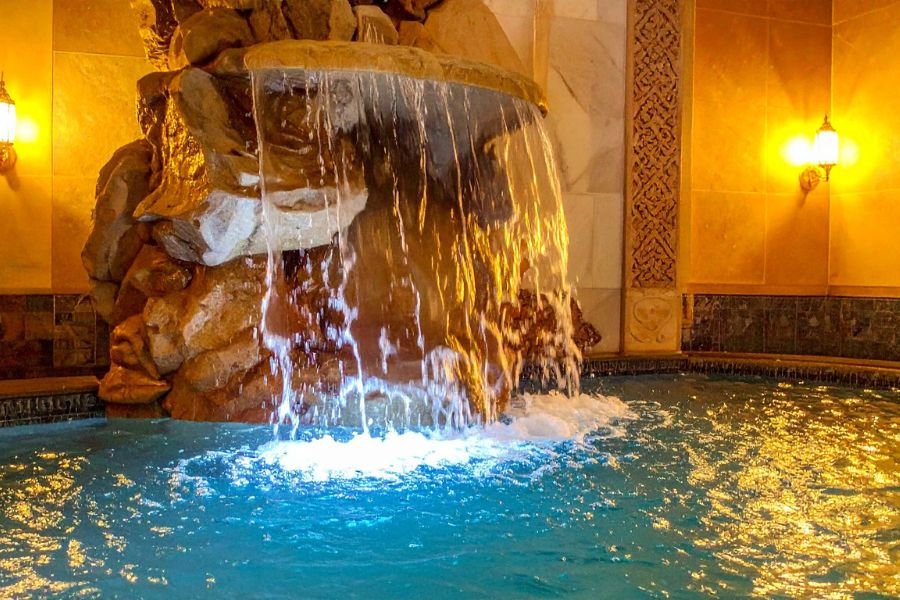
In the luxury pool construction industry, particularly across Orlando’s premium neighborhoods—Winter Garden, Windermere, Dr. Phillips, Lake Nona, Celebration, and Winter Park—water features represent one of the most significant design decisions homeowners make. Not primarily because of their cost impact, though they certainly influence budgets. Not mainly because of installation complexity, though some require considerable engineering.
Water features matter because they fundamentally alter how a space feels.
Consider the difference: a pool without water features serves its functional purpose perfectly well. But it misses something essential about how humans connect with outdoor environments. It’s the difference between a room with walls and a room with windows—both provide shelter, but only one invites you to linger.
Understanding the Language of Water
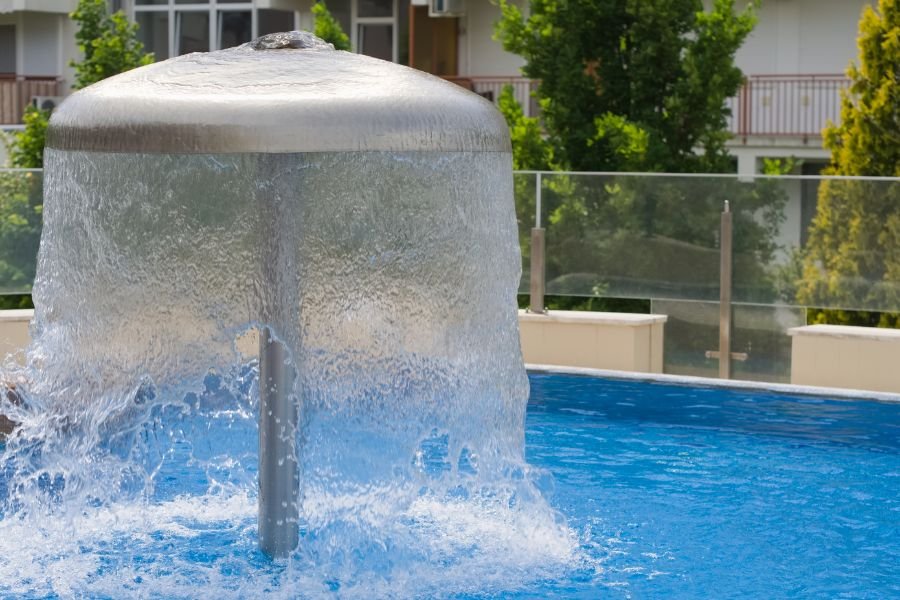
Most homeowners approach water features with a common misconception: they assume the primary value lies in aesthetics. In creating that immediate visual impact when guests first see the backyard.
Certainly, a well-designed waterfall creates stunning visual drama. The way sunlight catches cascading water, the architectural statement of a sheer descent wall, the organic beauty of natural stone formations—these visual elements carry significant weight.
But the transformative power operates in what you don’t initially see.
It’s the ambient sound that masks neighborhood noise. The gentle water movement that makes outdoor spaces feel more inviting for reading, conversation, or simply sitting quietly. The auditory element that shifts your home’s atmosphere from suburban to sanctuary.
Water features don’t just change backyards. They change patterns of use, family habits, and the fundamental experience of home.
The Sheer Descent: Modern Elegance in Motion
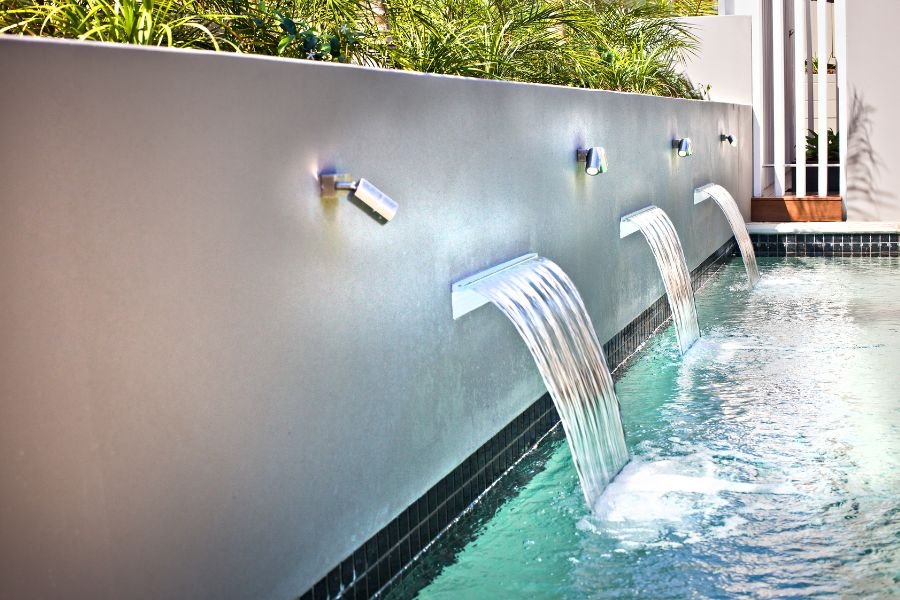
Sheer descent waterfalls have become synonymous with contemporary luxury pool design. These features create perfectly smooth sheets of water pouring from raised walls or spa edges, producing what appears to be glass in motion.
The appeal centers on clean minimalism. Sleek lines. Contemporary aesthetics that complement modern architecture prevalent in neighborhoods like Lake Nona and Celebration.
The engineering requires precision. Water must fall in unbroken sheets—which demands spillways manufactured to exacting standards. Flow rates need careful calibration. Outlet angles must be positioned precisely. The receiving pool area requires specific placement to minimize splash.
When executed properly, you achieve that coveted arc-of-water effect. When engineering falls short, the result resembles an expensive sprinkler system rather than an elegant water feature.
Investment in sheer descents typically ranges from $1,500 to $3,000 per spillway, varying with width and installation complexity. Many designs incorporate multiple spillways—two, three, or more—to create visual balance. Some ambitious projects feature six or more spillways creating dramatic water wall effects.
Maintenance proves surprisingly straightforward. The primary challenge involves calcium buildup on spillway edges, which disrupts that perfect sheet. Monthly cleaning maintains the magazine-worthy appearance these features promise.
Rock Waterfalls: Bringing Nature Home
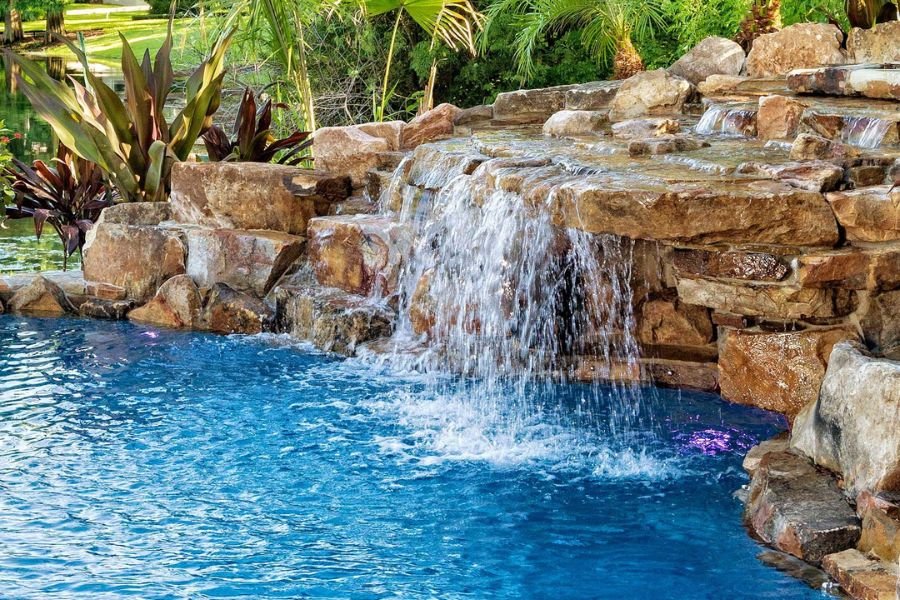
Natural rock waterfalls represent the opposite design philosophy from sheer descents—where modern features embrace minimalism, rock waterfalls pursue timeless naturalism.
Exceptional rock waterfalls create the illusion of discovering a natural spring rather than witnessing an installation. They appear as though they’ve existed since before neighborhood development, as though the pool was built around existing geology rather than geology added to enhance a pool.
The distinction between rock waterfalls that elevate outdoor spaces and those that appear contrived comes down to understanding authentic water movement through natural formations.
Natural streams don’t follow straight paths. Water finds routes of least resistance, creates organic pools and eddies, sometimes divides into multiple channels before reuniting. Successful rock waterfall designs incorporate these principles—using varied stone sizes, creating natural variation in water paths, ensuring proportions feel appropriate to overall pool scale.
The sound profile differs markedly from sheer descents. Multiple water sources create layered, complex tones. Natural irregularity means sound characteristics shift slightly with flow rate adjustments and water level changes. The effect feels less like an installation and more like a natural discovery.
Rock waterfall budgets vary considerably—from $5,000 for modest features to $25,000+ for elaborate multi-tier designs incorporating lighting, planted ledges, and integrated grottos. Labor intensity drives much of this cost variation. Each boulder requires careful positioning, mortaring, water flow testing, and sometimes multiple adjustments before achieving that effortless natural appearance.
Maintenance involves more attention than sheer descents. Algae can develop between stones. Debris accumulates in natural crevices. Professional cleaning services typically recommend monthly visits, though some homeowners actually prefer limited organic growth as it enhances the natural aesthetic.
Spillover Spas: Luxury Meets Function
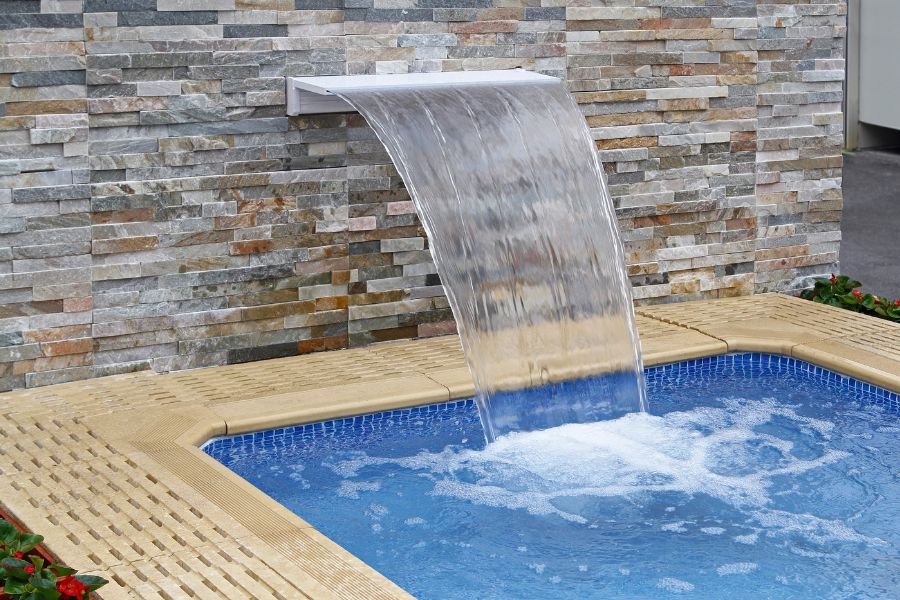
Spillover spas serve dual purposes in pool design.
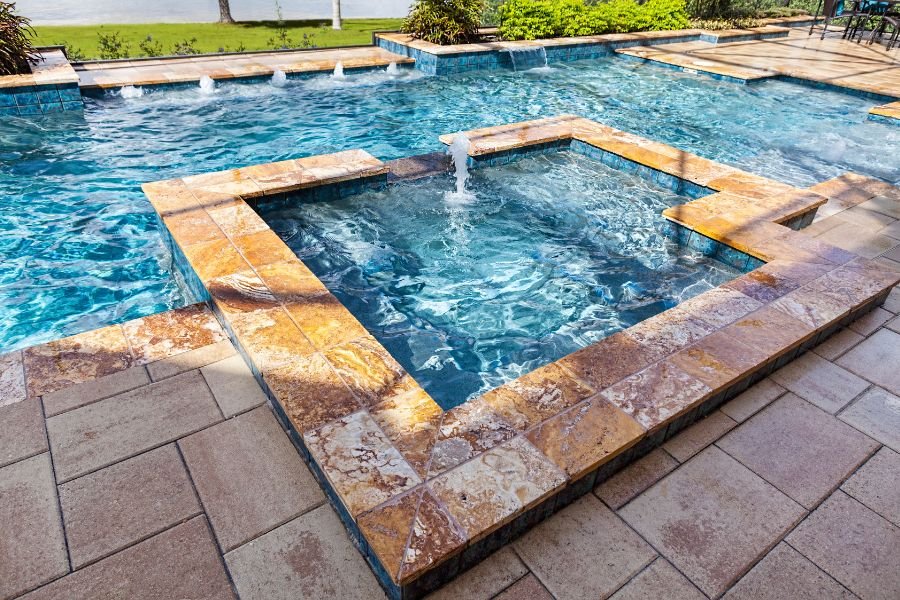
These elevated spas sit above main pool level, creating constant cascades of heated water that provide both practical and aesthetic benefits. Practically, they circulate warm spa water into pools, providing gentle heating to upper pool areas. Aesthetically, they create resort-style tiered effects that photograph beautifully and add architectural dimension.
Spillover spas work particularly well for creating distinct zones within pool areas. The elevated position provides natural separation while maintaining visual connection. The constant water movement creates spatial definition without physical barriers.
The sound profile proves distinctive—more vigorous than sheer descents, more consistent than rock waterfalls. That constant water rush provides excellent ambient noise coverage, valuable in denser neighborhoods across Winter Garden or Dr. Phillips where homes sit closer together.
Installation investments for spillover spas typically range from $8,000 to $15,000 beyond base pool costs, depending on spa dimensions and finish materials. The spillover edge itself—usually 6 to 12 inches—requires careful engineering to maintain proper flow without creating excessive splash or draining spa water too rapidly.
One consideration that surprises many: ongoing energy costs. Maintaining spa temperatures at elevated levels means heaters run more frequently, and spillover water constantly transfers heat into cooler main pools. Budget an additional $60-100 monthly in heating costs during cooler months, less in summer when spas often remain unheated.
The Subtle Magic of Bubblers and Deck Jets
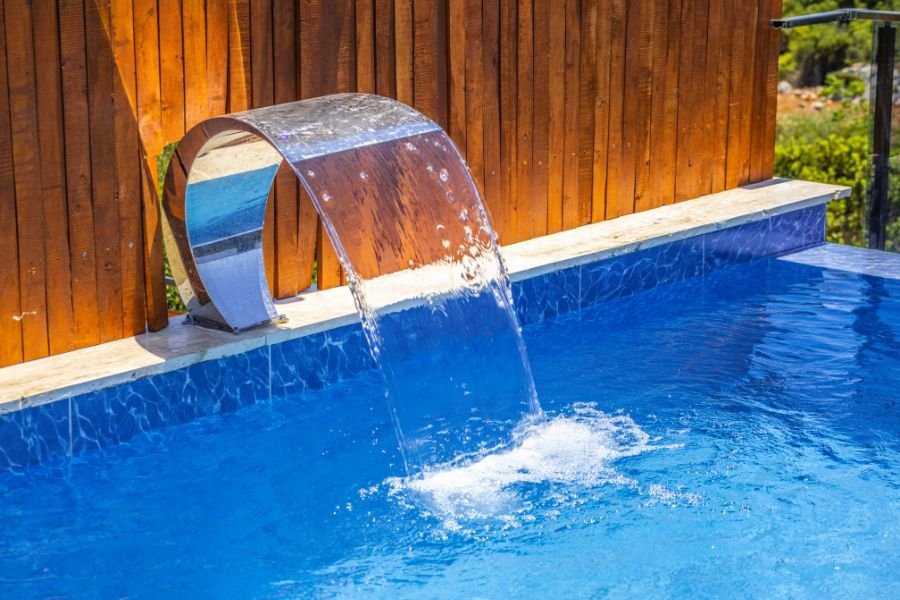
Not every water feature needs dramatic presence.
Some of the most effective elements add just whispers of movement, suggestions of playfulness, touches of whimsy to overall design.
Bubblers—small fountains shooting water upward from shallow pool areas—prove particularly popular for families. Children demonstrate consistent fascination with these features. The gentle spray and simple physics of upward-shooting water create natural play opportunities.
They’re also remarkably affordable. Plan on $500-800 per bubbler including installation. Most designs incorporate two to four in shallow sun shelves or entry areas.
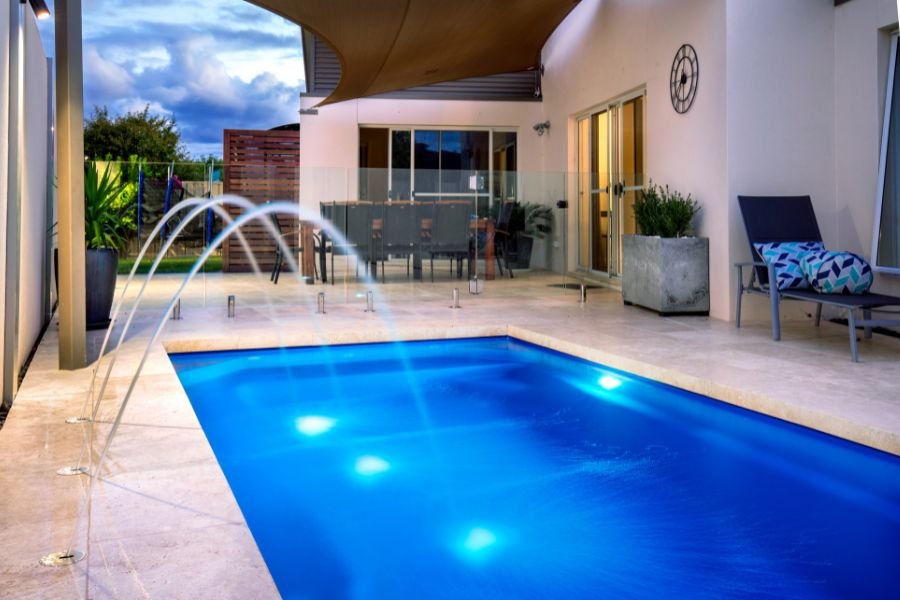
Deck jets create entirely different effects. These features shoot arcing water streams from deck surfaces into pools, creating visible parabolas that catch light beautifully. With LED lighting at night, they transform into illuminated color arcs.
The sound remains gentle—soft splashing that adds presence without overwhelming conversation. Deck jets work well for homeowners who want water features but have concerns about noise levels. They provide visual interest and pleasant sound at lower volumes than waterfalls.
Investment per jet runs $600-1,000 installed, with most effective designs using four to six jets positioned symmetrically. The key lies in trajectory engineering—graceful arcs that land well into pool interiors, not short spurts that splash onto decking.
Scuppers and Rain Curtains: The Unexpected Elements
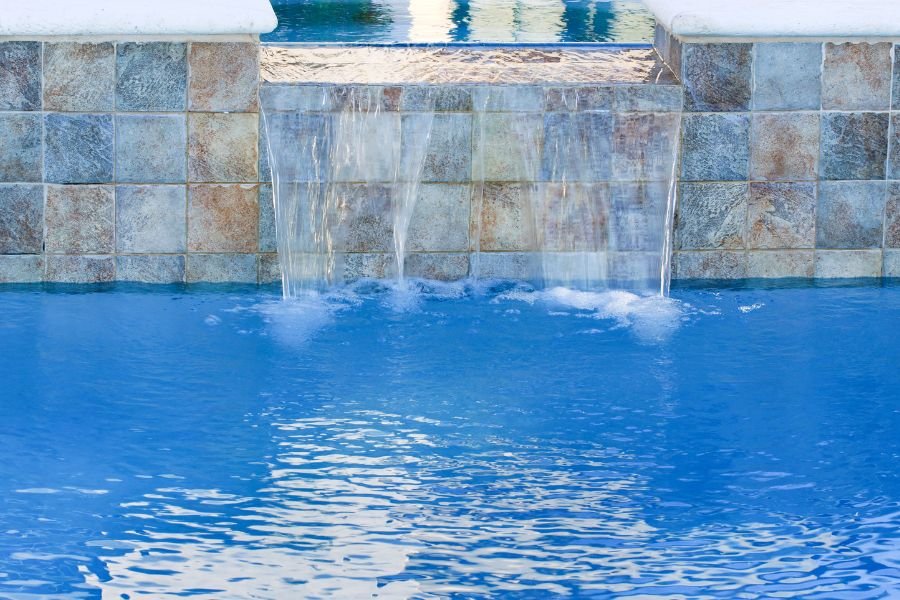
Some features excite designers while remaining largely unknown to homeowners.
Scuppers function essentially as decorative water spouts—artistic elements mounted on walls, ledges, or elevated features that pour water into pools. Think of them as sophisticated cousins of rain gutters, often designed with artistic flourishes: lion heads, geometric shapes, contemporary cylinders.
The appeal centers on detailing. Bronze scuppers with verdigris patina add old-world elegance. Sleek stainless steel scuppers complement modern architecture common in Windermere and Lake Nona. Multiple scuppers at varying heights create rhythmic water patterns.
They function as conversation pieces—the kind of detail that reveals itself gradually, that visitors notice on third or fourth visits and think, “Was that always there?”
Installation costs range from $800 to $2,500 per scupper depending on size and material. Their versatility proves advantageous; scuppers can be added to existing pools relatively easily compared to more integrated features.
Rain curtains elevate this concept considerably. These systems create sheets of water falling from overhead structures—pergolas, covered patios, architectural features—into pools below. The effect creates drama: being near or under a rain curtain feels transportive, like experiencing a luxury resort rather than a residential backyard.
The engineering complexity increases significantly. Proper drainage, flow rate management, and structural support for overhead installation all require careful planning. Budget $3,000-8,000 for quality rain curtain systems. For homeowners creating truly unique backyard experiences, few features deliver comparable impact.
The Sound Architecture of Your Space
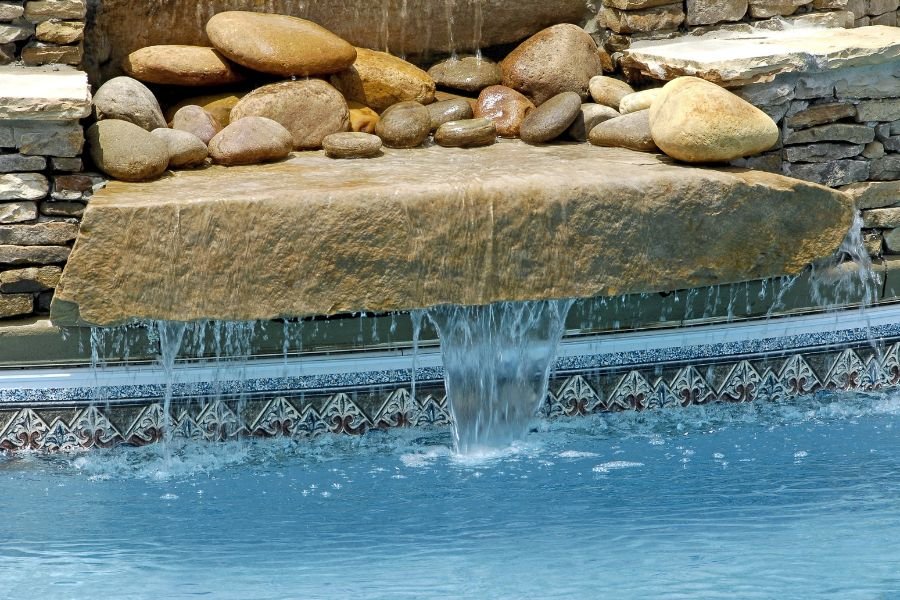
Water features don’t simply add isolated elements to pools—they create sonic environments for entire outdoor living areas. Like any thoughtful architecture, that environment should be intentional.
Different water features operate at different frequencies. Rock waterfalls create lower, richer tones. Sheer descents produce crisp, higher-frequency sounds. Spillover spas generate constant mid-range rush. Bubblers add staccato accents. Deck jets contribute punctuated splashes.
When multiple features combine thoughtfully, they create what acousticians call “layered ambient sound”—complex, natural noise that helps minds relax by masking mechanical sounds (AC units, traffic, neighbor conversations) while remaining pleasant and non-intrusive.
Effective design considers sound sensitivities. Some people find constant water noise deeply soothing and want maximum volume—rock waterfalls, spillover spas, comprehensive installations. Others prefer subtlety—perhaps just deck jets and a single modest sheer descent.
Neither approach is inherently superior. But there is an inferior approach: adding features randomly without considering how they’ll interact sonically.
The Investment Question Everyone Asks
Water features represent some of the highest-ROI additions possible in pool construction. Industry data suggests well-designed water features can add 15-25% to home appraisal values, frequently exceeding their installation costs.
But raw numbers don’t fully capture the value proposition.
Consider a comprehensive water feature package—perhaps a rock waterfall, spillover spa, and four deck jets—that might add $18,000-22,000 to project costs. Amortized over a 20-year timespan (typical life expectancy for well-maintained pools), that represents roughly $900-1,100 annually, or about $75-90 per month.
Compare that monthly cost to country club memberships many Orlando families maintain primarily for pool access. Or weekend entertainment budgets spent leaving home because backyards don’t compel staying in. Or vacation expenses to destinations featuring beautiful water elements you could experience daily in your own space.
The financial calculation shifts when accounting for actual use and enjoyment patterns.
Maintenance Realities Worth Knowing
Water features require ongoing maintenance—this reality deserves honest discussion.
Complexity increases maintenance needs. Nozzles clog. Calcium accumulates on spillways. Rock surfaces develop algae. Lighting elements require periodic bulb replacement.
Professional cleaning quarterly for basic features, monthly for elaborate installations represents standard practice. Budget $100-150 per visit for routine maintenance, more for particularly complex elements.
The positive aspect: proper maintenance prevents major repairs. Neglected water features develop expensive problems—broken pumps from clogged lines, structural issues from water intrusion, costly component replacements for corroded elements.
Maintenance requirements, while real, typically prove minimal compared to daily enjoyment for most homeowners. It becomes part of seasonal rhythms—spring tune-up, summer monitoring, fall preparation, winter procedures (for those who close pools, though many don’t in Central Florida’s climate).
Bringing It Together: Designing Your Water Symphony
Determining which features belong in your space starts with honest questions.
How will you use your pool? Families with young children benefit from bubblers and gentle waterfalls creating play opportunities. Adults seeking relaxation might prioritize spillover spas and multi-level rock features creating resort ambiance.
What’s your architectural style? Contemporary homes in Celebration and Winter Park call for clean-lined sheer descents and geometric deck jets. Traditional or Mediterranean architecture prevalent in Winter Garden and Dr. Phillips harmonizes beautifully with natural rock waterfalls and classical scuppers.
What’s your sound preference? Homes on busier streets might benefit from more robust water features providing effective noise masking. On quiet cul-de-sacs in Windermere, subtler elements might prove more appropriate.
And perhaps most importantly: what brings you joy? The most successful water feature plans emerge from understanding not just what appears attractive in photographs, but what will enhance your specific life in your specific space.
The Invitation
After years in luxury pool construction across Orlando’s premium neighborhoods, a consistent pattern emerges:
Families who invest thoughtfully in water features don’t just have more attractive pools. They have pools they actually use regularly. They spend evenings outside rather than defaulting to screens. They host gatherings rather than declining opportunities. Their children grow up with water as constant presence—learning to swim, playing for extended periods, creating memories lasting into adulthood.
The sound of running water serves as more than relaxation. It becomes the heartbeat of homes built for peace. The soundtrack of well-lived lives. The audible reminder that something special has been created. This isn’t marketing language. This reflects consistent feedback from homeowners years after installation—their pools represent among their best investments, not primarily because of property value increases (though those prove substantial), but because of how water features changed their daily experience of home.
Water features transform more than backyards. They transform how families live.
This guide reflects professional experience creating custom water features for Orlando families across Winter Garden, Windermere, Dr. Phillips, Lake Nona, Celebration, and Winter Park seeking to transform outdoor living spaces. For personalized consultation on which water features would best serve your specific home and lifestyle, our professional design expertise at Aqua Elite Pools™ ensures features that enhance rather than overwhelm your space.